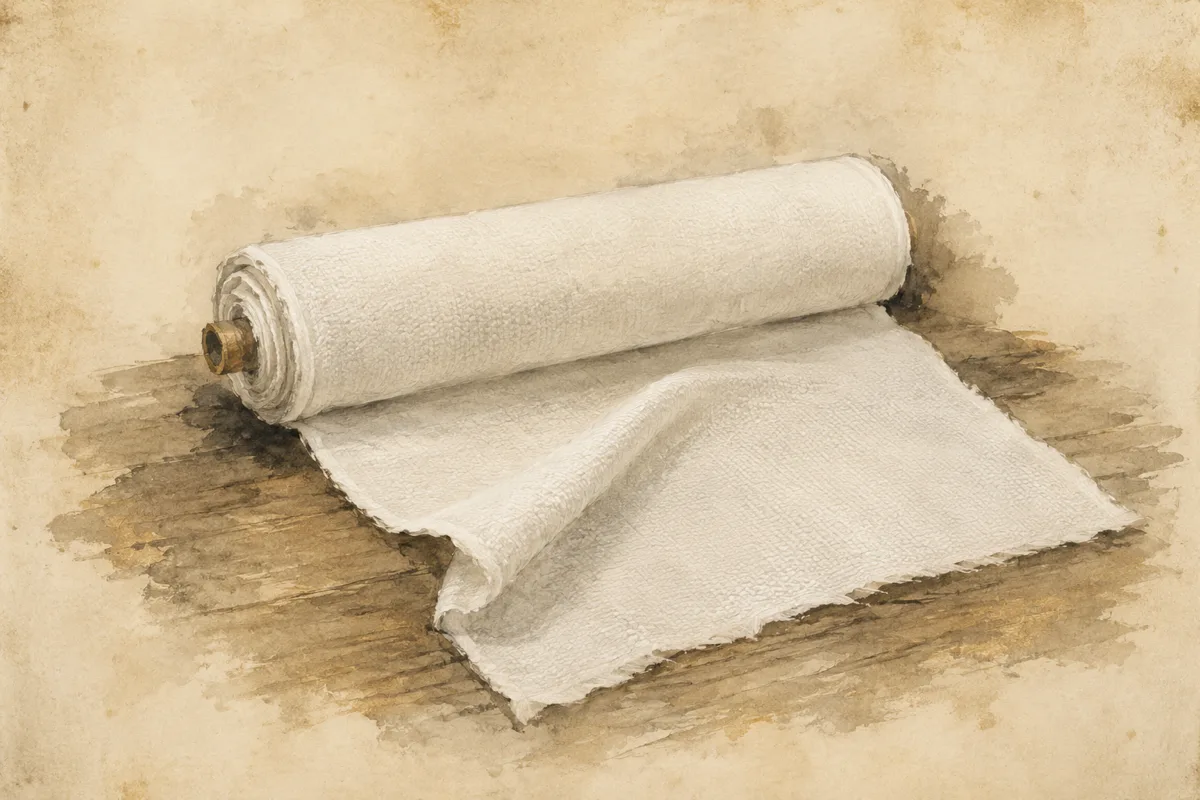
The pebbled surface of chirimen crepe is not woven in. The cloth leaves the loom flat and stiff; the texture appears only in the wash, when the weft, twisted three to four thousand times a metre, is freed of its silk gum and shrinks the fabric into thousands of tiny crimps. That same shrinkage is why water marks it, and why Tango, which weaves most of Japan's kimono silk, tells you to keep it dry.
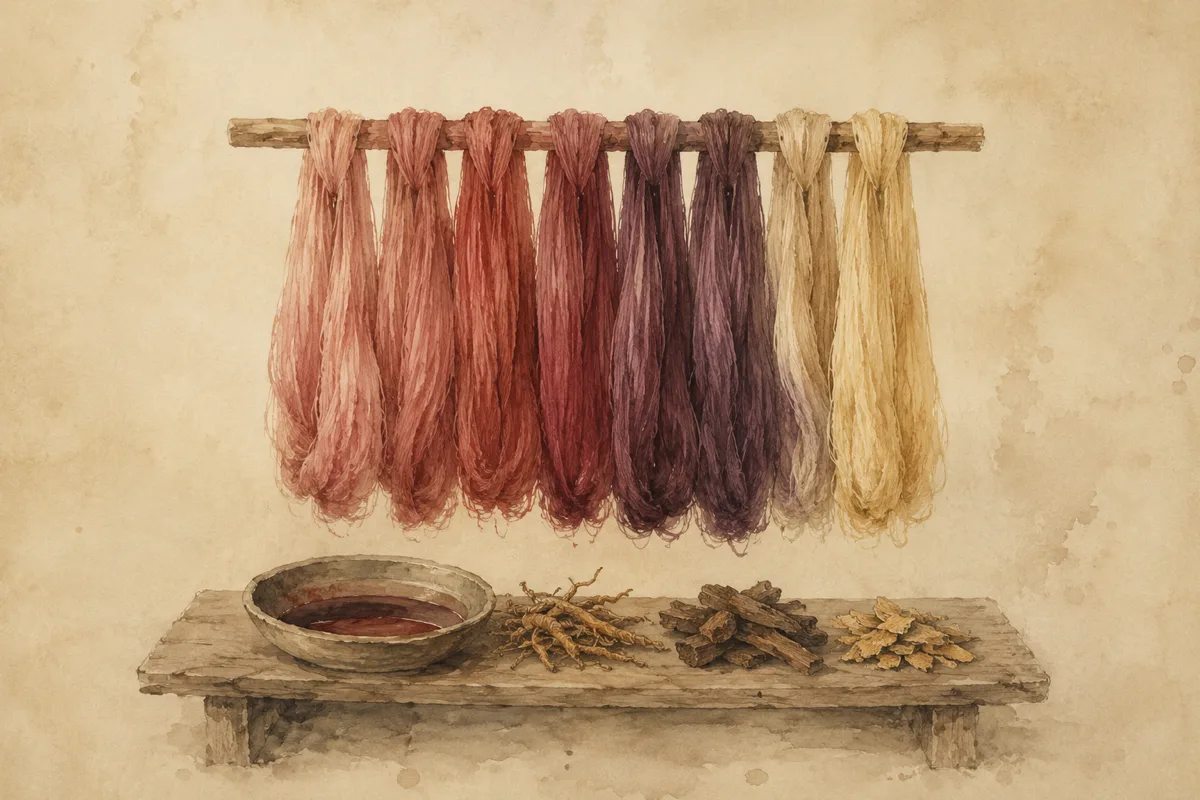
Japanese plant dyeing is usually explained as a list: this plant gives red, that one gives yellow. The real variable is the mordant, the metal salt that fixes the dye and shifts its color. The same madder root gives you clear red over aluminum and dull brown over iron. And the word kusaki-zome itself is younger than you would guess.
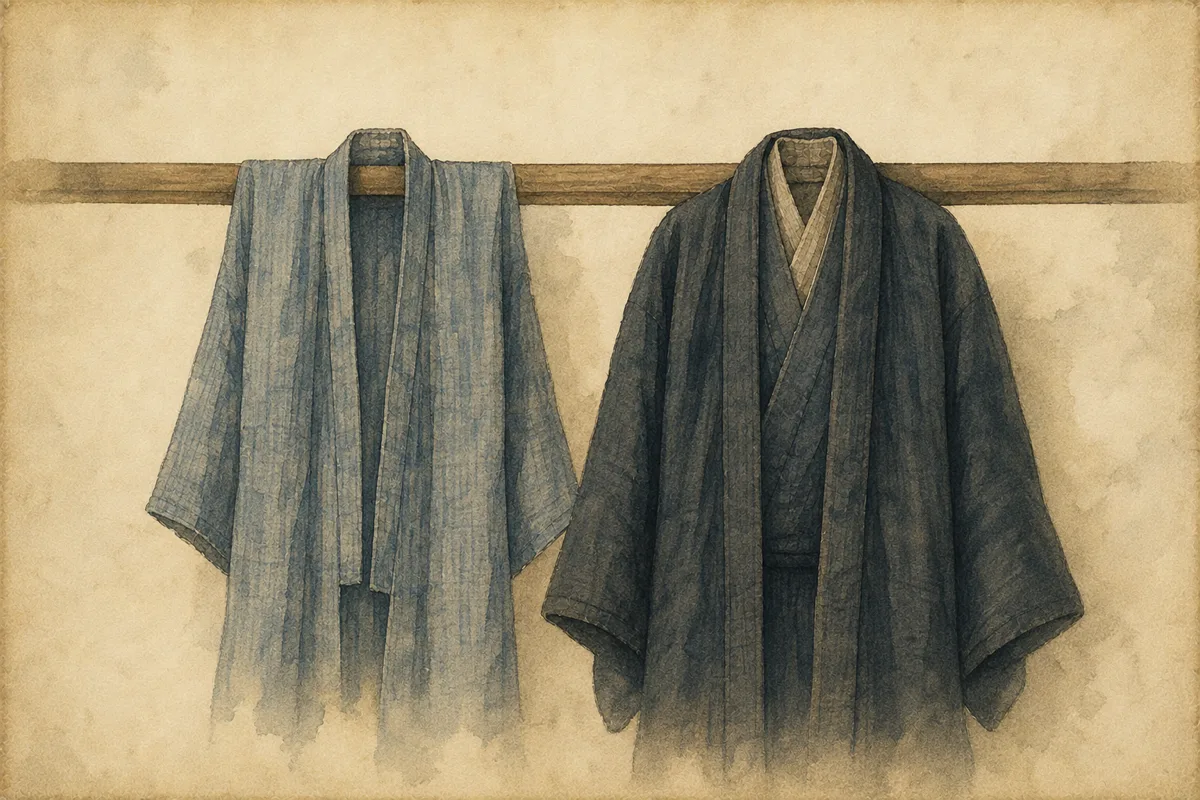
Pattern and colour will not tell you which garment you are looking at. The reliable signs are a second collar at the neck, socks on the feet, and how many cords went round the waist during dressing.
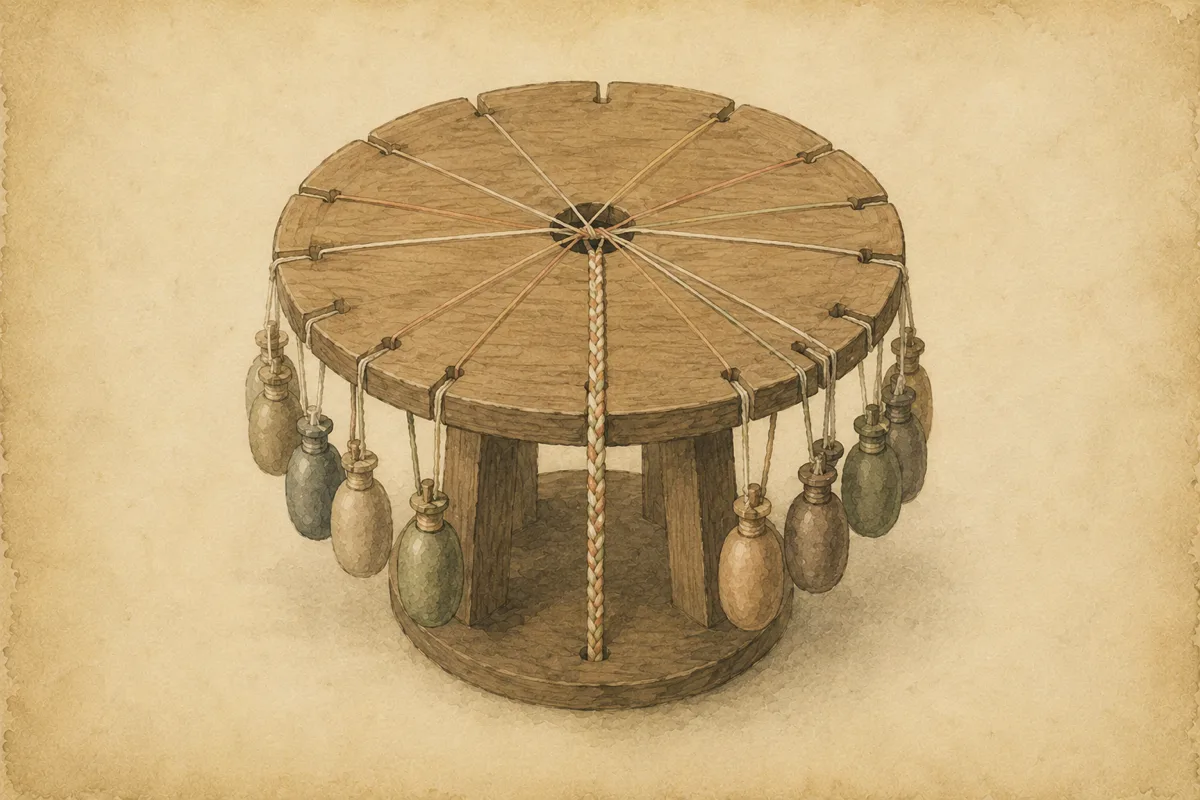
Japanese braided cord is not woven and not knitted. Every strand in it does the work of warp and weft at once. The trade laced armour and hung swords for centuries, then had to find new work when the sword was banned.
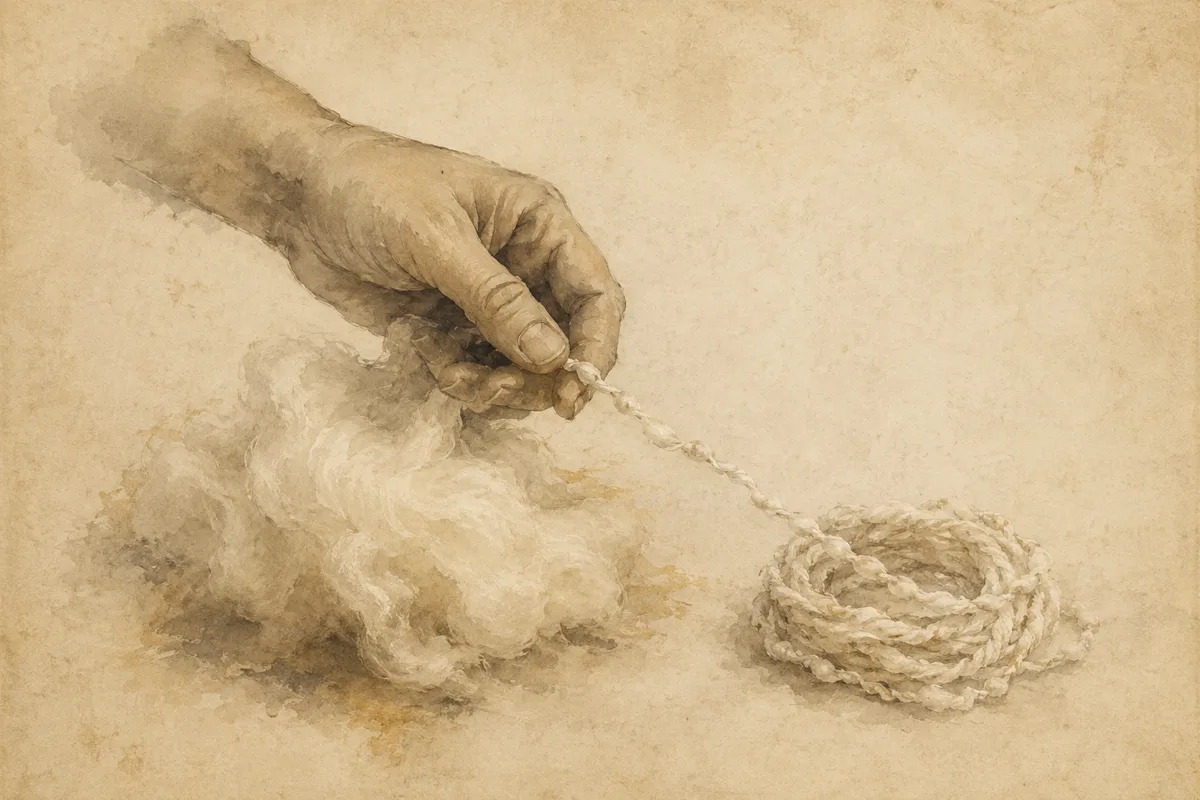
Tsumugi is silk spun by hand instead of reeled. Rather than unreeling a cocoon into one long filament, it is spun from the broken and waste cocoons that cannot be reeled, which gives it the rough, nubby surface that once marked it as a peasant's cloth. Then that humble spun silk became one of the most expensive things you can wear, and by the rules of the kimono you still cannot wear it anywhere formal.
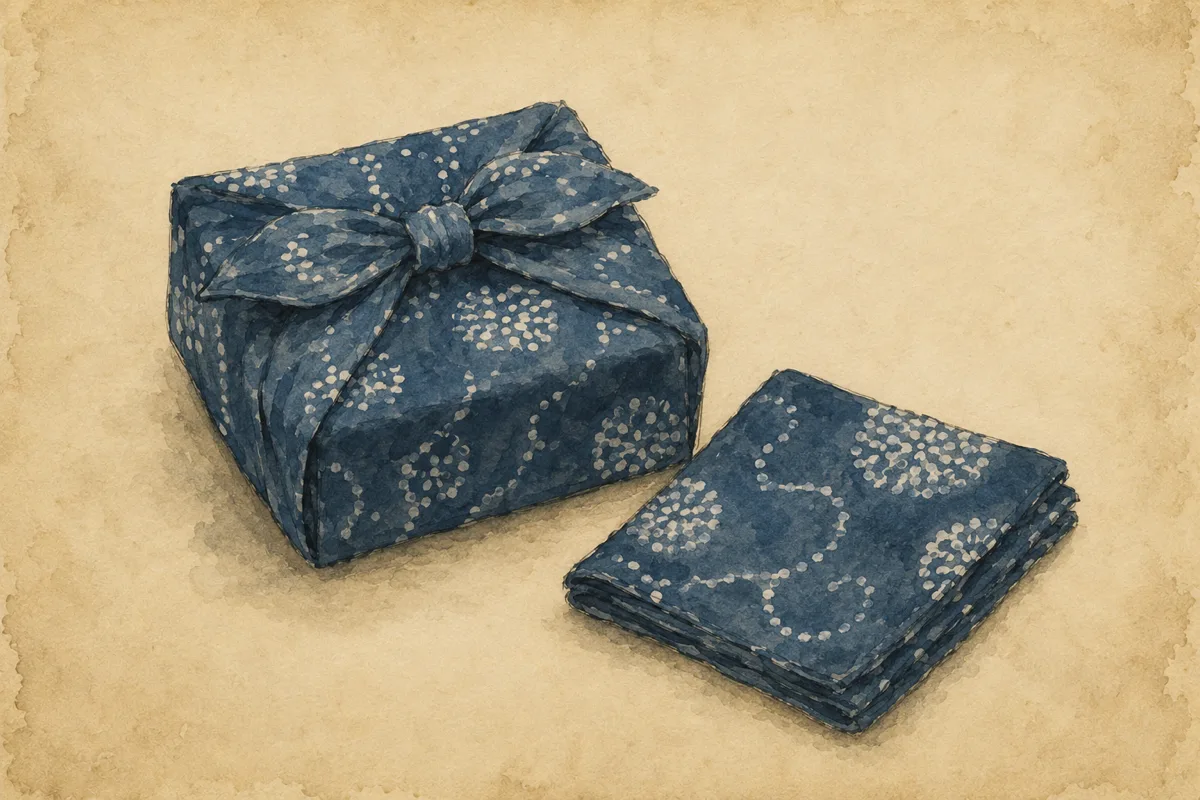
A furoshiki is sized in loom widths, not in inches, and there is an arithmetic for choosing one: work out the diagonal your object needs, then divide by 1.414. Most wrapping failures are a cloth of the wrong size finished with the wrong knot.
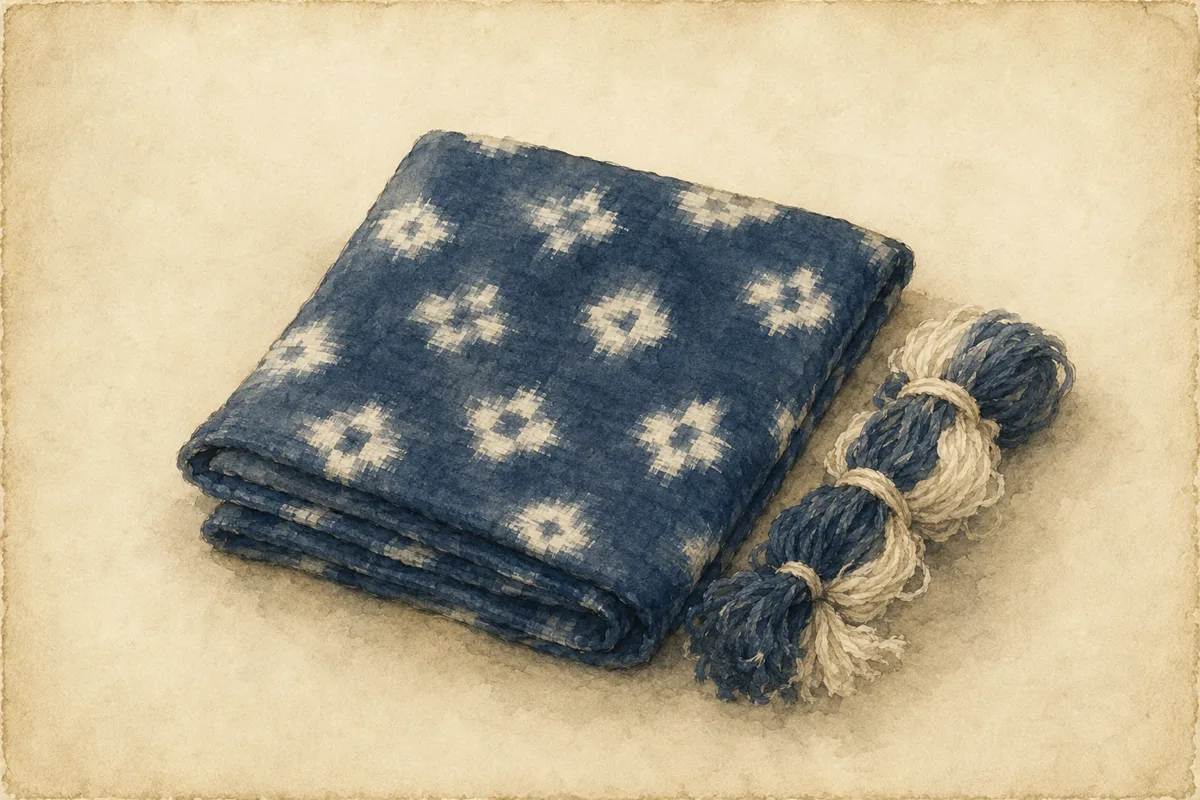
Kasuri is Japanese ikat. The design is tied and resist-dyed onto the yarn, and only then woven, so the weaver has to aim a pattern that already exists. The soft feathered edge everyone recognises comes out of that sequence rather than out of a decorative choice.
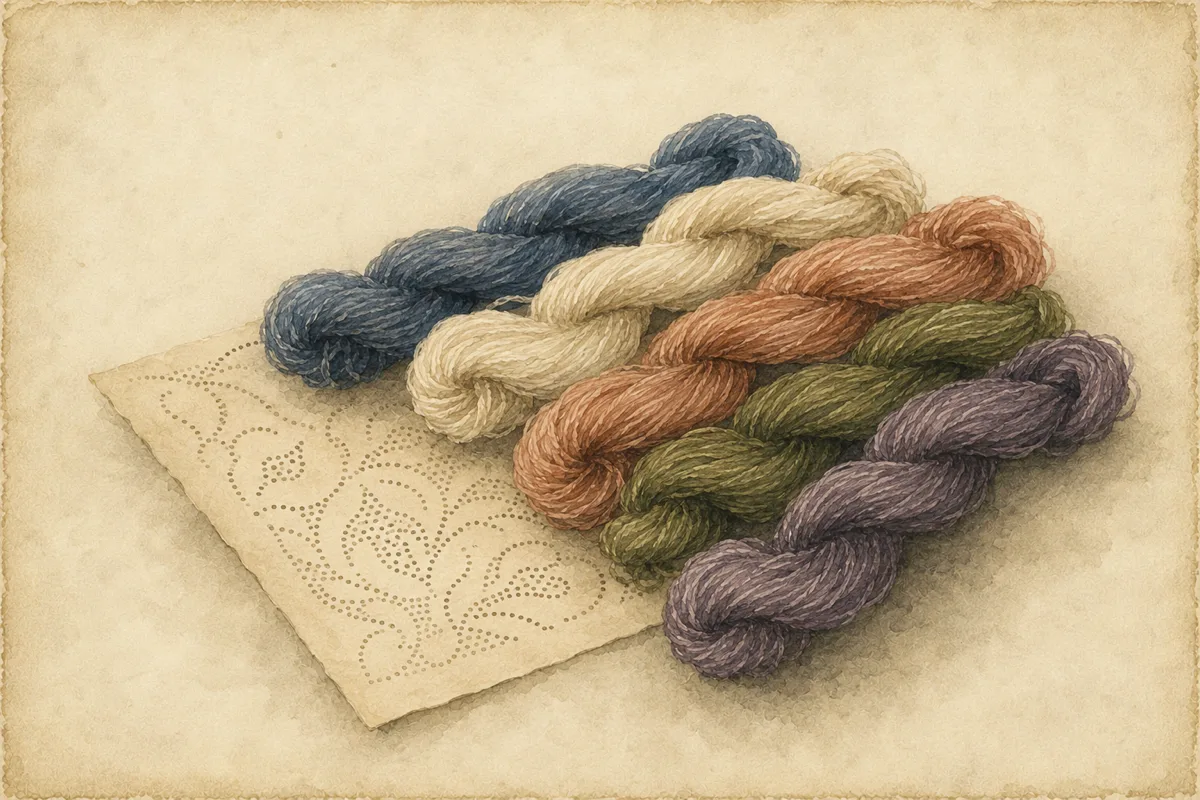
Kyoto's Nishijin weavers dye the thread rather than the cloth, and punch the pattern into perforated paper at step three of nine, before a single strand has been twisted. The district is named after an army camp from the war that burned Kyoto, and the trade was saved in 1872 by a French loom.
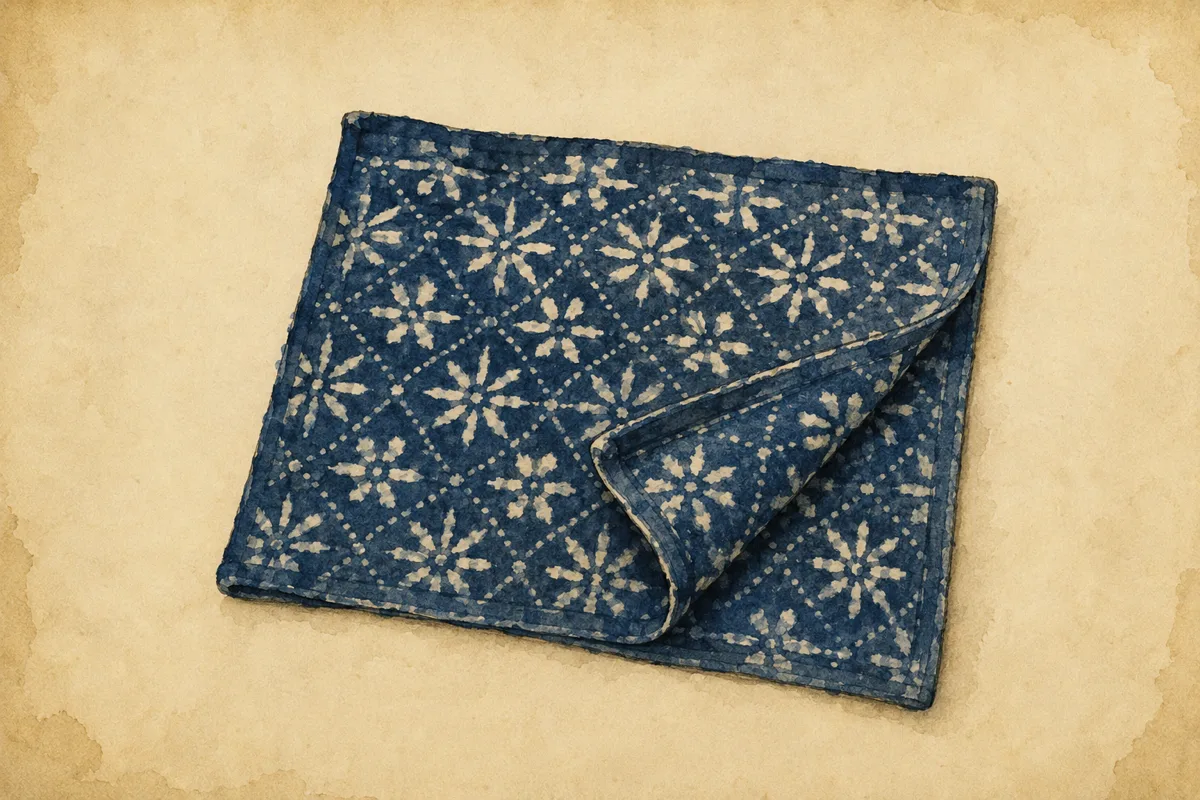
A dyed tenugui carries its design on both faces, mirrored, because the dye is poured through the cloth. A printed one does not. That single check separates the two products, and it also explains why hand-dyed tenugui designs are always bold: the process cannot hold a line under two or three millimetres.
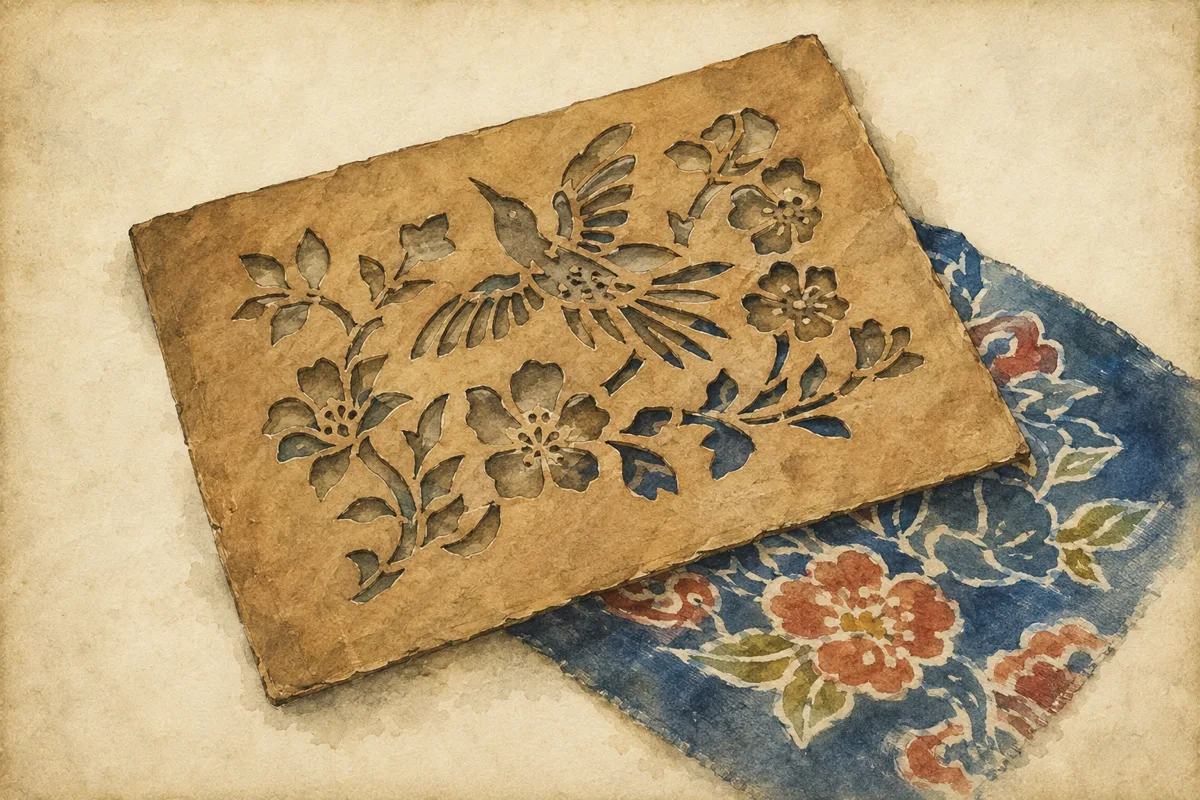
Okinawan bingata is painted with pigments rather than dyed, because plant dyes fail under subtropical sun. Those colours were assigned by rank, yellow to the royal family and indigo alone to the third class. In 1945 the workshops and the stencils were gone, and the craft came back on Japanese army maps cut with remembered designs.
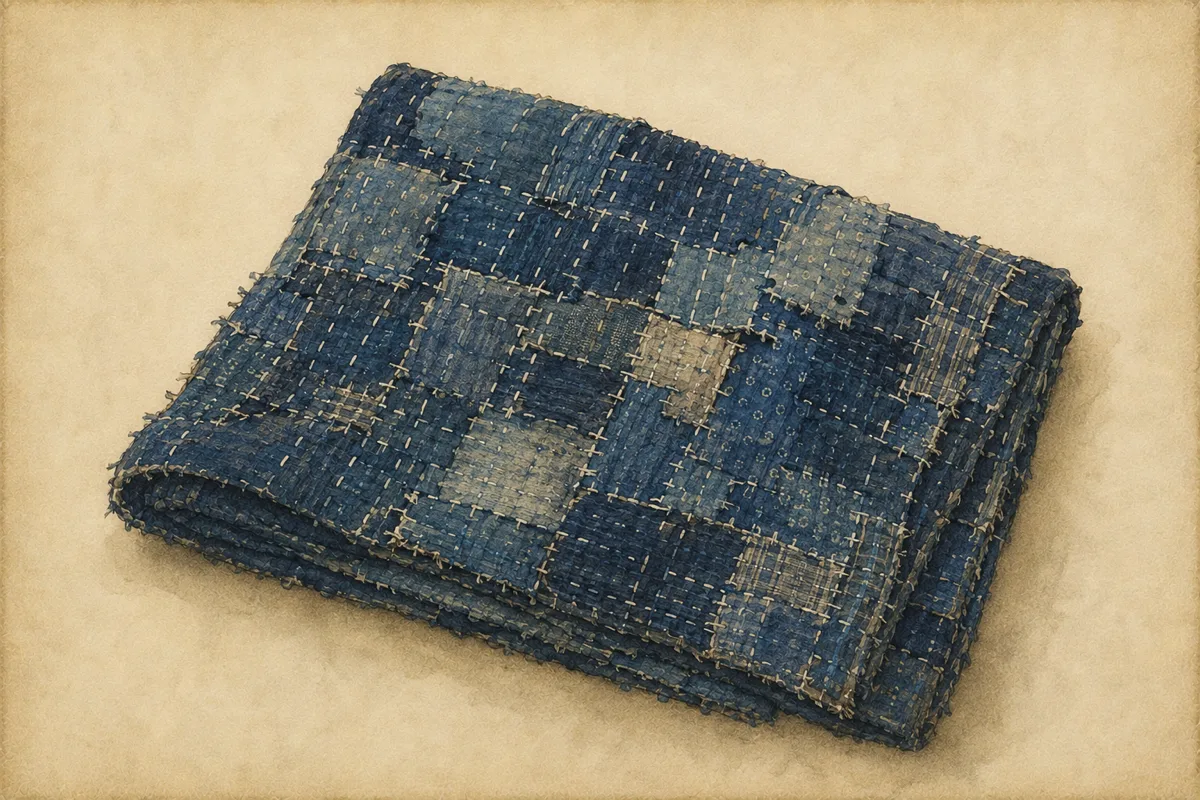
Boro is what northern Japanese farming families made when cotton was something you bought second-hand: cloth patched onto cloth, stitched with sashiko, re-dyed and handed down until it was more repair than original. It was an embarrassment before it was a collectible.
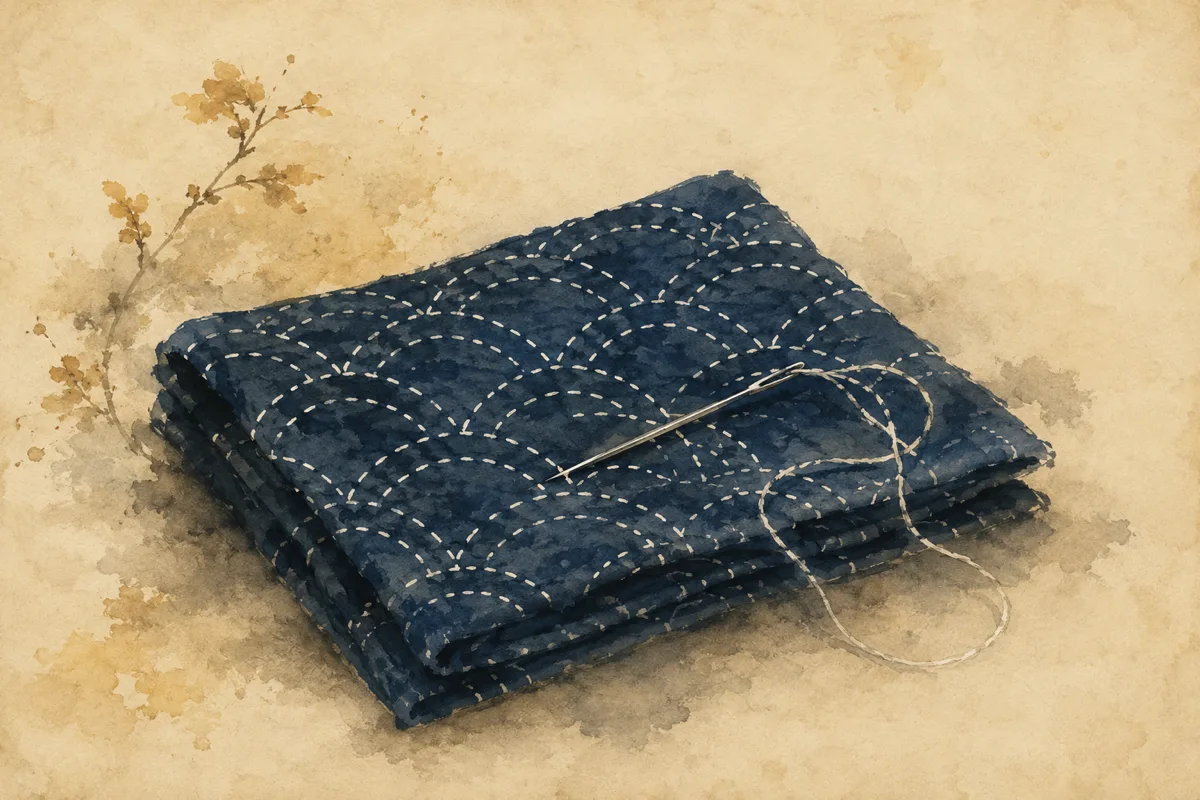
Sashiko means 'little stabs.' It began as white cotton thread run through indigo cloth by farming families in Japan's cold north, to make thin fabric warm and worn fabric last. The geometry came later, and some scholars argue it was never really embroidery at all.
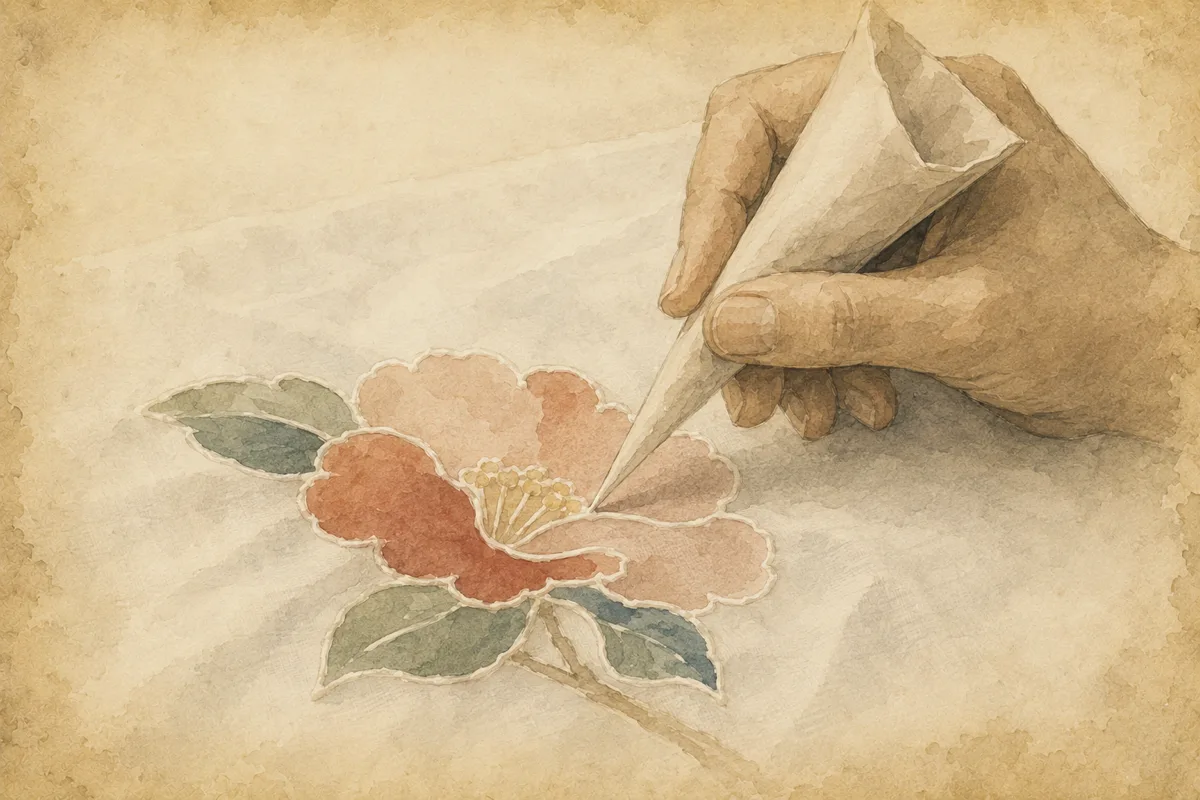
The fine white outline running between the colours of a yūzen kimono is not decoration. It is a wall of rice paste, piped from a cone, that stops one dye from bleeding into the next and so lets a length of silk be painted freehand like a sheet of paper. It is also how a townsman dressed in luxury while obeying laws against it.
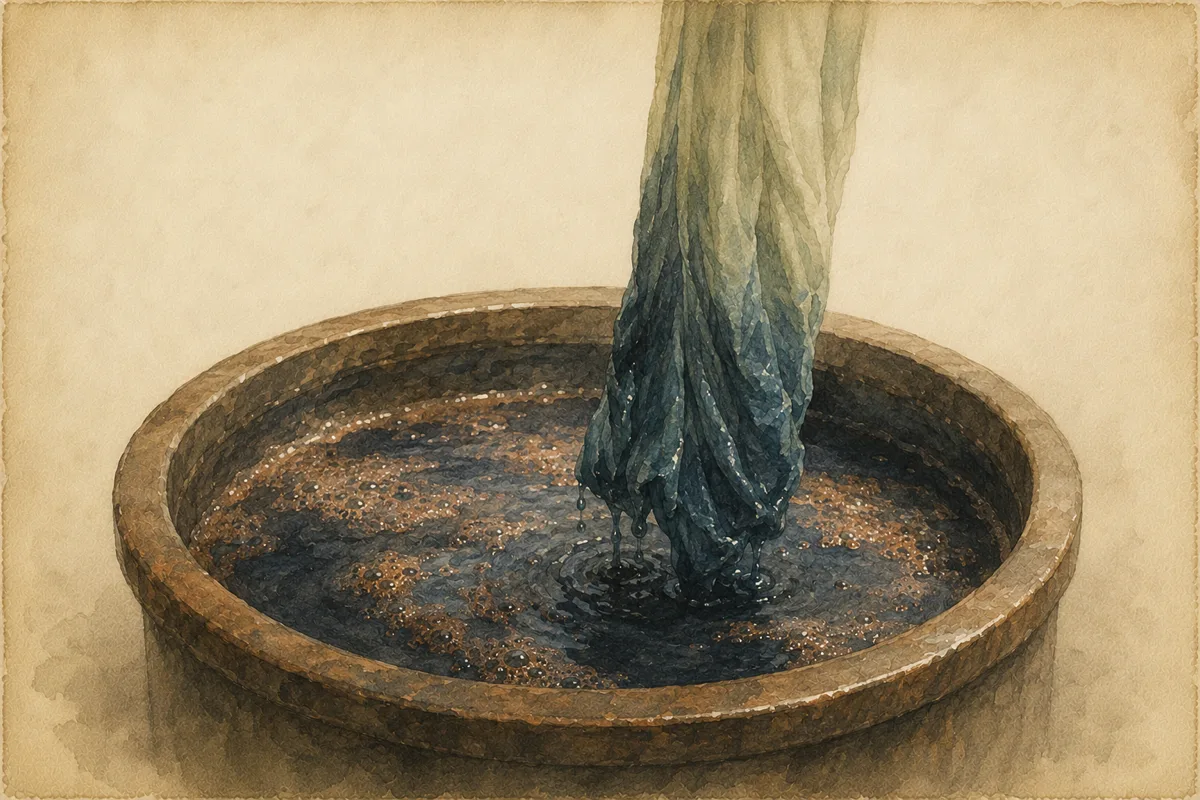
Real Japanese indigo isn't a color you paint on. The pigment won't dissolve in water, so it has to be fermented alive in a heated vat first, and the cloth comes out green and turns blue in your hands. That living chain is what separates aizome from a synthetic tie-dye kit.
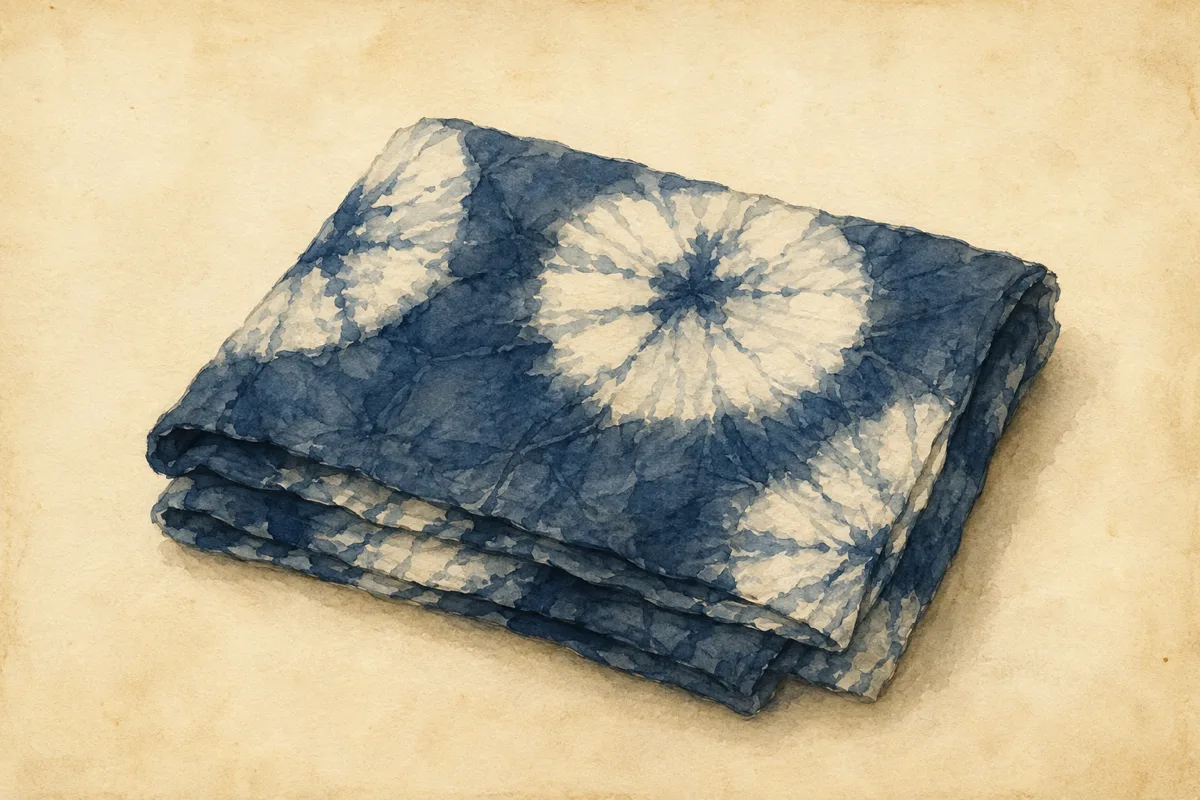
Shibori is often sold as Japanese tie-dye, but the resemblance is thin. It is a whole family of ways to bind, stitch, fold, and pole-wrap cloth before it meets the dye — with a town near Nagoya at the center of it.