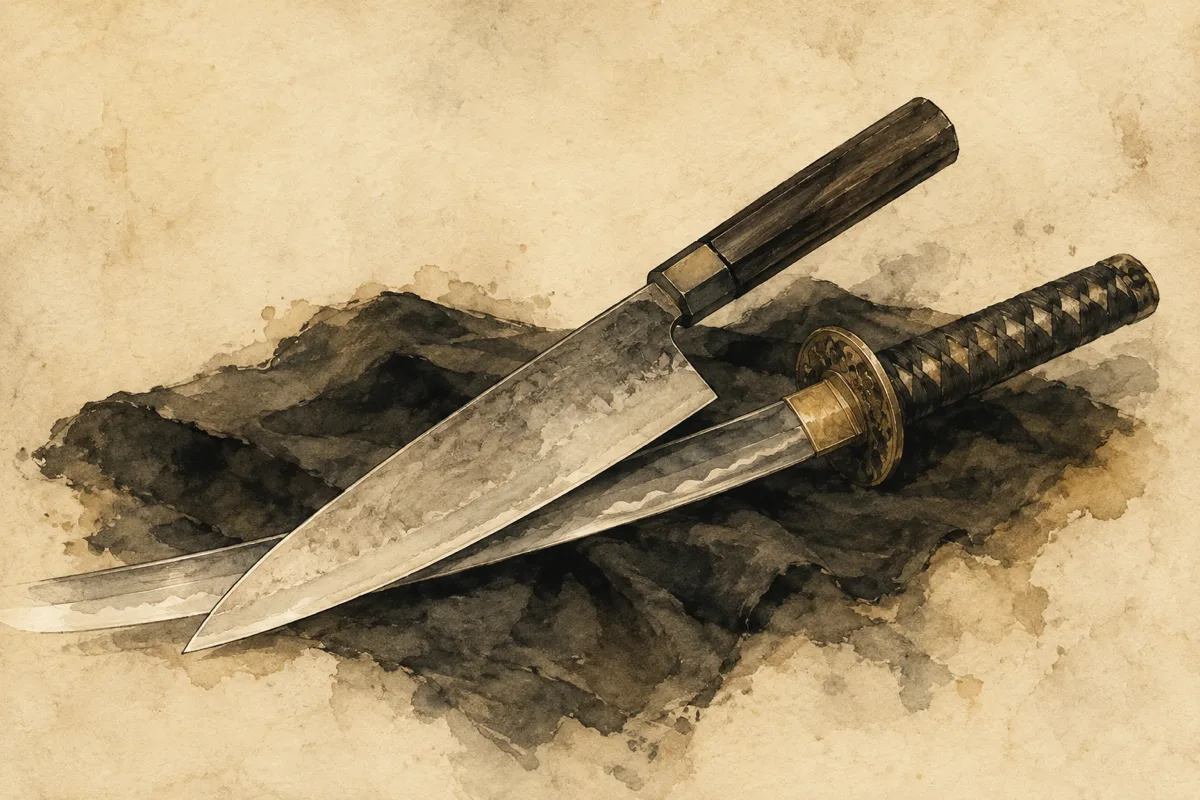
The story that a single 1876 sword ban turned samurai swords into chef's knives is half true and half myth. The Haitō Edict did push thousands of jobless swordsmiths into cutlery, but the deba and yanagiba were already Edo-period Sakai knives, and the gyuto is a separate Western import. What the sword passed down was the metallurgy, not the shape.
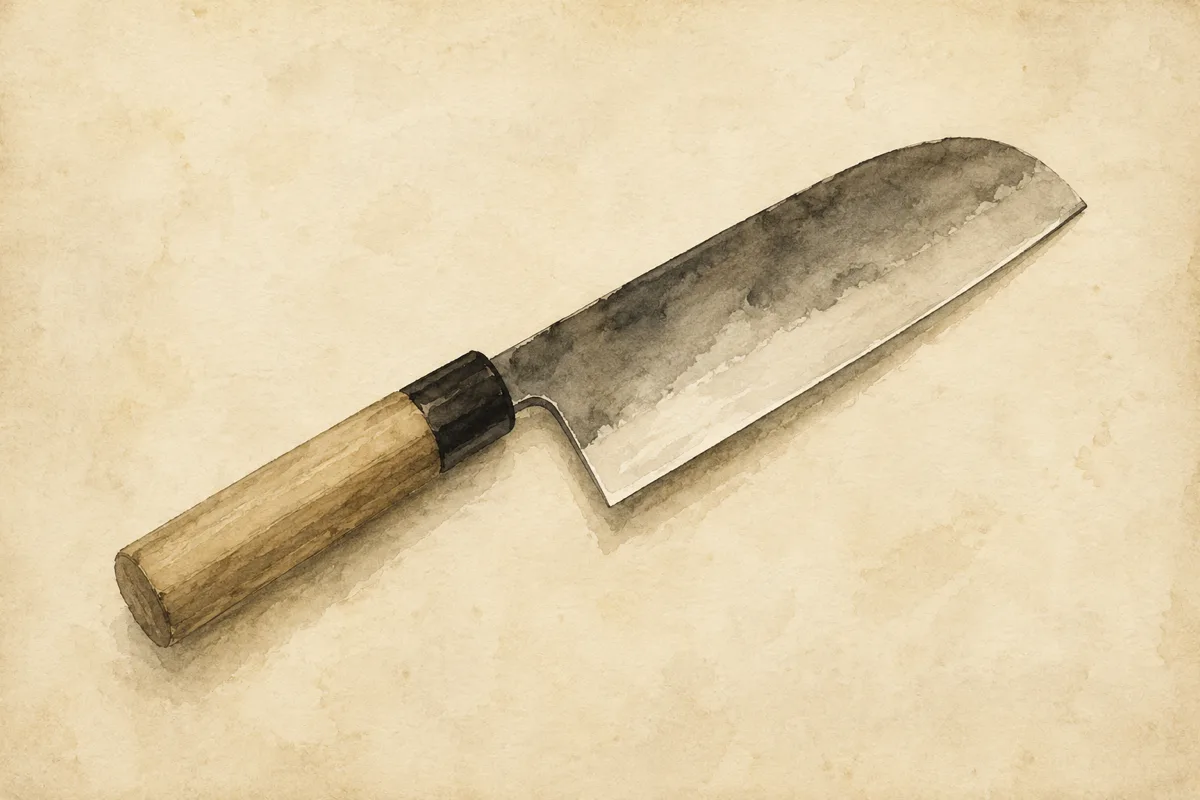
The santoku is the most-searched Japanese knife name and the everyday blade in most Japanese kitchens, but it is younger than your grandparents, and it isn't a samurai sword's descendant. This guide covers what 'three virtues' really means, why its flat edge wants a chop and not a rock, and how to decide between a santoku and a gyuto before you buy.
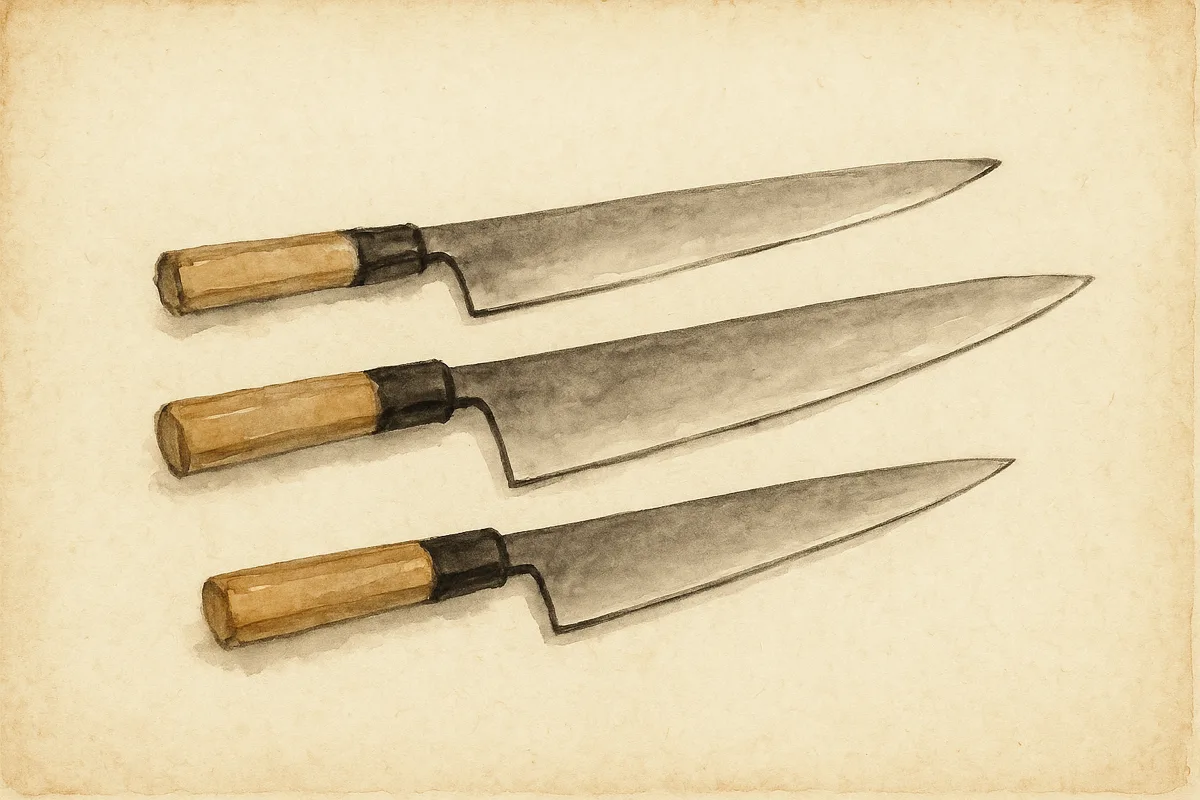
The same gyuto sells in 180mm, 210mm and 240mm, and the length is not a matter of taste. Three things you can measure decide it: your cutting board's width, the spread of your hand, and how much you cut at once, including the hand-spread test that separates 210 from 240.
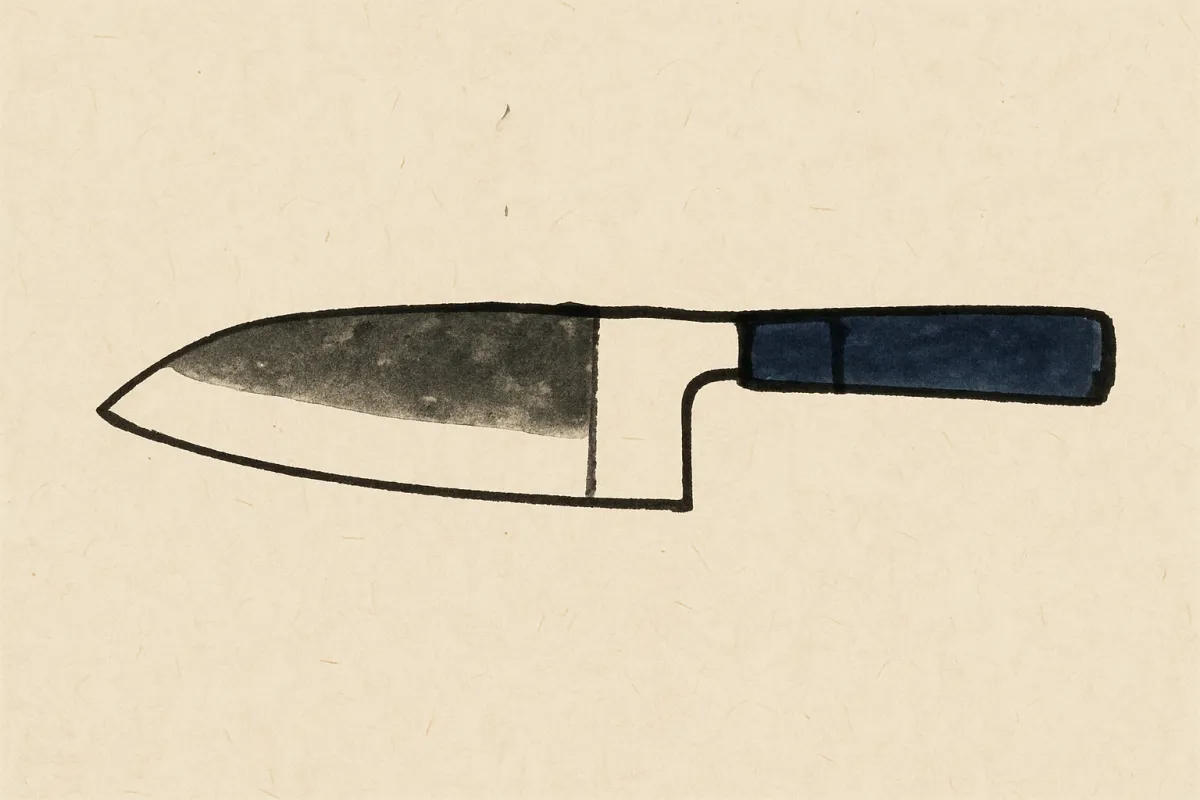
Before you compare White steel, Blue steel, and VG-10, there's a simpler fork: carbon or stainless. One element, chromium, sets every trade-off in sharpness, upkeep, and rust. Pick your camp, and settle the myth that carbon always holds an edge longer.
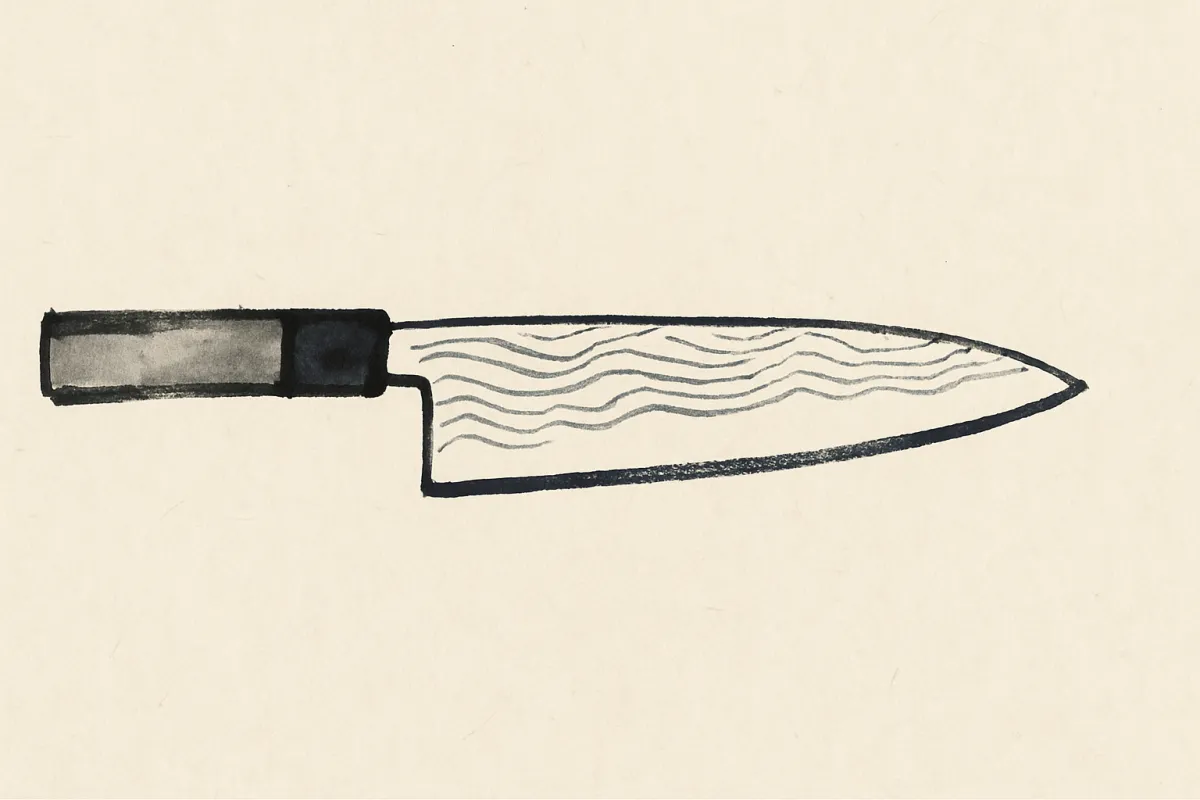
That rippling 67-layer Damascus gyuto costs double the plain one, yet the pattern sits on the cladding, and on a Japanese knife the cladding never touches the food. Separate the swirl (beauty) from the core steel (the cut), and you can read the price tag without the mystique.
One clear answer for your first Japanese knife: a 210mm gyuto or a 165–180mm santoku in stainless steel, for $80–150. This covers how to pick between the two, which steel to start on, and the beginner mistakes (carbon first, single-bevel, pull-through sharpeners) that ruin a good blade.
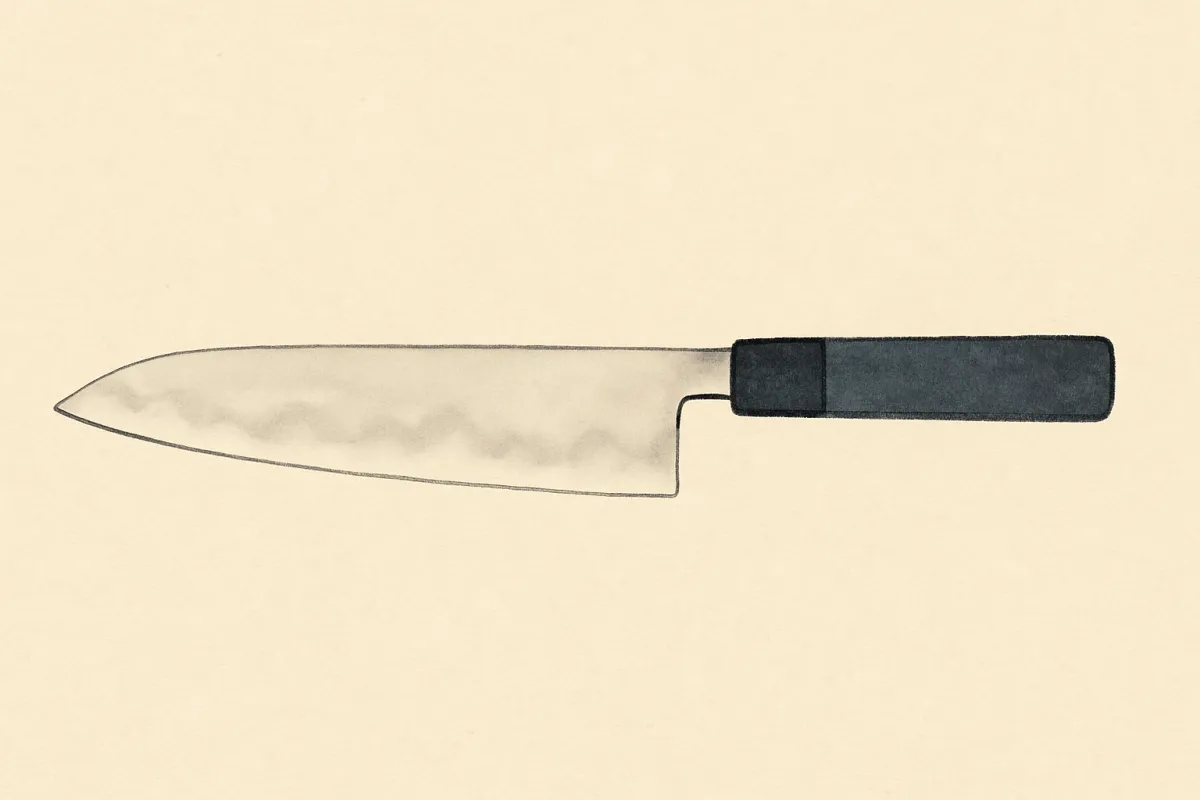
Honyaki is a knife forged from a single hard steel with no soft cladding, hardened by the same clay-and-quench method as a Japanese sword, so a wavy hamon appears at the edge. This guide covers what makes it different, why blades crack in the making, why one costs thousands, and whether you should ever buy one over a clad kasumi knife.
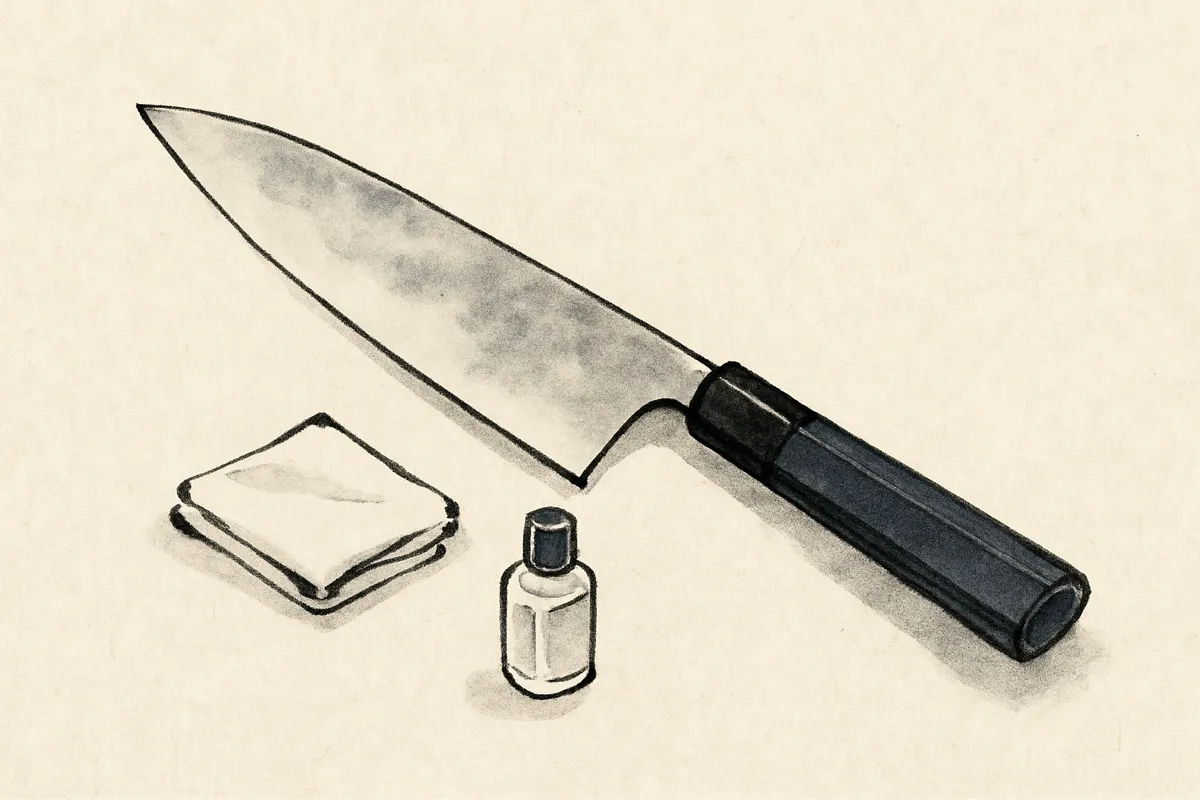
The orange spots aren't the same as the grey-black bloom, and knowing which is which is most of the job. Patina is a friend, rust is the enemy: the wash-dry rule, the taboos that ruin blades, how to oil and store, and how to remove rust once it wins.
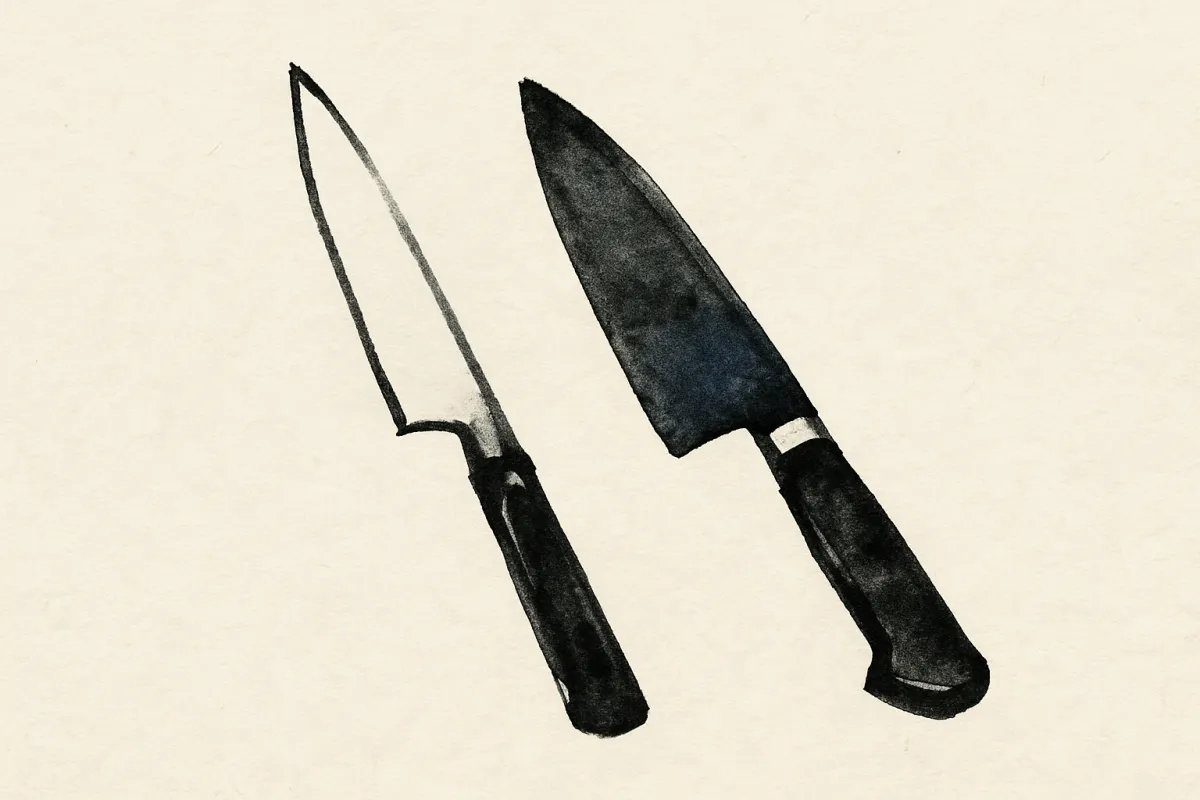
One property separates a Japanese chef's knife from a German one: how hard the steel is. Thin edges, chipping, weight, and sharpening all follow from it. This is what that hardness changes in your kitchen, who should switch, and who should keep the German knife they already own.
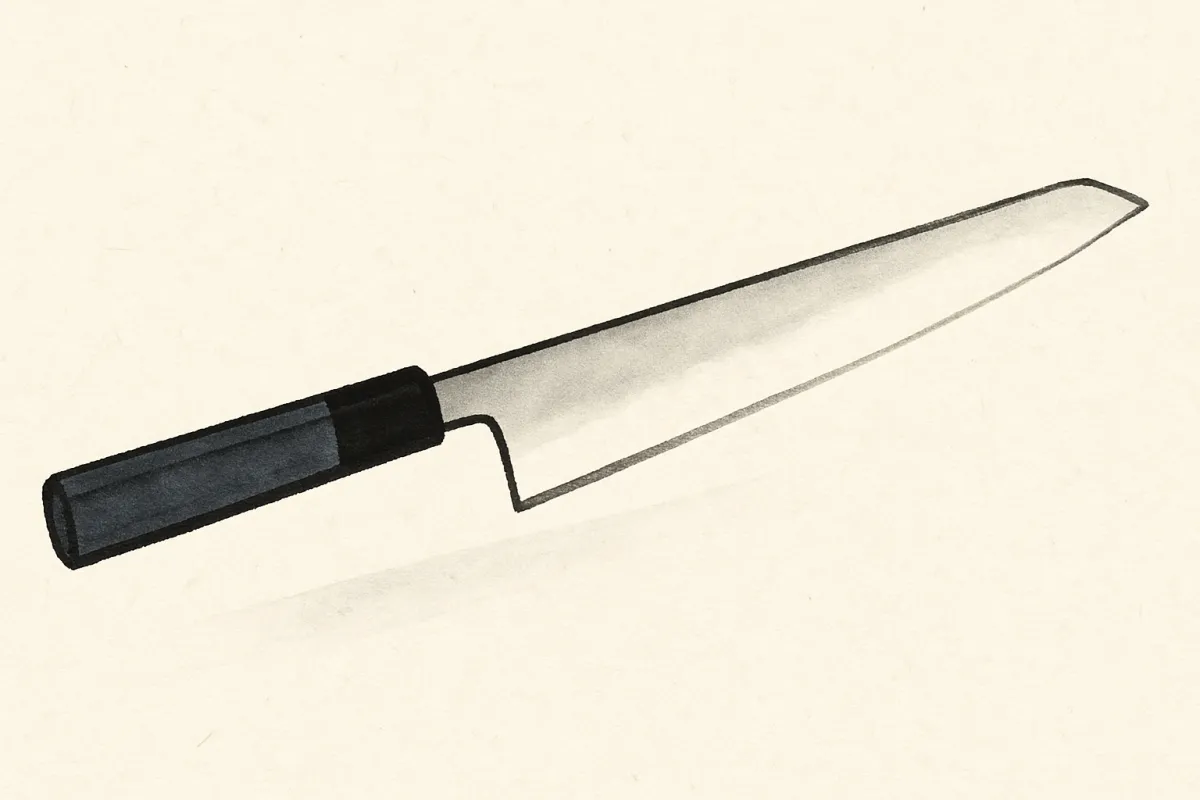
Search 'kiritsuke' and you'll find a $1,500 single-bevel status blade and a $150 K-tip gyuto sold under the same name. How to tell them apart: the traditional itamae's slicer that merges the yanagiba and usuba, versus the modern double-bevel workhorse with an angled tip, plus why the flat edge won't let you rock-chop and which one you should actually buy.
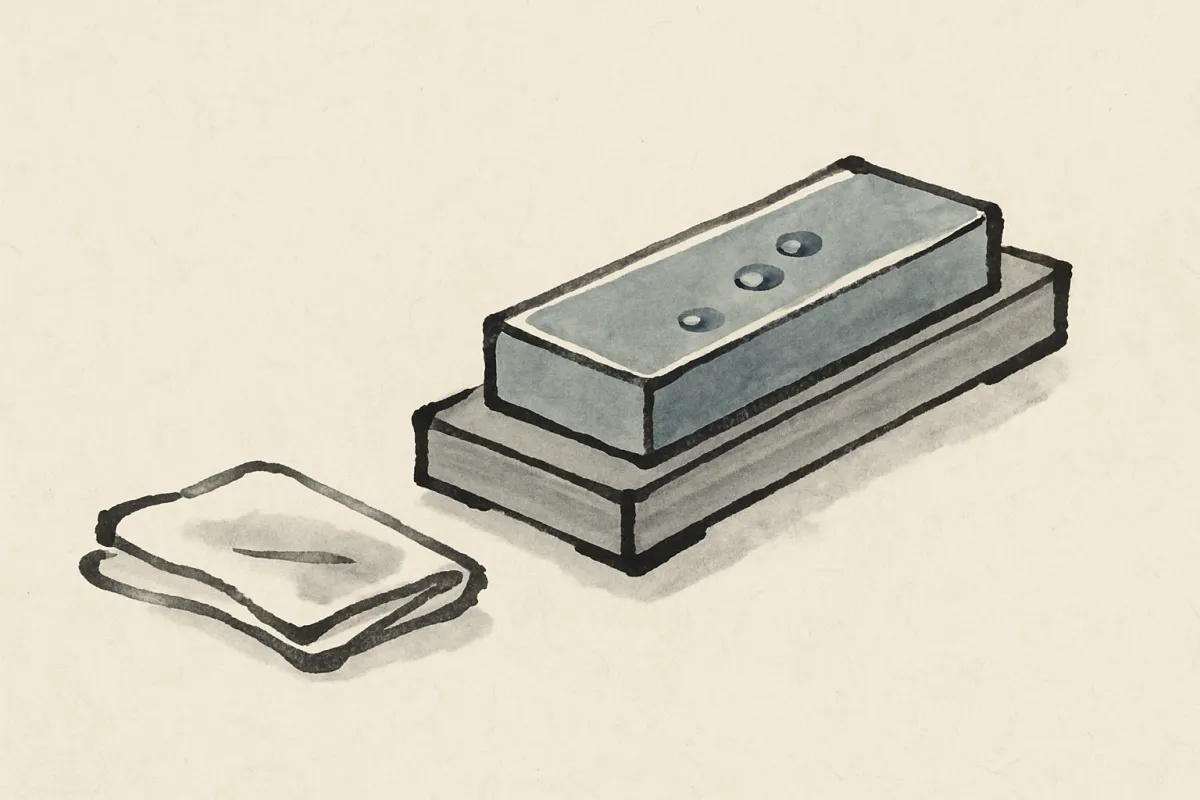
The catalog runs from #120 to #12000 and it's paralyzing. But grit number just maps to a job: coarse repairs chips, medium re-sharpens, fine polishes. Why one #1000 stone does 90% of home sharpening, what the #1000/#6000 combo adds, and why you also have to keep the stone flat.
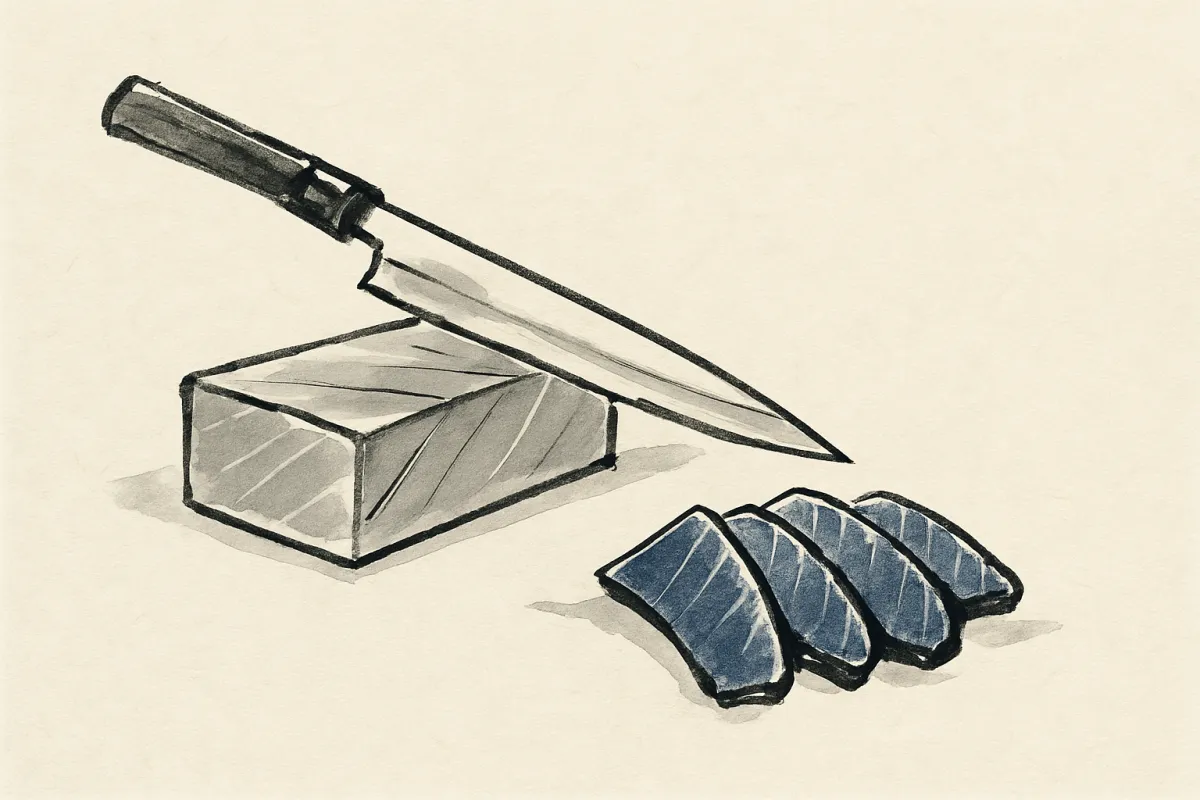
A yanagiba is a long, single-bevel slicer built for one job: turning a fish fillet into glossy sashimi in a single pull. Here is why the blade is 240–330mm long, ground on one side, and drawn toward you, plus how it splits work with the deba, the takobiki/fuguhiki cousins, and how to pick a length.
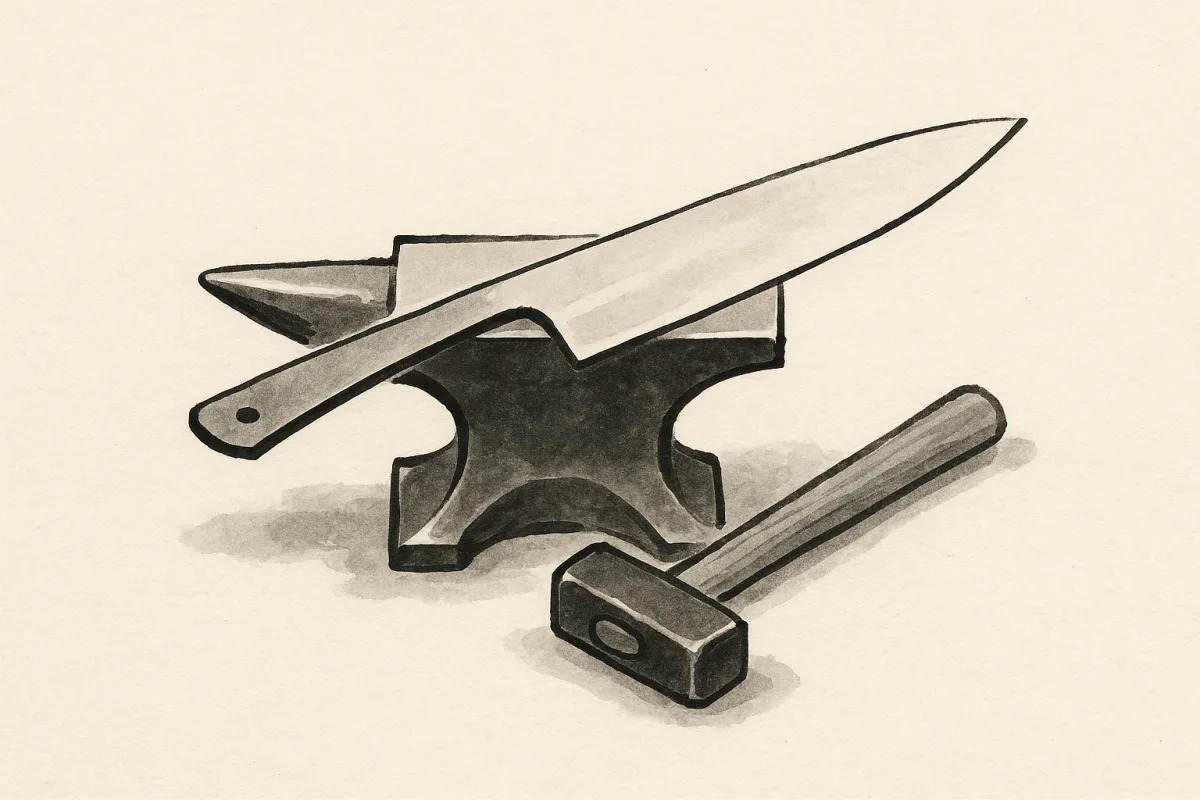
A finished Japanese knife looks like a single sliver of steel, but it almost never is. Most are a hard cutting steel clad in soft iron, and that lamination runs through the whole process: the forge-welding, the water quench, the multi-stage sharpening, and why one blade passes through three different masters' hands.
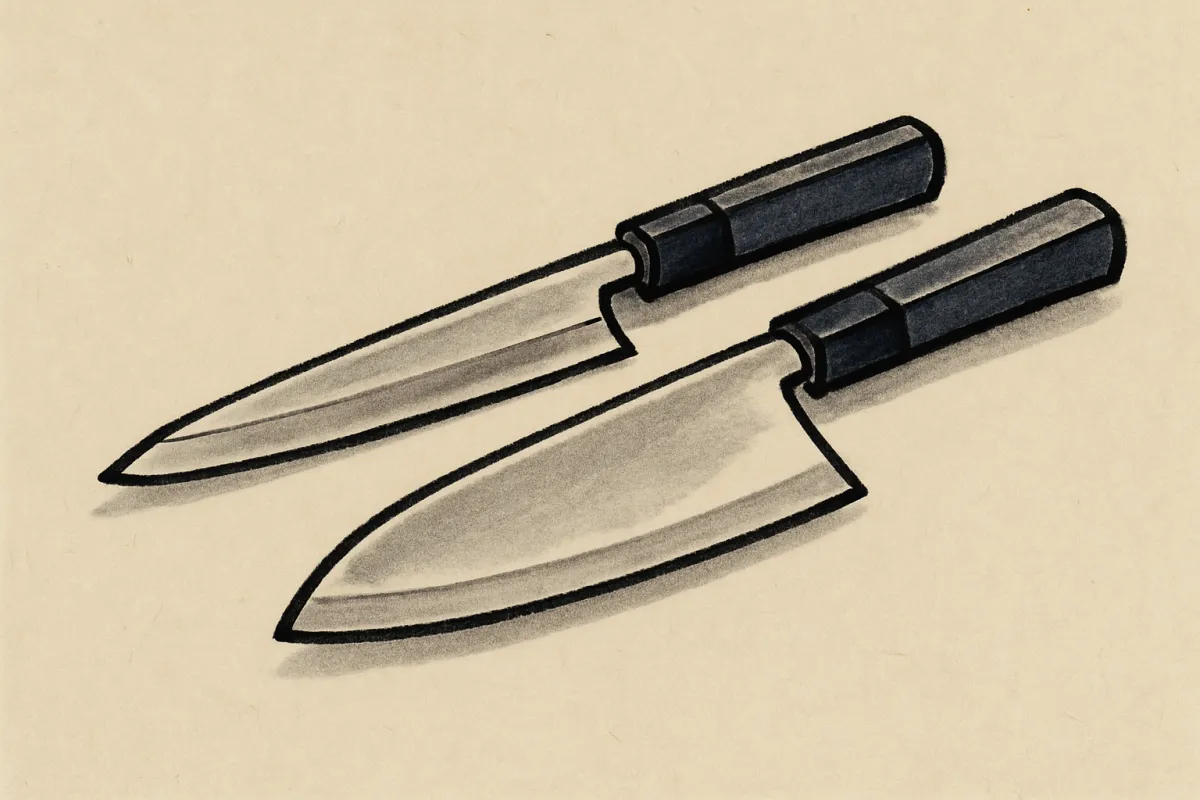
Whether a Japanese blade is ground on one side (single bevel, kataba) or both (double bevel, ryoba) decides how sharp it gets, whether it's handed, whether food releases, and how you sharpen it. This covers what that one difference changes and how to read it on a spec sheet before you buy.
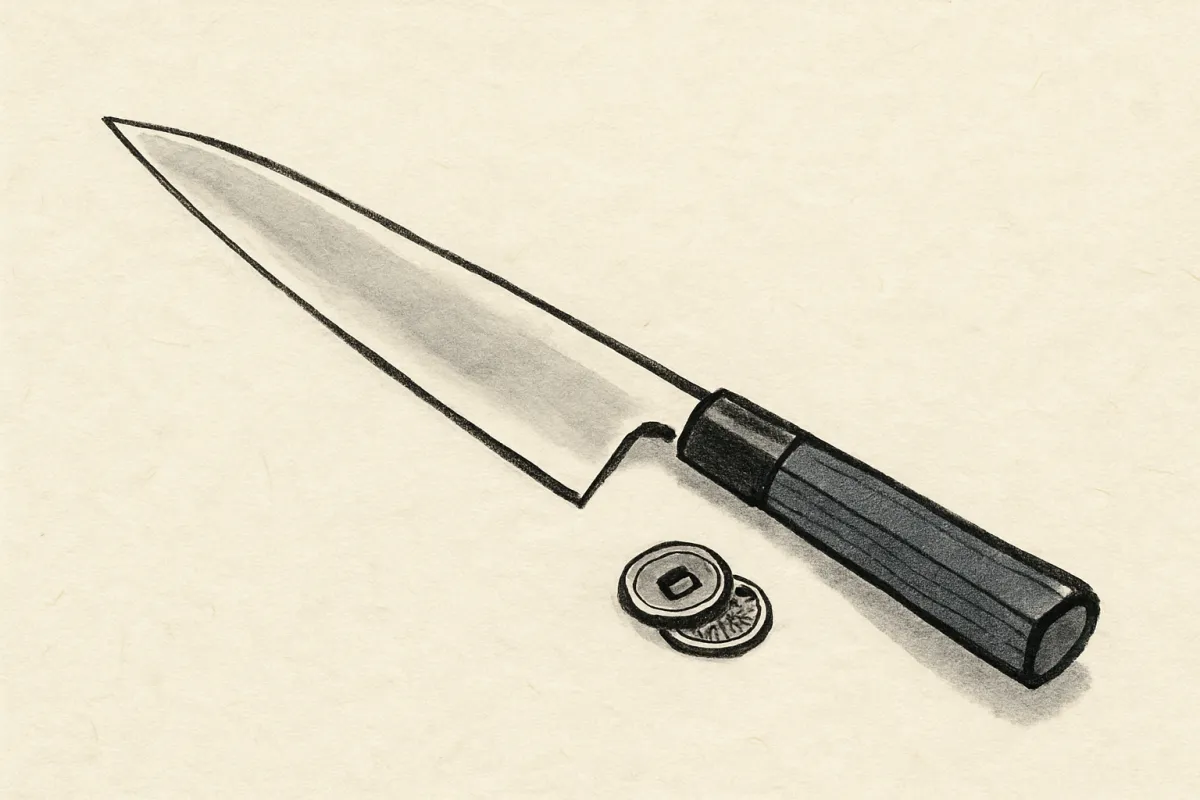
The same 210 mm gyuto can cost $40 or $400. This breaks the price into four stacked costs (steel, hand labor, hard-mode blades, and handle-and-name), shows which of them buy sharper cutting and which buy prestige, and pins down how much you actually need to spend.
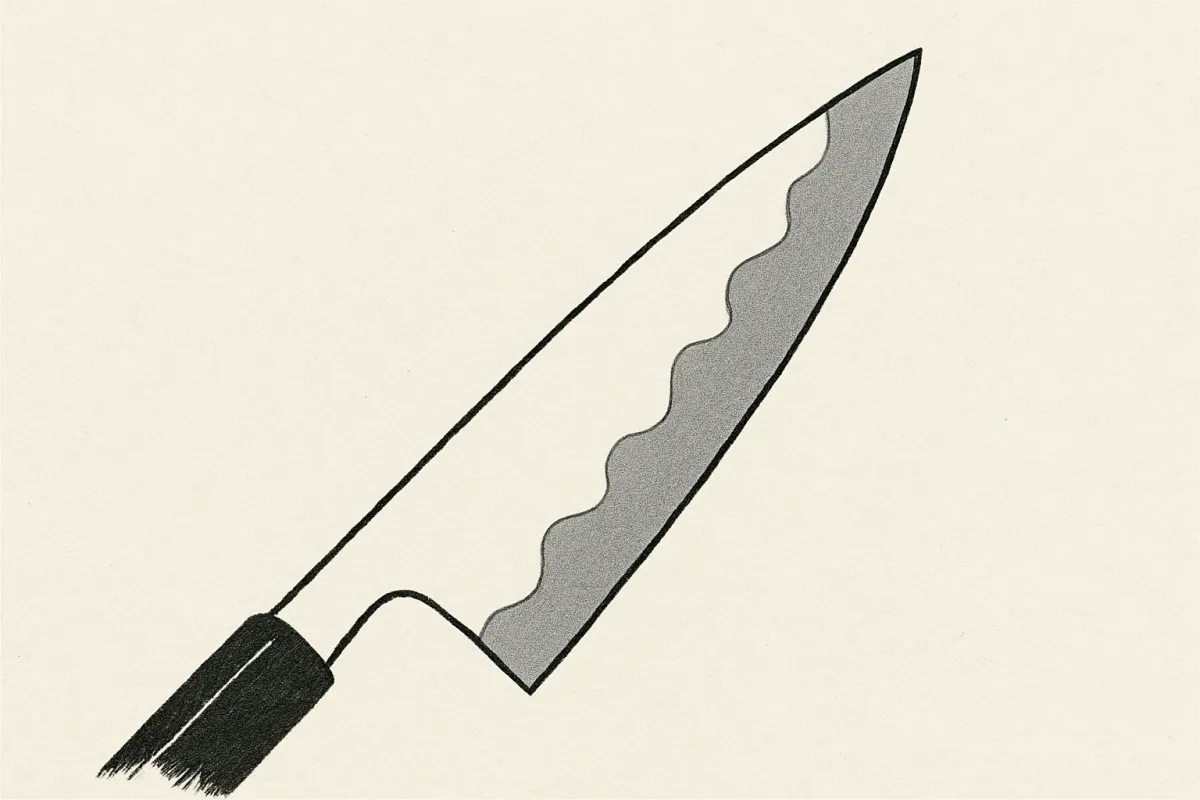
The steel on a Japanese knife decides how sharp it gets, how long it stays sharp, and how much upkeep it demands. This guide maps Shirogami, Aogami, VG-10, and the powdered stainless steels, and spells out what HRC hardness means for you.
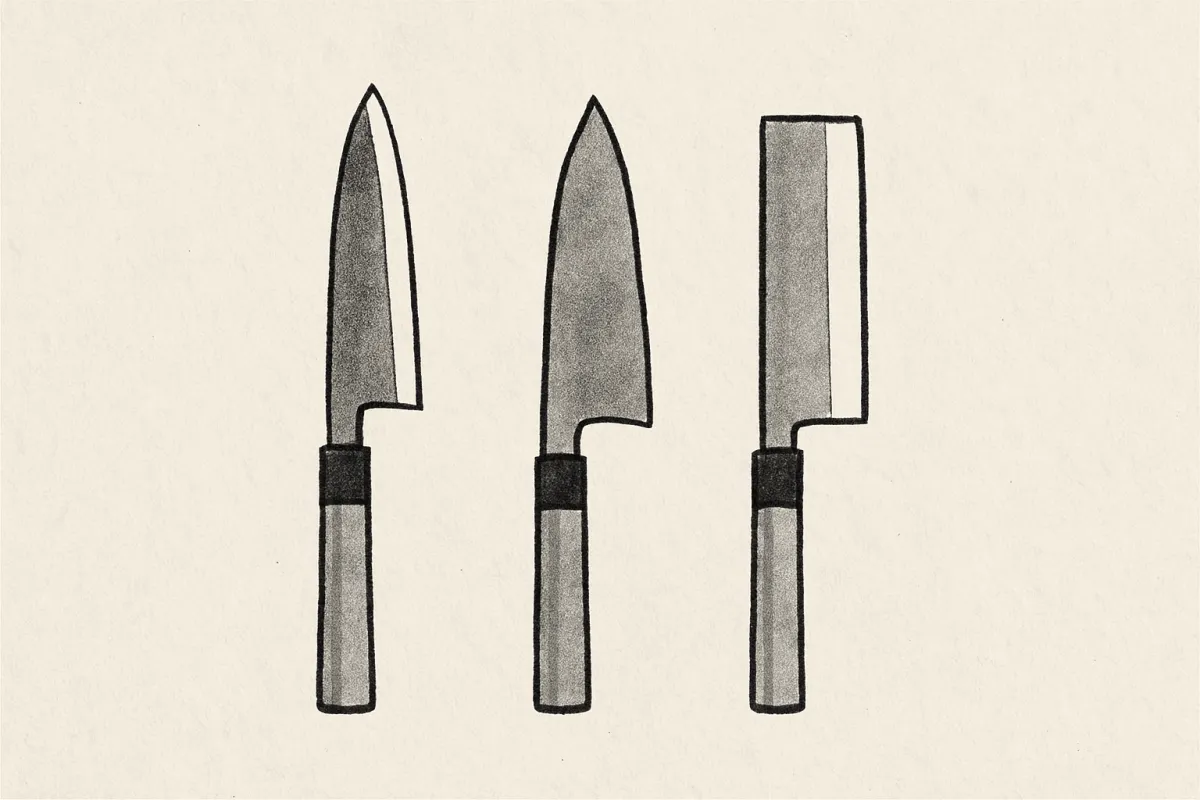
Four Japanese kitchen knives cover almost everything a home cook does, but they are not interchangeable. Here is what each one is built for, the blade lengths worth owning, and how to pick the first one or two without wasting money on a block set.
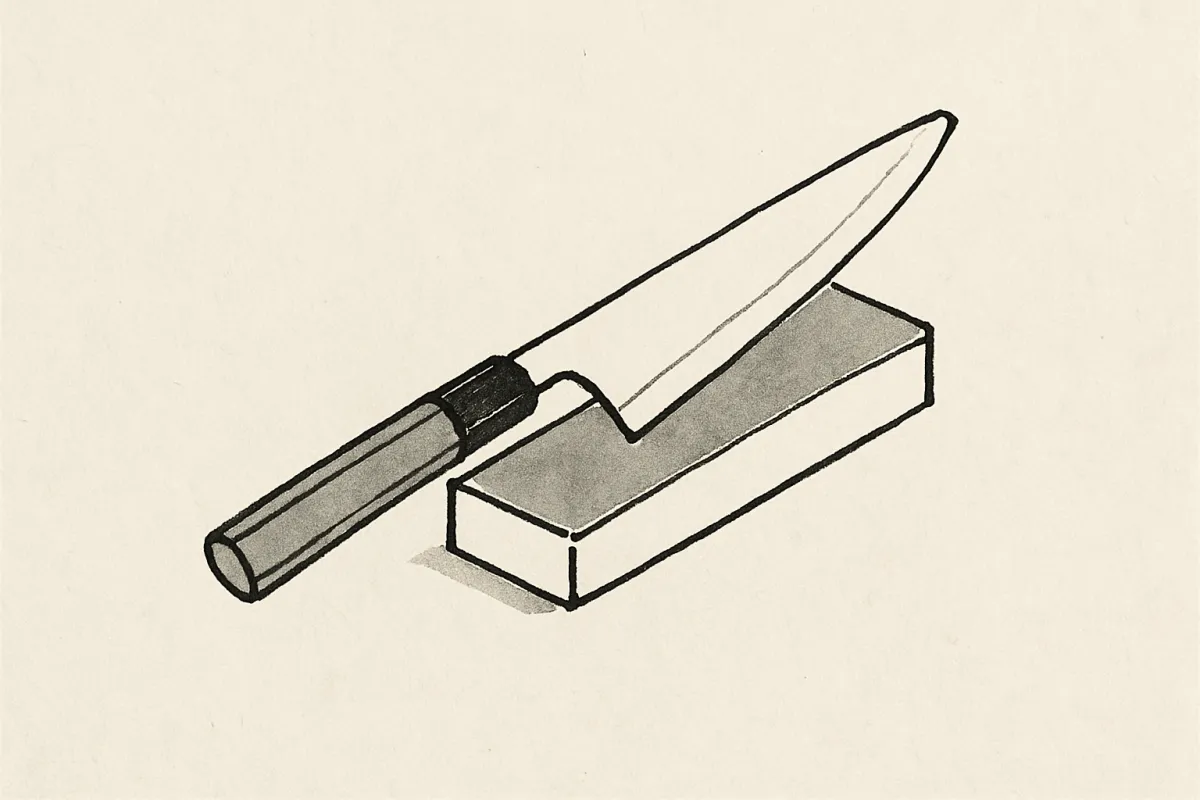
A whetstone is the only thing that truly sharpens a Japanese knife, and the basics are simpler than the internet makes them look. Here is how to choose grits, find and hold the angle, raise and chase a burr, and finish a clean edge without grinding your blade away.