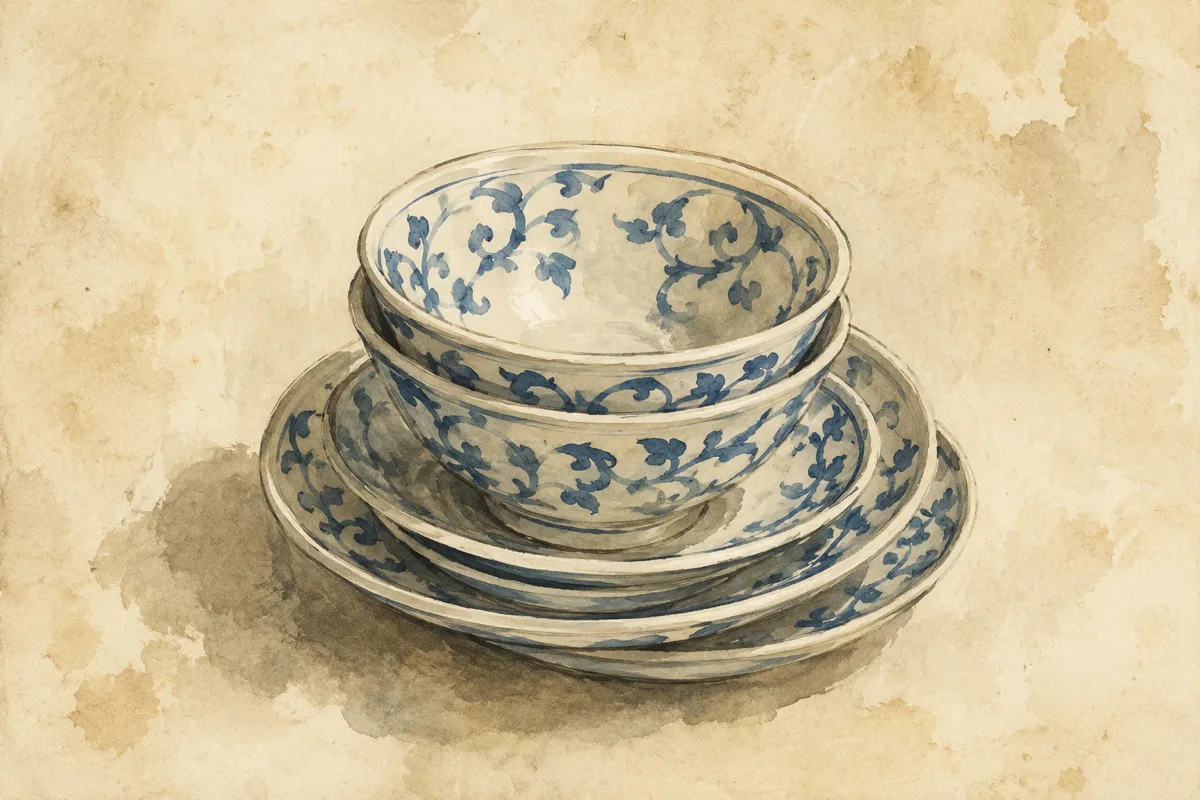
Hasami-yaki is the everyday porcelain of Hasami, Nagasaki, one valley over from Arita, and the source of roughly 16% of all the dishes used in Japan. The story of the cheap, thick kurawanka bowl that put porcelain on the common table, why Hasami spent centuries anonymous under Arita's name, and how it became the design world's favourite stacking tableware.

The beckoning cat by the register is calling luck in, not waving goodbye. A guide to what the left vs right paw means, what each color is for, the coin it holds, and the Aichi pottery towns that make it.
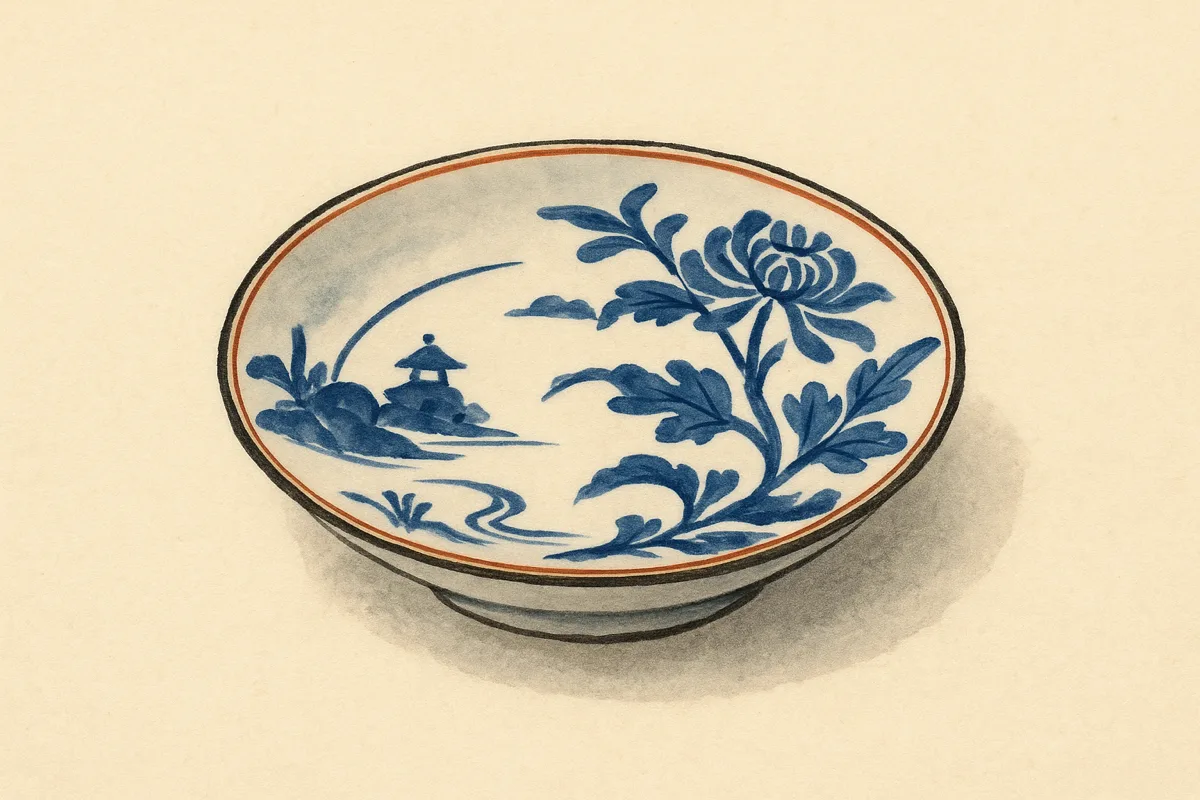
Arita is the town where Japan first made porcelain around 1616; Imari was only the port it shipped from — so 'Imari ware' is the same clay by another name. A guide to sometsuke blue-and-white, the Kakiemon and Nabeshima styles, and how a Chinese civil war put Japanese porcelain in European palaces.
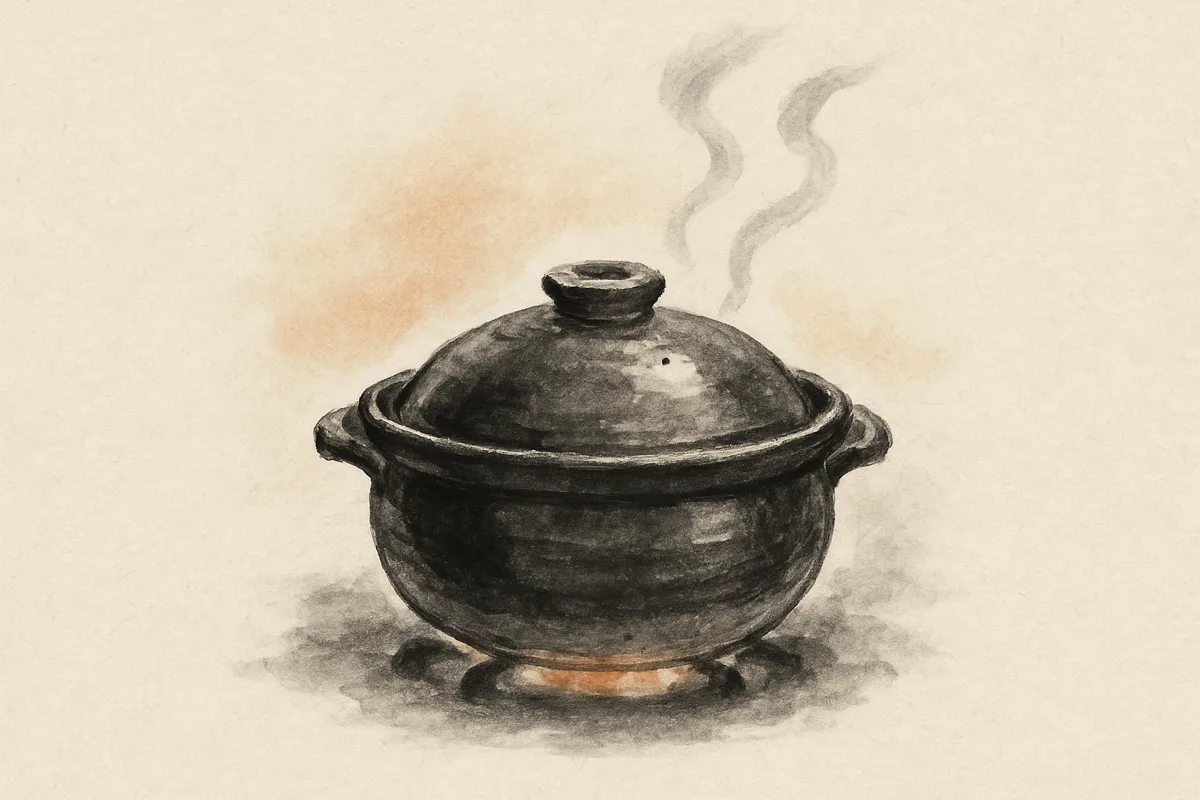
A donabe is a porous earthenware pot that goes straight on the flame and cooks the opposite way to metal — it stores heat slowly and finishes food off the fire. Why Iga and Banko clay survives direct flame, how to do the first seasoning (medome), the four ways people crack one, and how to cook rice in it.
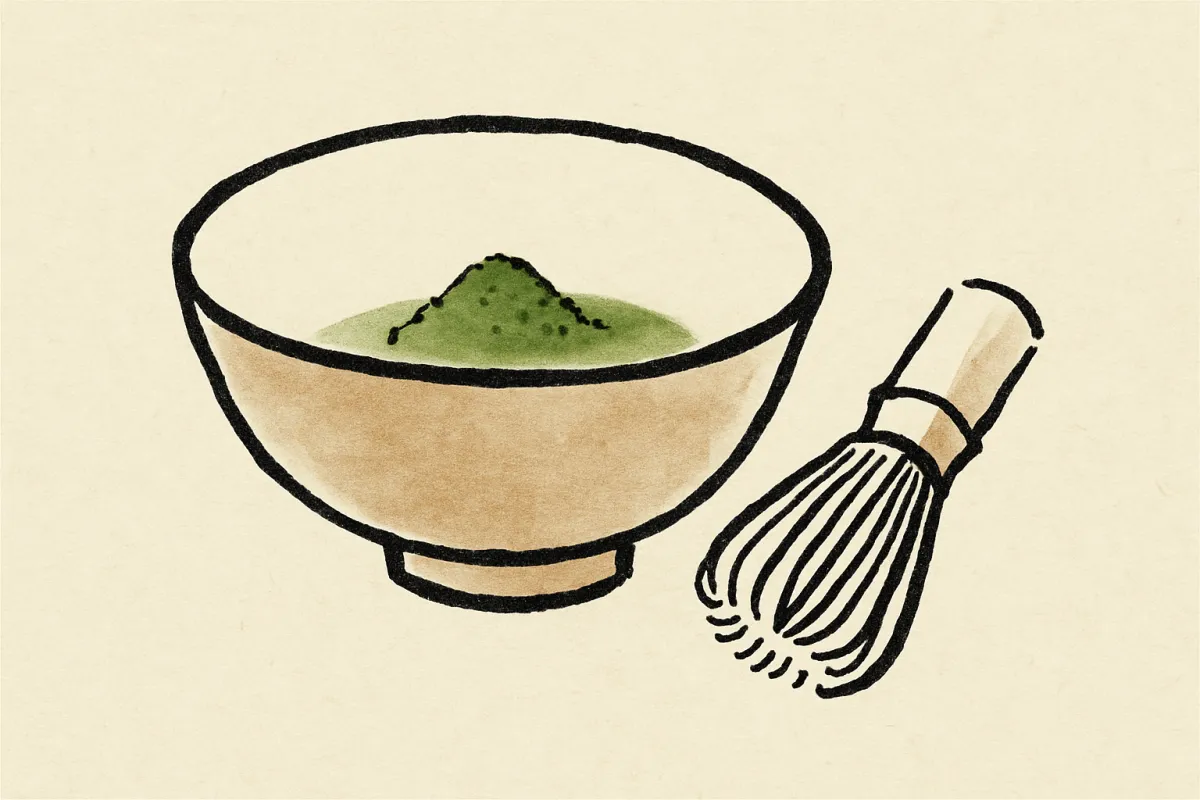
A matcha bowl is a working tool. What decides whether the whisk works: interior width (≈12–14cm), a flat-to-gently-curved floor, seasonal shape (tall in winter, shallow in summer), and whether the clay is porous and needs seasoning.
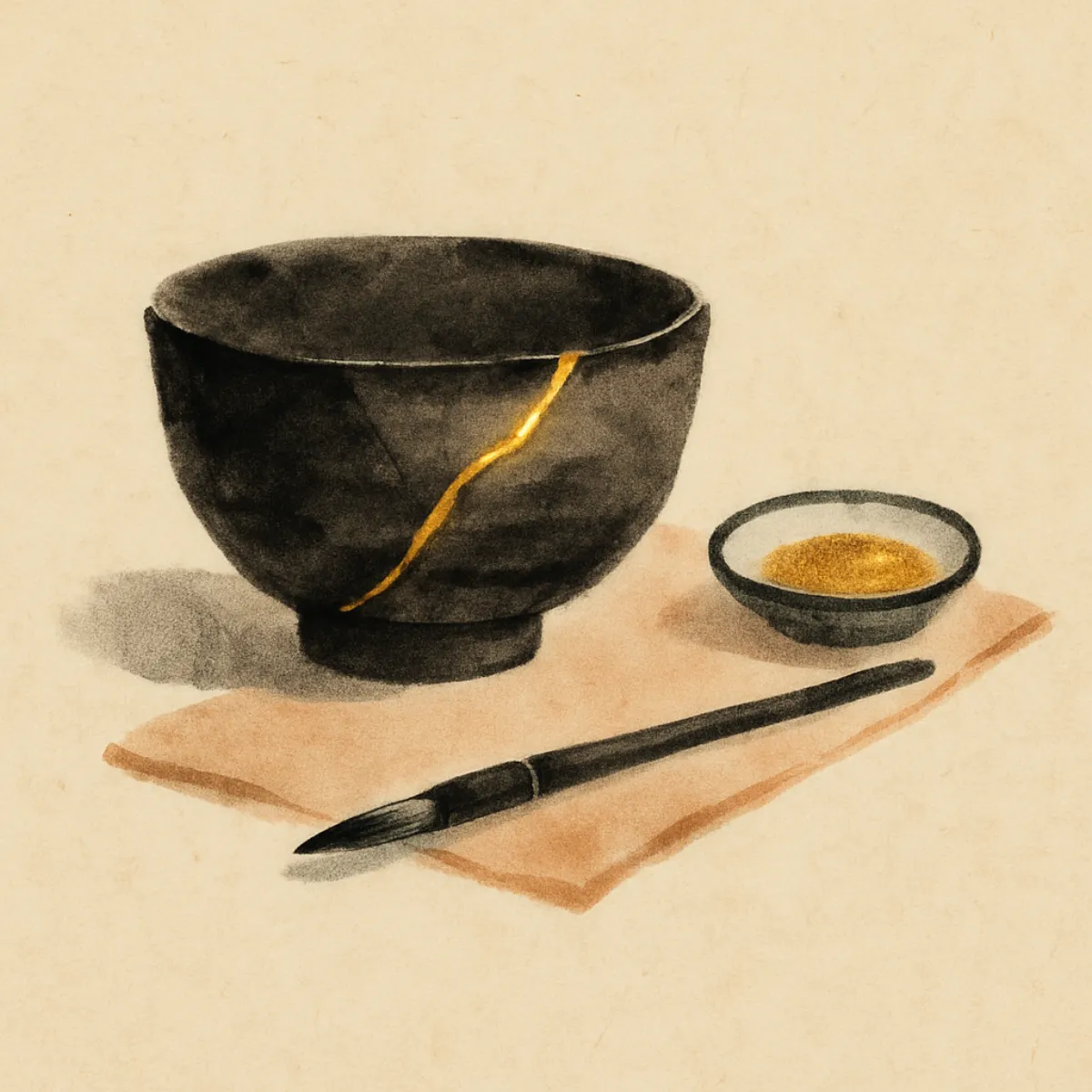
Two completely different products are sold as 'kintsugi.' One mends the break with natural urushi and real gold: food-safe, about a month. The other sets in a day with resin and gold-colored powder, and is decoration only. How to tell them apart, and how a real repair actually goes.
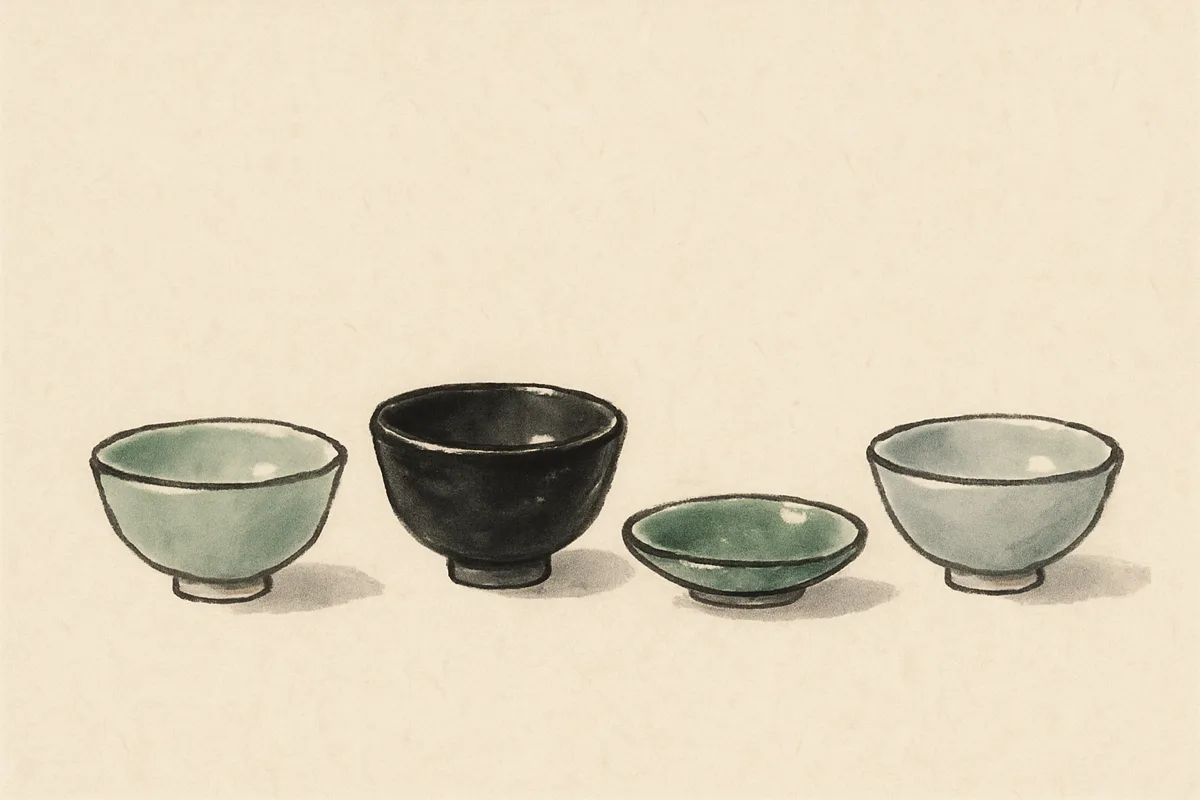
Why a celadon dish is jade-green, a tenmoku bowl is black, and an Oribe plate is green, decoded on a single grid. Almost every classic Japanese glaze turns on two things you can read off the surface: which metal colored it, and whether the kiln burned rich in oxygen or starved of it.
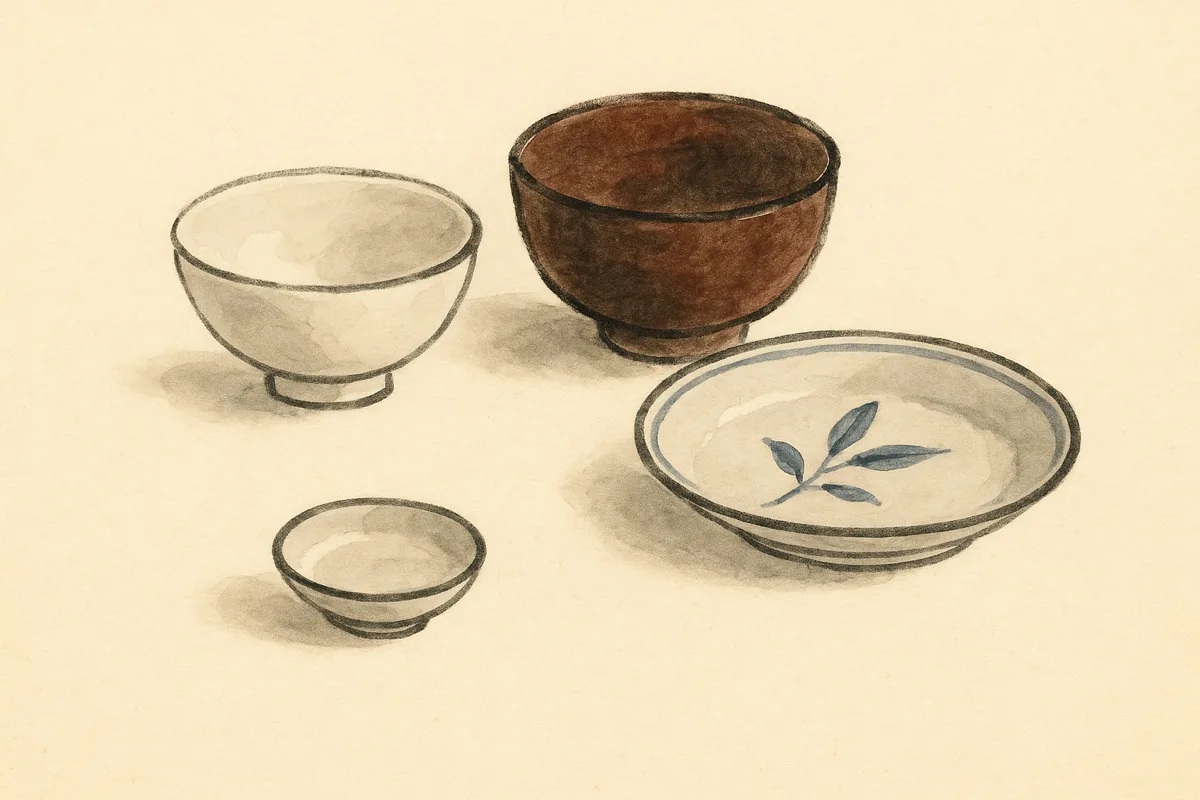
A Japanese table is not built as a matched dinner set. Here is the whole cabinet sorted by shape, size, and job: mamezara to ōzara, the rice bowl and lacquer soup bowl, the donburi, plus where each one goes on the tray and why the rice always sits on your left.
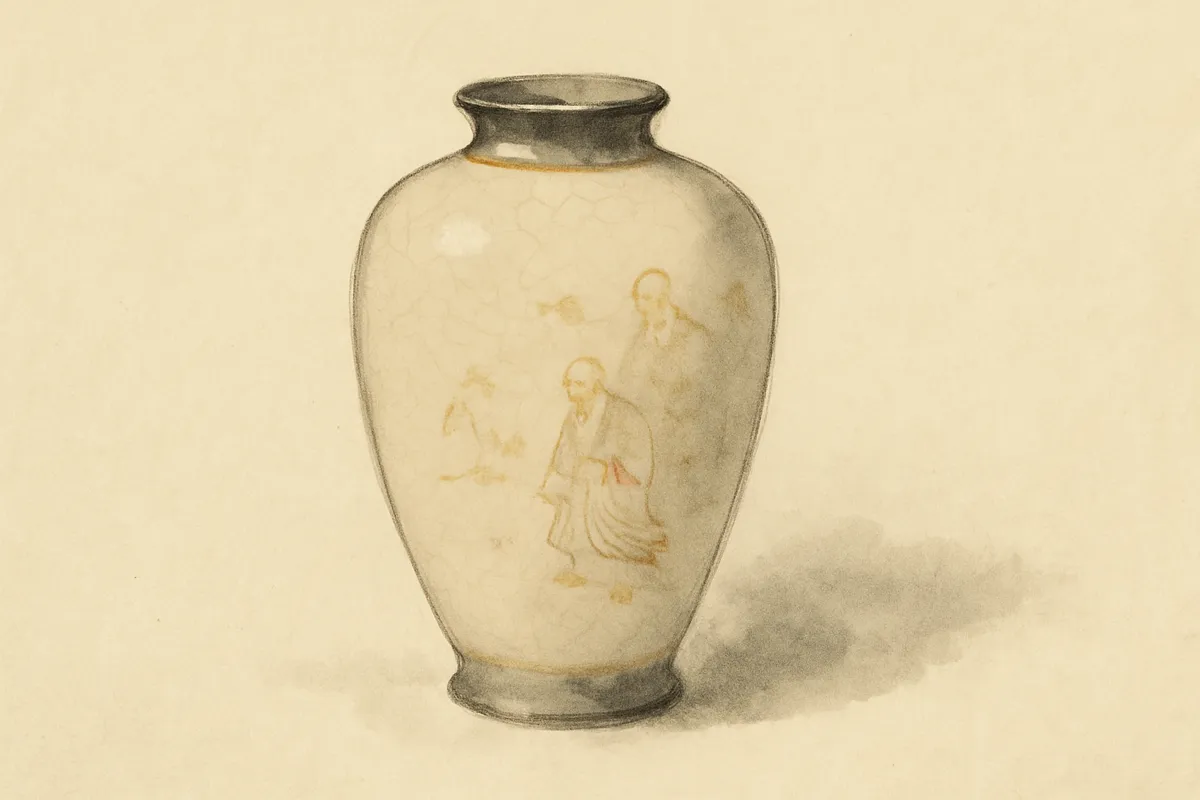
That crackled ivory vase with gold and crowded figures is Satsuma — but Satsuma is a style, not always a place, and it is earthenware, not porcelain. A collector's guide to reading a Satsuma piece: the tap test, the crazing, Kyō-Satsuma, the Shimazu crest that proves nothing, and how English lettering dates it.
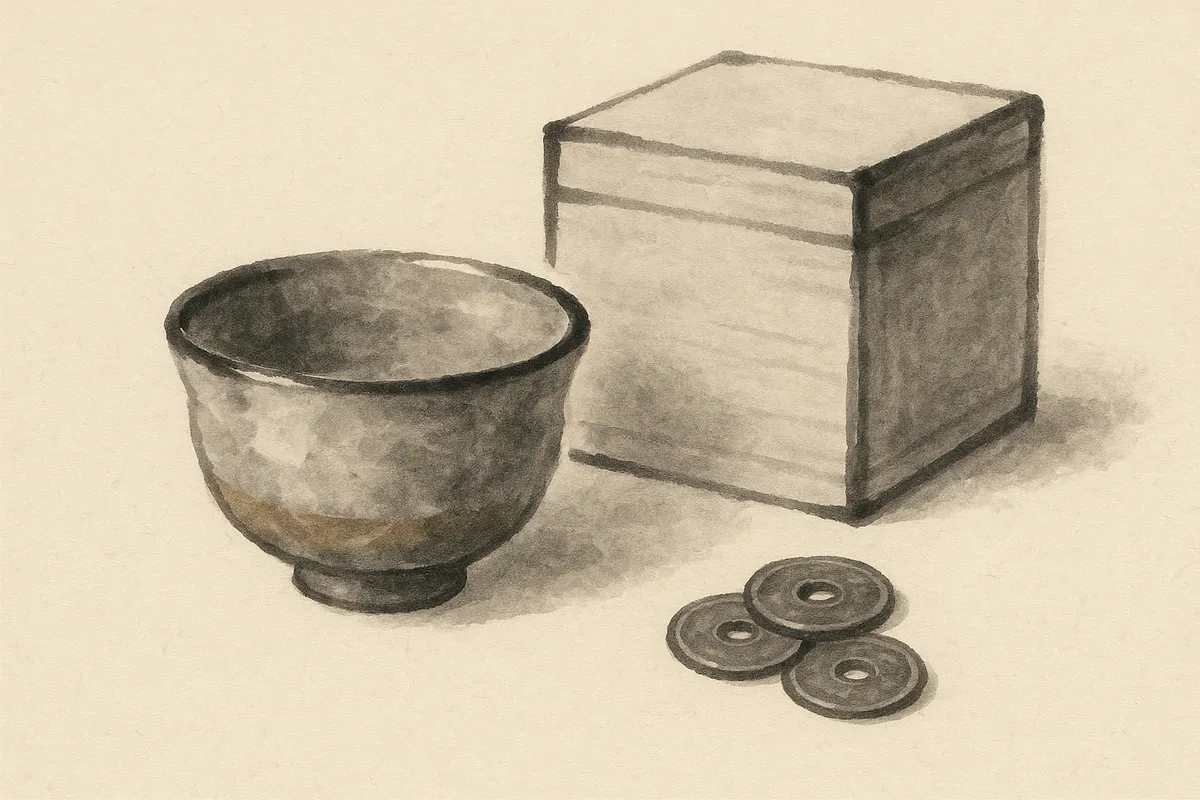
A maker's tea bowl can cost tens of thousands of yen while a near-identical mass-market cup costs a few dollars. This guide breaks the price into five honest parts: the hours of handwork, the kiln loss on a one-of-a-kind piece, the name on the box, the stone in the clay, and the tea culture that made vessels into art, plus what not to overpay for.
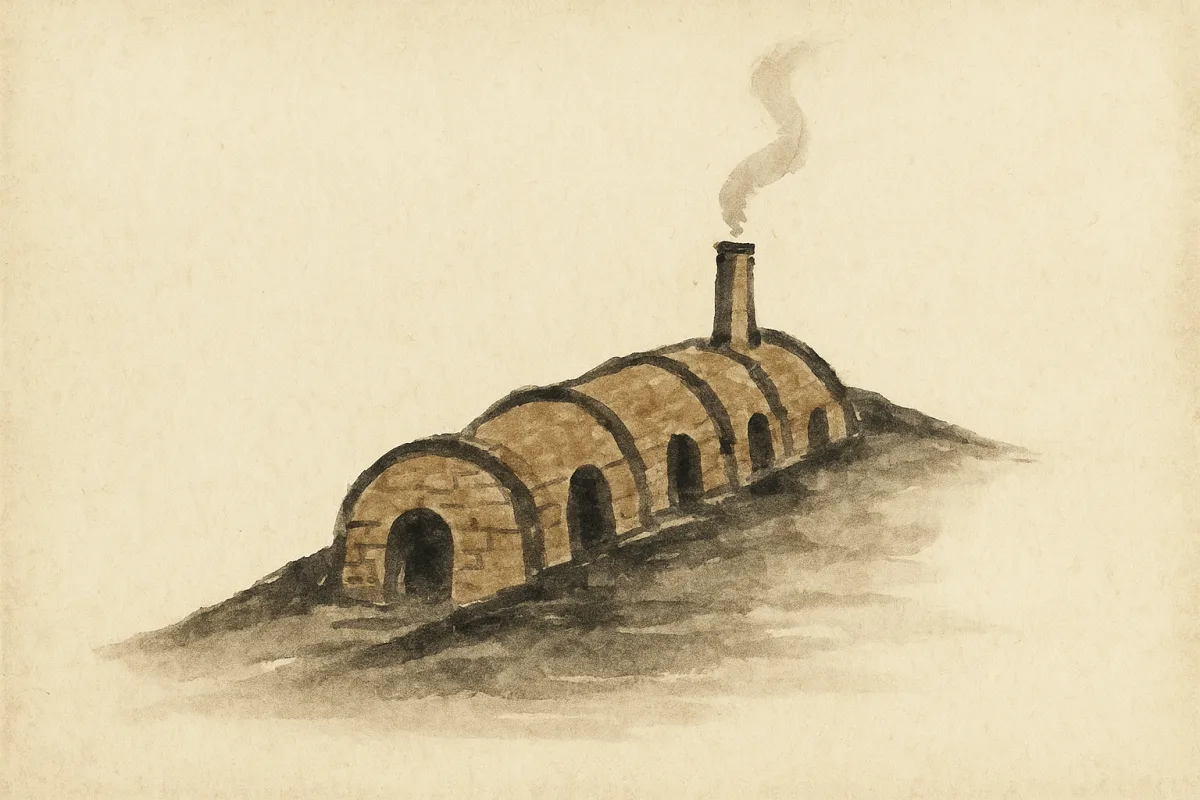
Almost every Japanese pot follows the same path: shaped soft, dried hard, fired twice. This walks the full process, from kikumomi kneading and the wheel to the kiln that decides the surface: a controlled electric kiln, or a week of pine and flying ash in an anagama or noborigama.
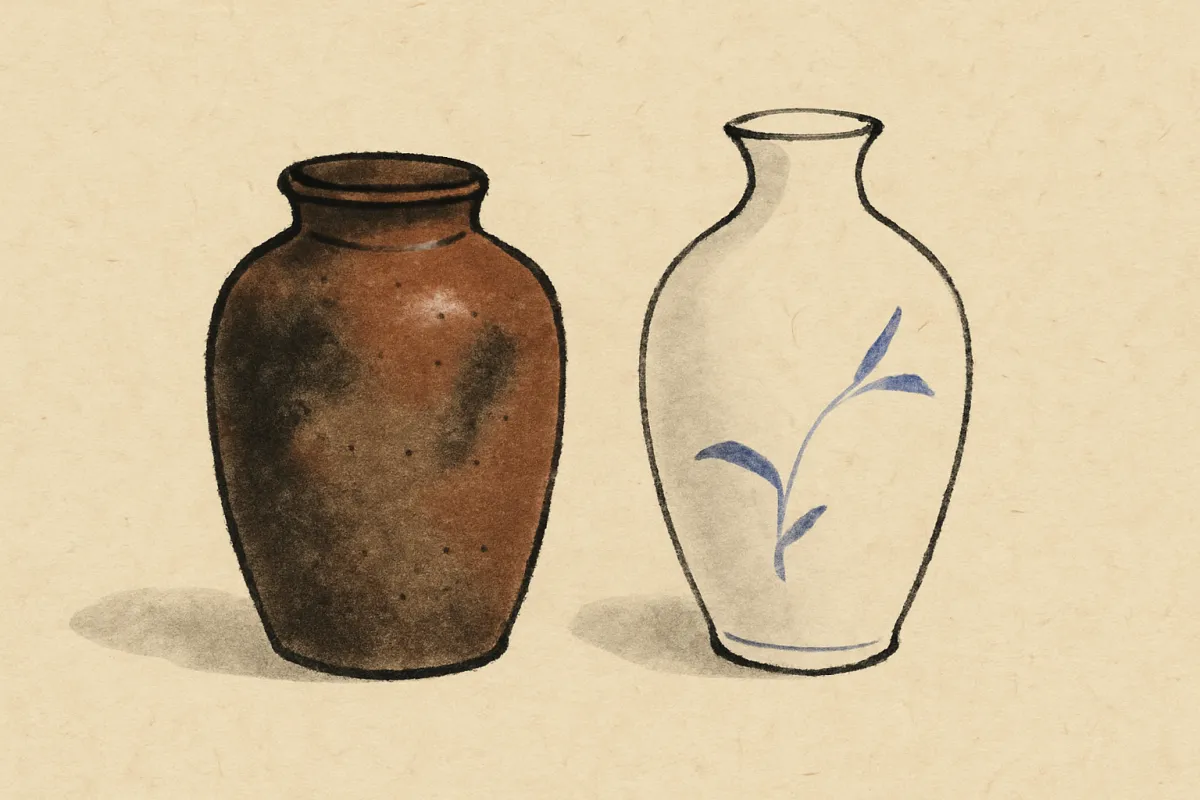
Why Bizen is rough and reddish while Arita is smooth and white, and how to place any Japanese piece as earthenware, stoneware (sekki), or porcelain (jiki) using three tests: hold it to light, tap it, and put a drop of water on the foot.
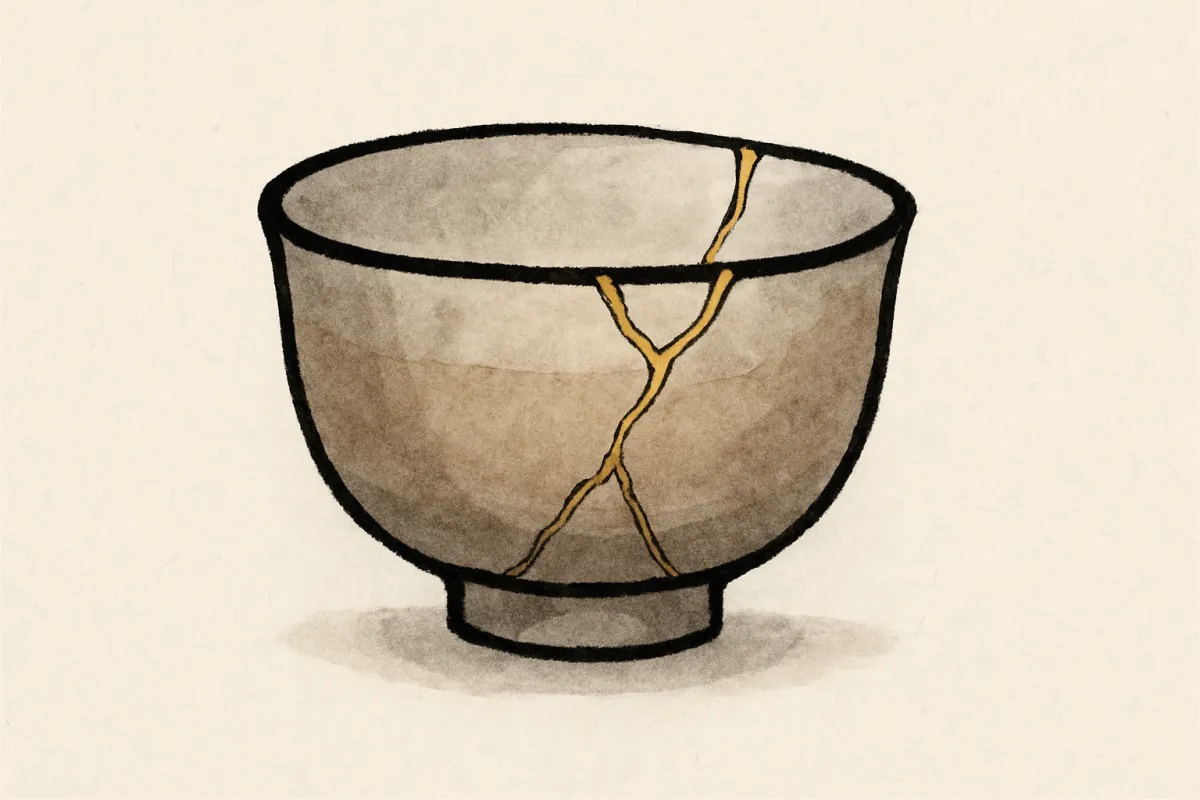
Kintsugi mends broken pottery so the repair shows rather than hides. The gold isn't the glue; lacquer is. What actually holds a kintsugi bowl together, why a real repair takes months, and why the famous shogun origin story is a myth.
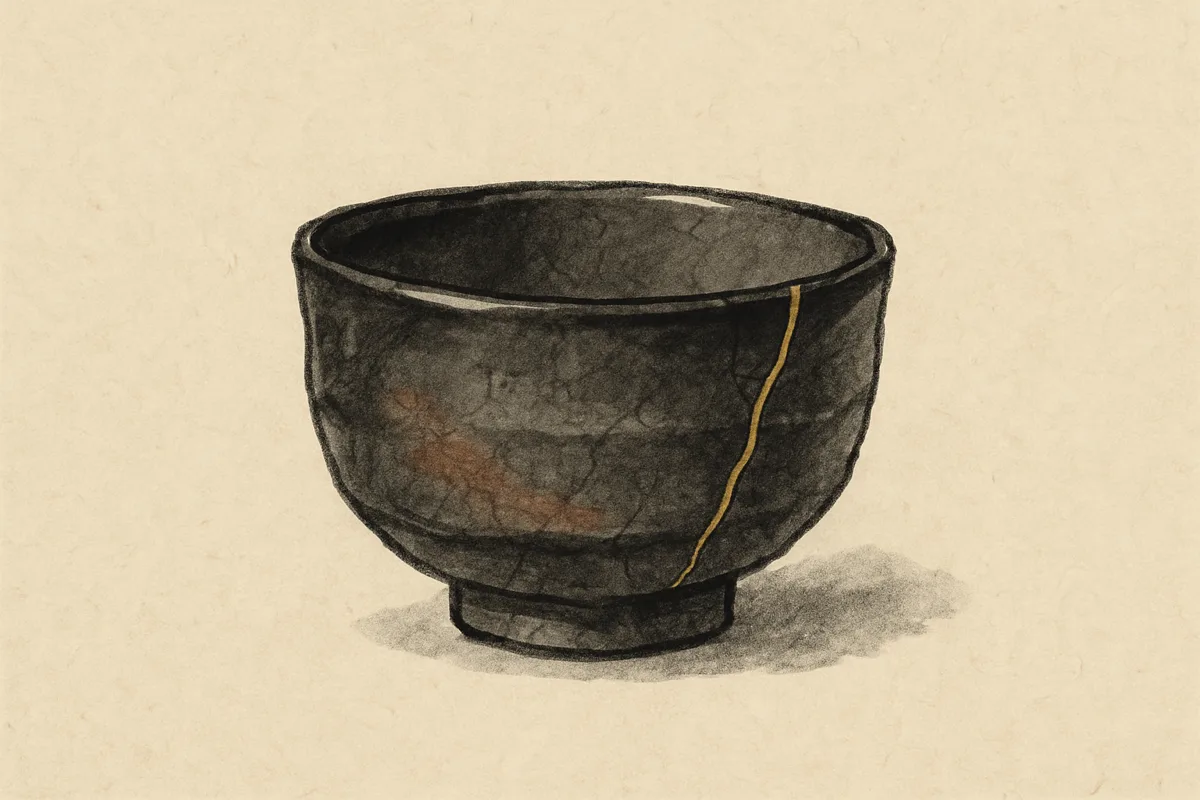
Wabi-sabi isn't 'rustic decor.' It's two different words that both started out meaning misery and loneliness, transvalued into a beauty of imperfection, impermanence, and age, engineered in the tea room and easiest to see in a tea bowl.
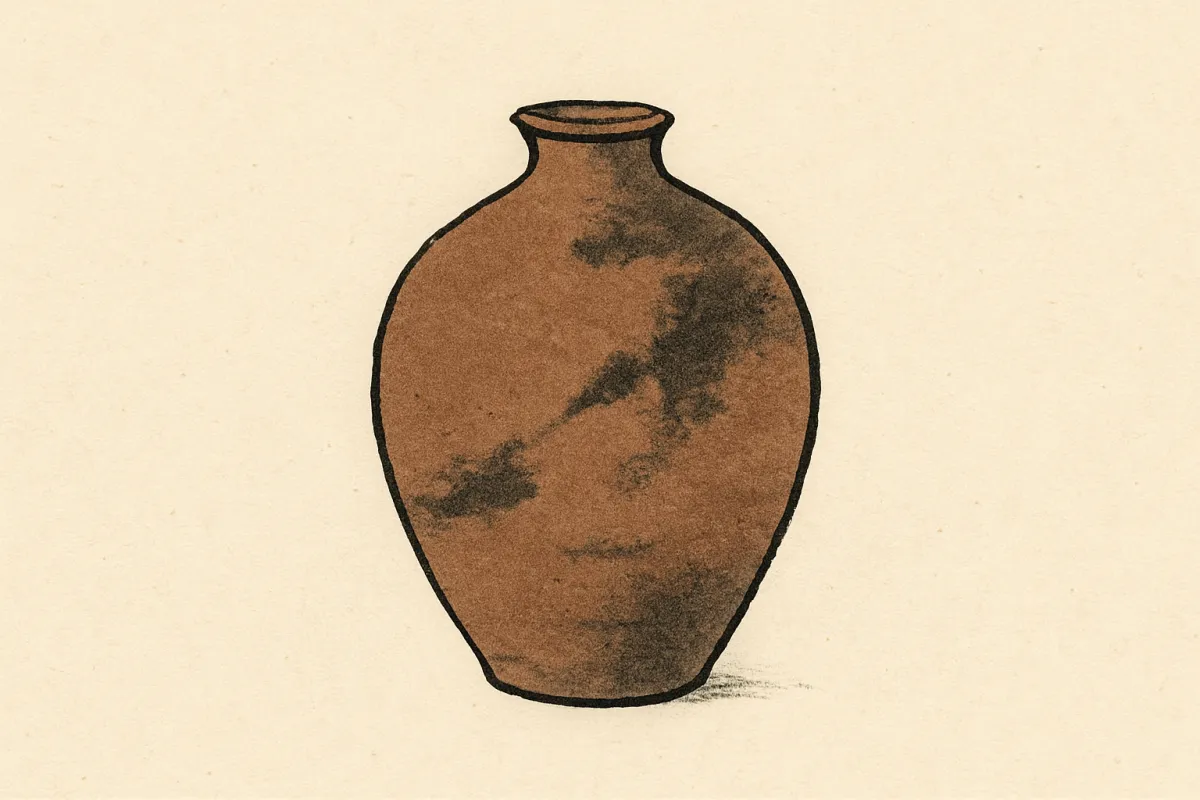
Bizen ware uses no glaze: every color and marking comes from clay, flame, and ash over a week-long wood firing. A guide to hidasuki, goma, sangiri and botamochi, and why this 1,000-year-old kiln still matters.
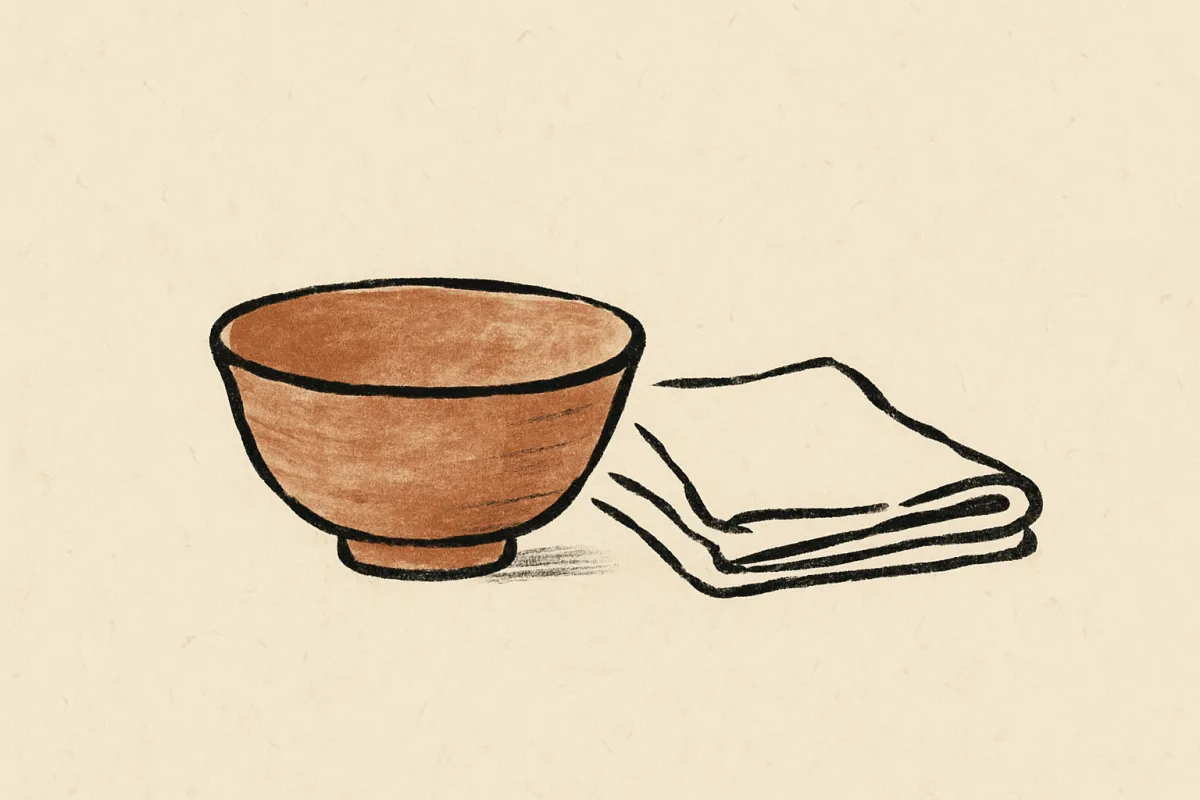
A practical guide to living with handmade Japanese ceramics: what crazing (kannyū) is, how to season porous ware with rice water (medome), and which pieces should never go in the microwave or dishwasher.
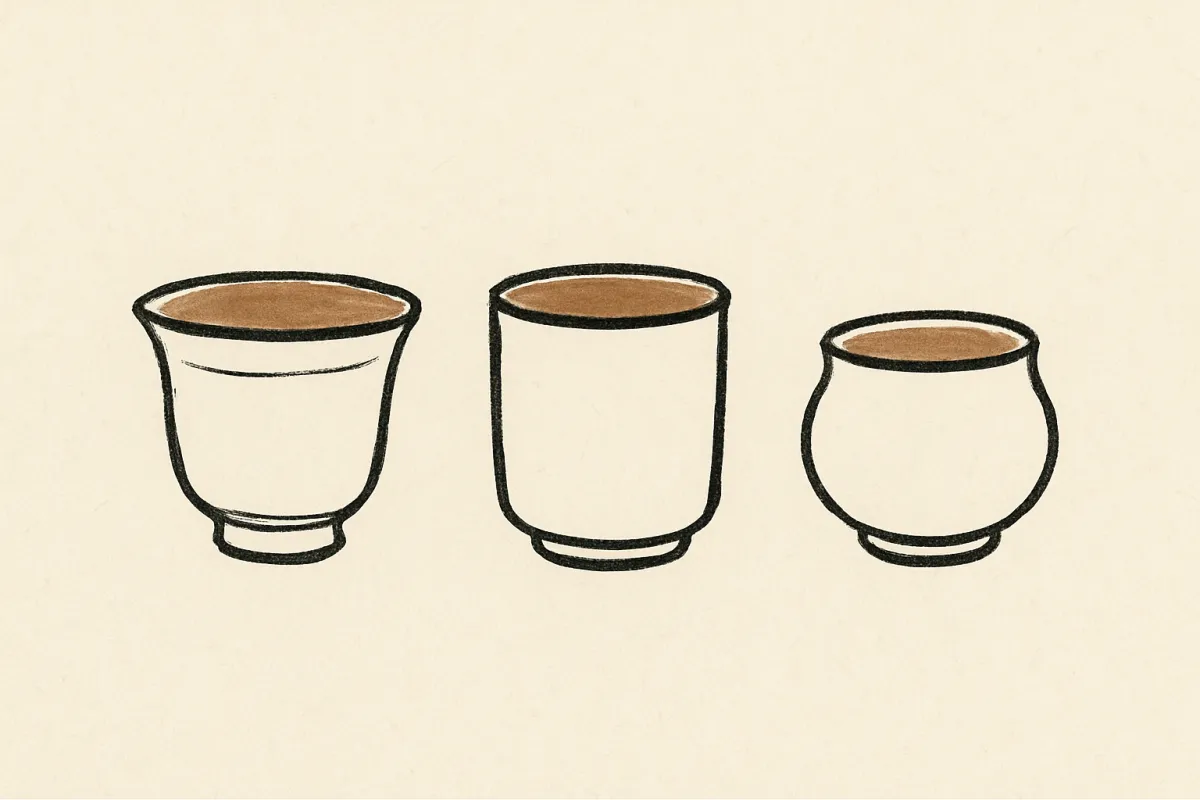
A regional guide to Japan's major ceramic traditions: how to tell unglazed Bizen from blue-and-white Arita, what makes Hagi a tea-ceremony favorite, and where each clay and kiln comes from.
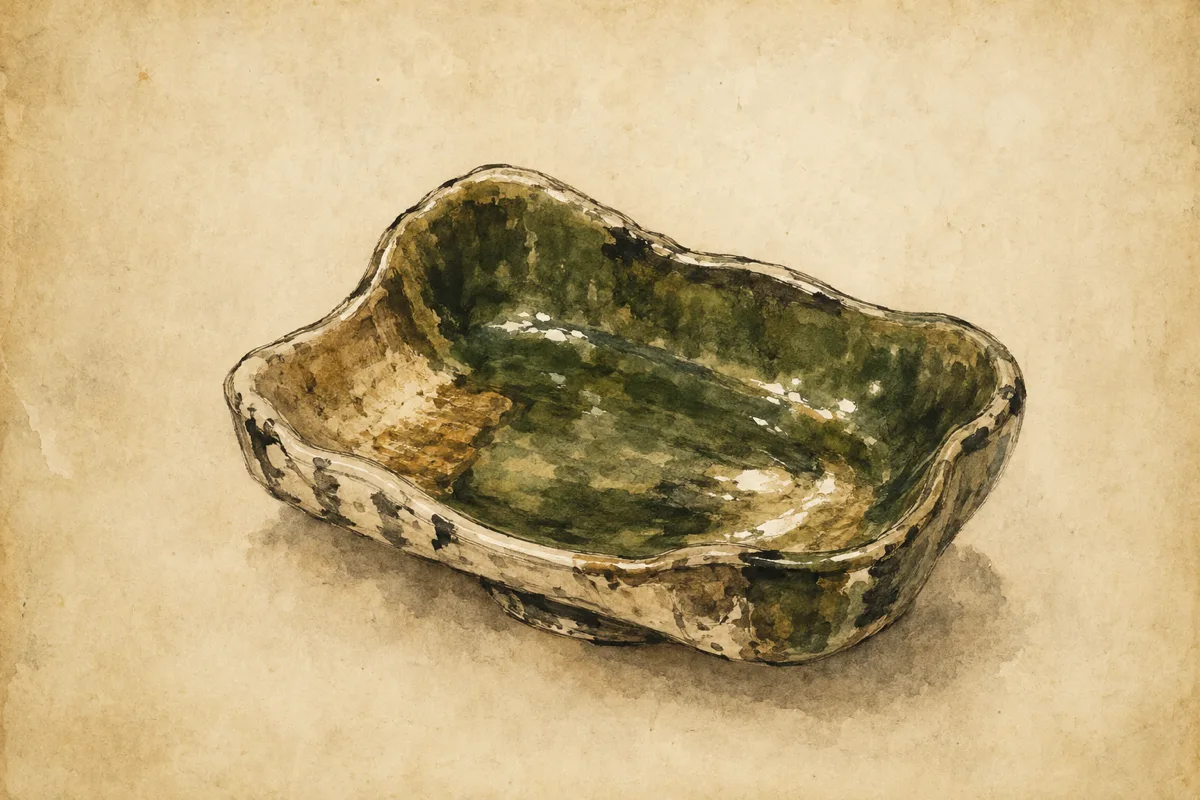
Buy a Japanese dish and there's a good chance it's Mino ware, made in Gifu, yet almost no one abroad knows the name. This is the region that produces about half of Japan's ceramics, and in the 1500s invented milky Shino white and warped Oribe green. Why Japan's biggest pottery is also its most invisible.