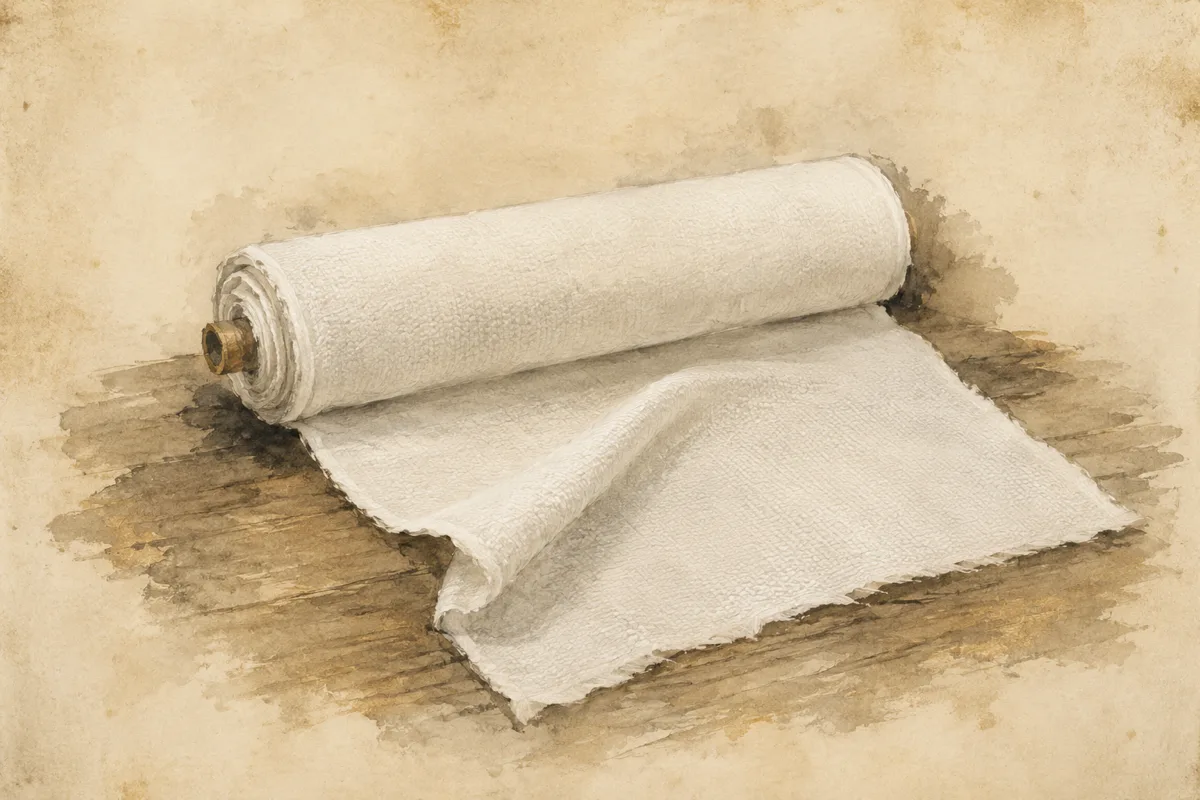
The pebbled surface of chirimen crepe is not woven in. The cloth leaves the loom flat and stiff; the texture appears only in the wash, when the weft, twisted three to four thousand times a metre, is freed of its silk gum and shrinks the fabric into thousands of tiny crimps. That same shrinkage is why water marks it, and why Tango, which weaves most of Japan's kimono silk, tells you to keep it dry.
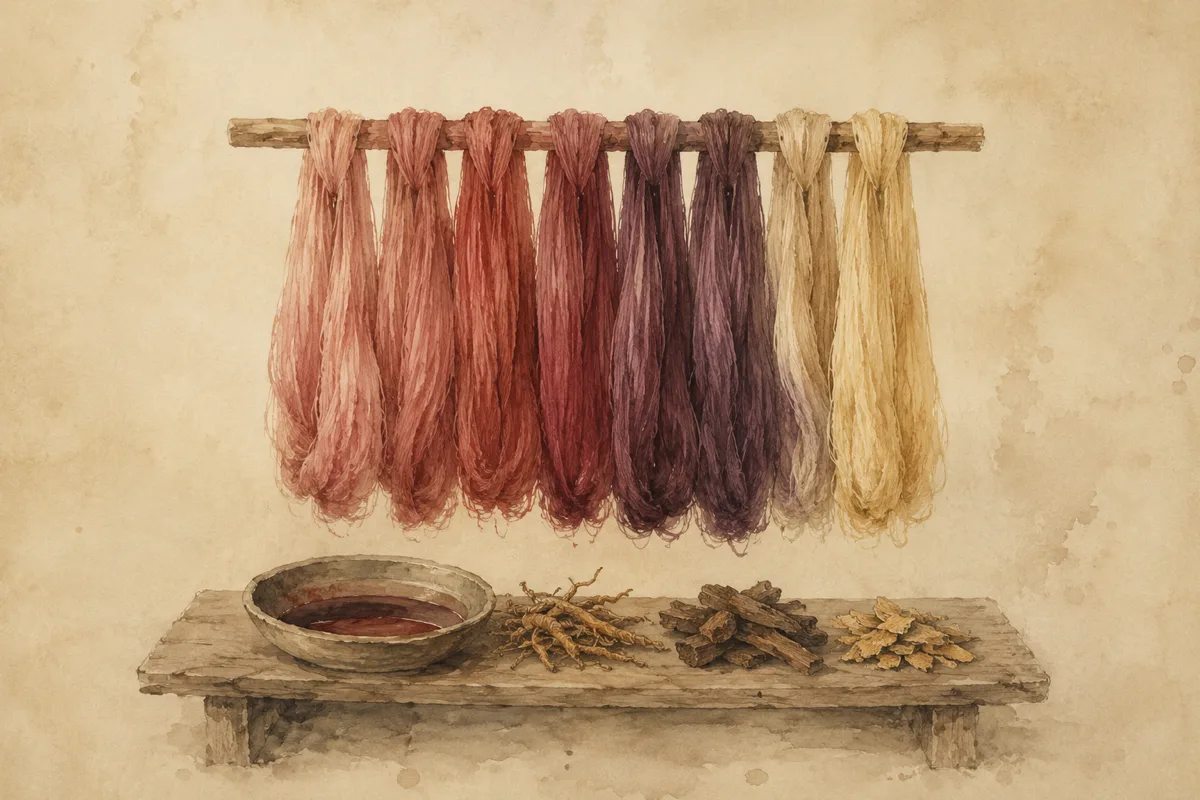
Japanese plant dyeing is usually explained as a list: this plant gives red, that one gives yellow. The real variable is the mordant, the metal salt that fixes the dye and shifts its color. The same madder root gives you clear red over aluminum and dull brown over iron. And the word kusaki-zome itself is younger than you would guess.
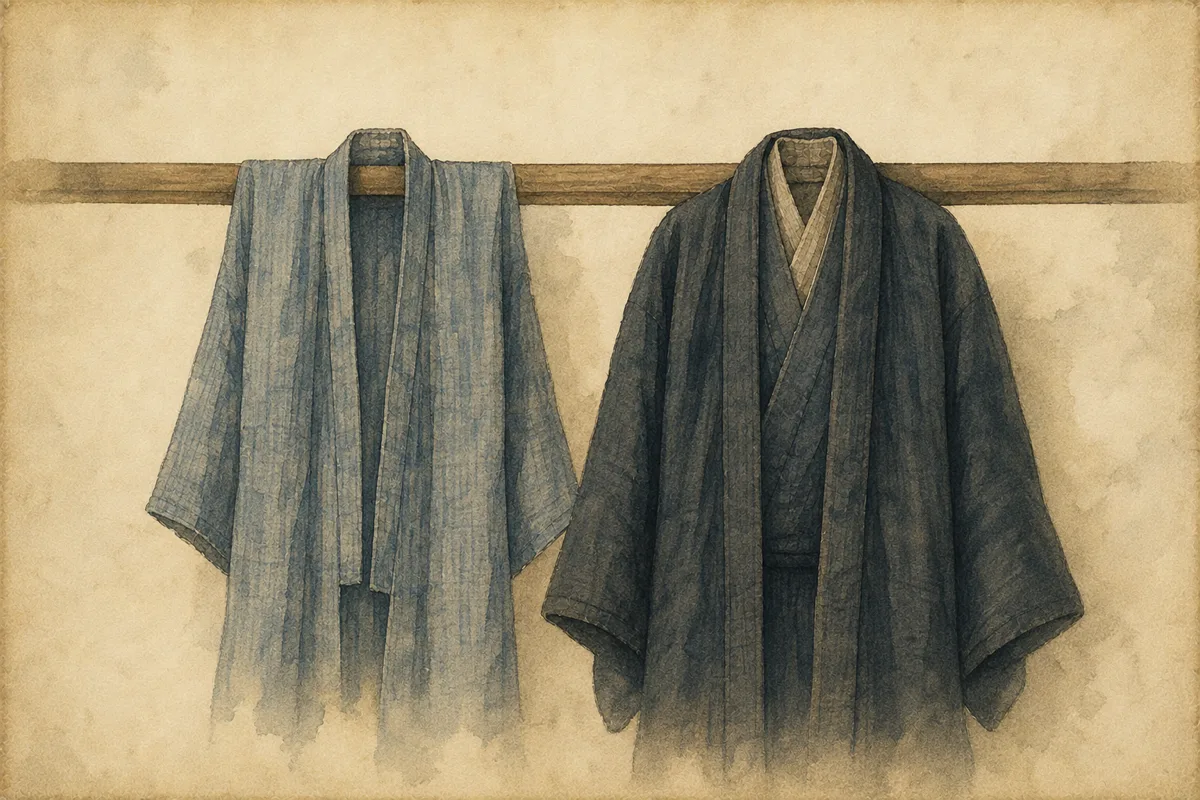
Pattern and colour will not tell you which garment you are looking at. The reliable signs are a second collar at the neck, socks on the feet, and how many cords went round the waist during dressing.