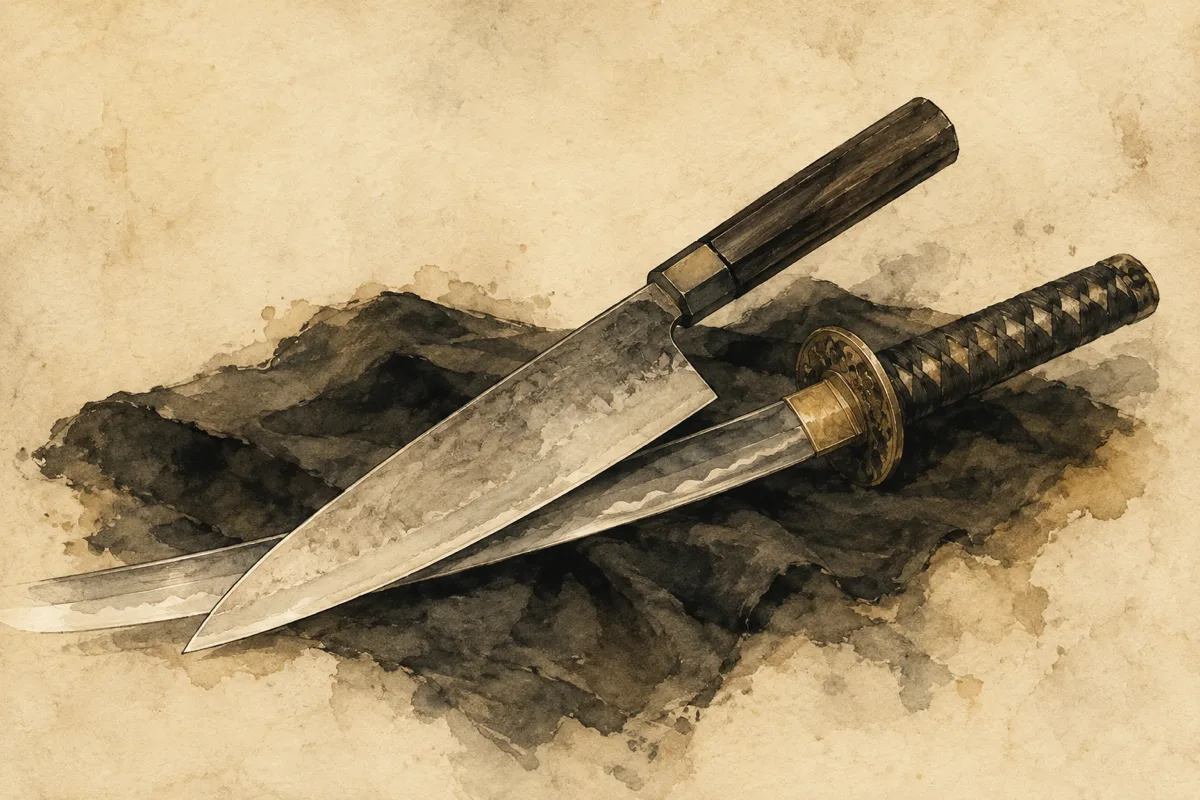
The story that a single 1876 sword ban turned samurai swords into chef's knives is half true and half myth. The Haitō Edict did push thousands of jobless swordsmiths into cutlery, but the deba and yanagiba were already Edo-period Sakai knives, and the gyuto is a separate Western import. What the sword passed down was the metallurgy, not the shape.
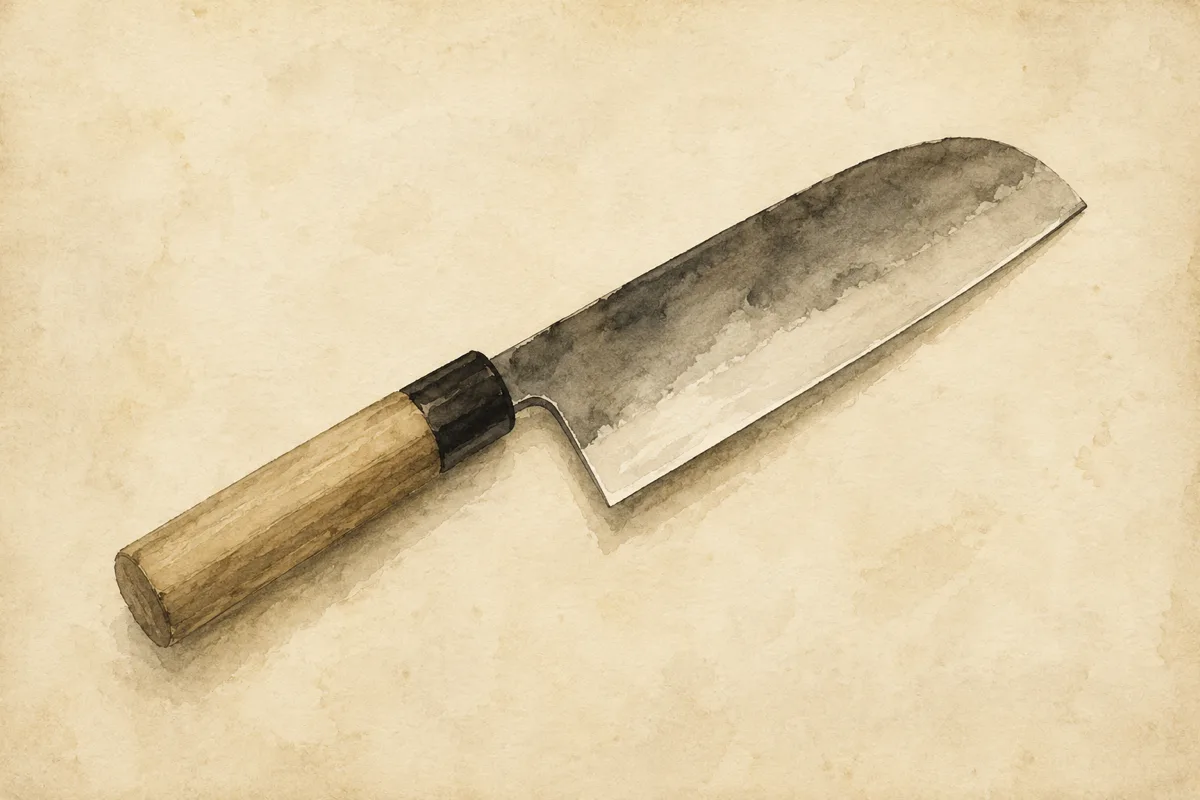
The santoku is the most-searched Japanese knife name and the everyday blade in most Japanese kitchens, but it is younger than your grandparents, and it isn't a samurai sword's descendant. This guide covers what 'three virtues' really means, why its flat edge wants a chop and not a rock, and how to decide between a santoku and a gyuto before you buy.
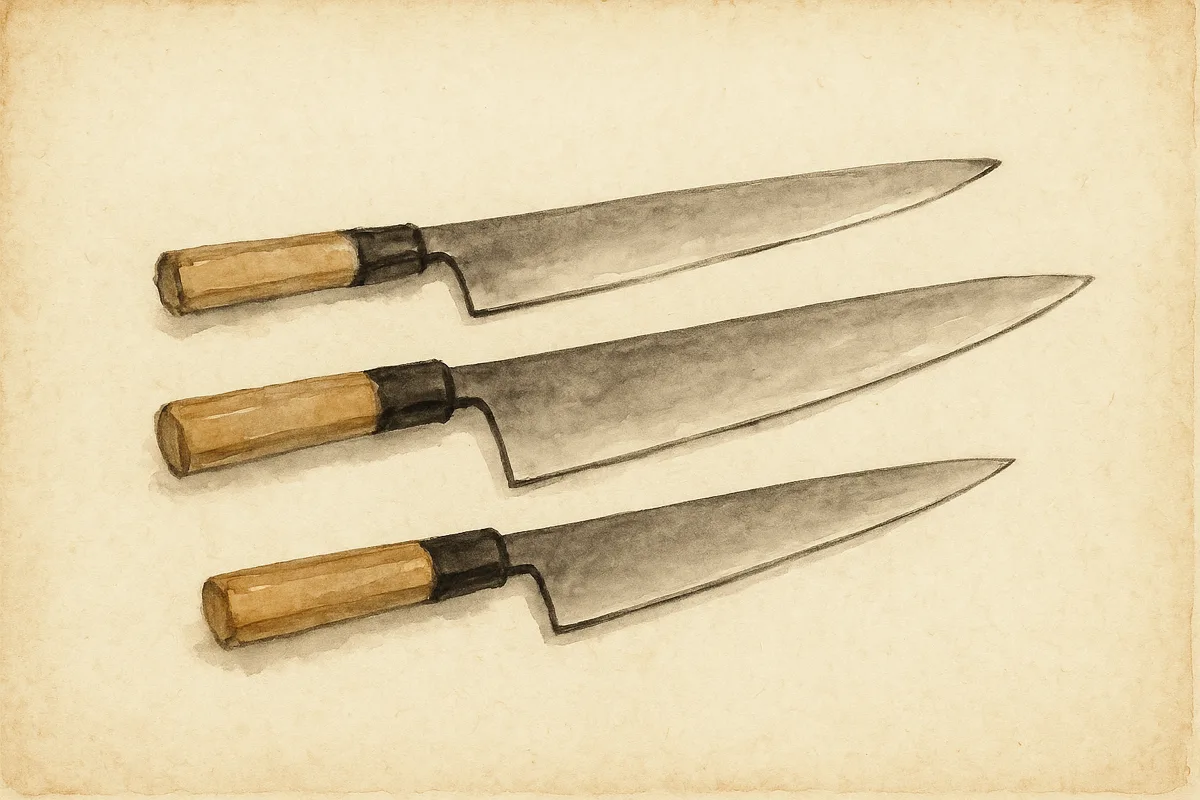
The same gyuto sells in 180mm, 210mm and 240mm, and the length is not a matter of taste. Three things you can measure decide it: your cutting board's width, the spread of your hand, and how much you cut at once, including the hand-spread test that separates 210 from 240.