
The sweet, amber drink you had at the end of dinner was probably umeshu, poured over ice with a soft, wrinkled fruit sitting at the bottom of the glass. Almost every English menu calls it "plum wine." That name is wrong twice. Once you see why, the whole bottle reads differently.
It isn't wine
Wine is fruit sugar that yeast has fermented into alcohol. Umeshu never ferments anything. You start with alcohol that already exists, drop in whole fruit and sugar, and wait while the fruit leaches its sharp acidity, aroma, and color into the liquid. It's an infusion, closer to how you'd make a cordial than how you'd make wine.
This isn't a loose distinction; it's how Japan files the drink. The National Tax Agency's own definition of umeshu is "a liquor made by steeping ume fruit in liquor to extract the essence of the fruit and adding saccharides to adjust the flavor," and it classifies umeshu as a liqueur, not a fruit wine. 梅酒 reads ume-shu, "ume liquor." "Wine" was added later by importers and marketers because it sounded familiar. It stuck, and it misleads.
And it isn't plum
The fruit is ume (梅), and ume is not a plum. It's Prunus mume, a species native to China that sits closer to the apricot than to the purple plum you'd eat off a supermarket shelf. It's almost never eaten raw: ume is punishingly sour, with far more acidity than a plum, and it's picked while still green and rock-hard. That aggressive acidity makes umeshu work. Steeped in sweetened spirit, the sourness turns into the bright, mouth-watering tang that balances all that sugar. Eat the fruit alone and you'd wince; give it three months in a jar and it becomes the best part of the drink.
The base spirit is the real dial
Because nothing ferments, umeshu's character comes almost entirely from the ume, the sugar, and what you steeped them in. The base spirit is the flavor dial.
- White liquor (howaito rikā, a neutral, near-flavorless shochu-type spirit around 35% ABV) is the home-kitchen default. It tastes of almost nothing, so the ume and sugar run the show. This is the clean, straightforward umeshu most people picture.
- Shochu gives a similar clean profile but can carry a little more grain or sweet-potato character depending on what it's distilled from.
- Sake (nihonshu) makes a softer, rounder, lower-alcohol umeshu, gentler and more delicate.
- Brandy or whisky pushes it richest of all, layering in oak and vanilla. Some makers, including large distillers, age umeshu in used whisky barrels for exactly this.
Wakayama's regional standard even spells the permitted bases out: seishu (sake), shochu, whisky, brandy, and more, used alone or blended. So if two umeshu taste completely different, the base spirit is usually why, long before you get to the fruit.
Sweet, dry, and how strong
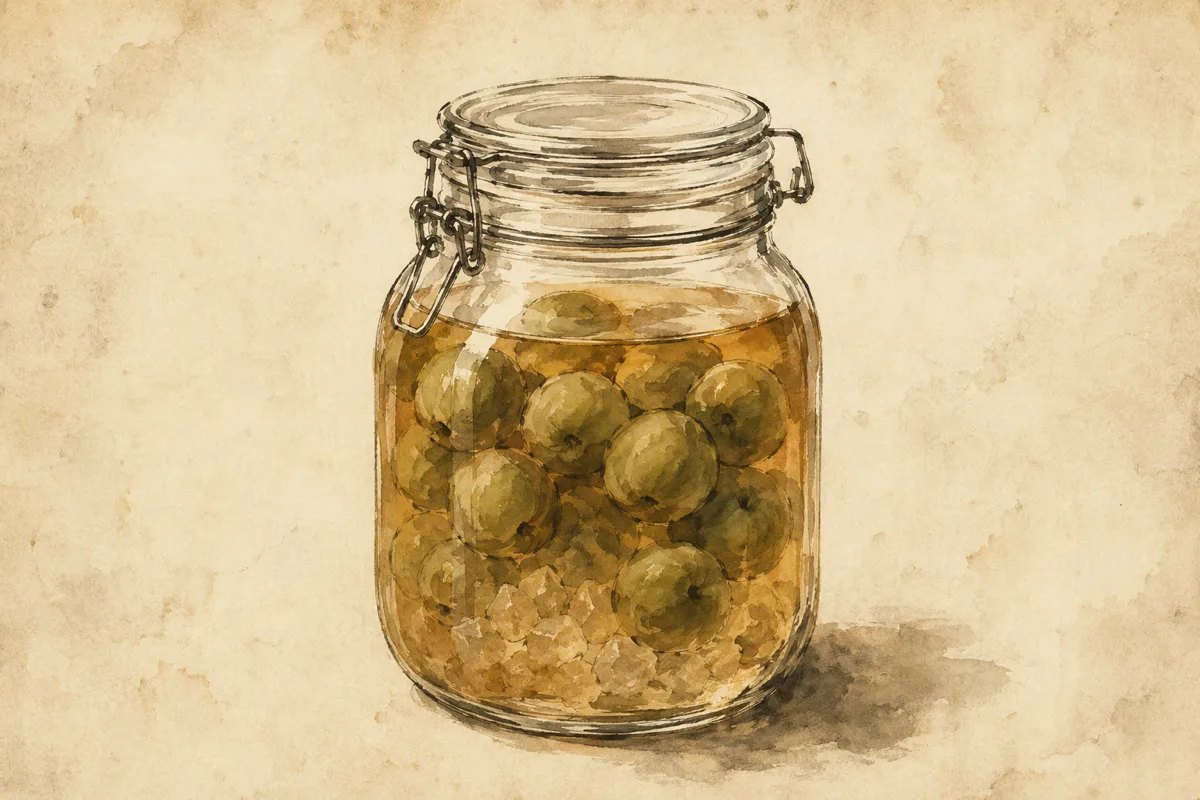
Umeshu is sweet by default, because home and commercial recipes both lean on a lot of rock sugar. A classic jar is roughly a kilo of green ume, up to a kilo of rock sugar, and about 1.8 liters of white liquor. But drier, less-sugared styles exist, along with cloudy nigori umeshu made with fruit pulp (sweeter, fruitier) and lightly carbonated sparkling versions. Look for honkaku (本格) umeshu if you want the purest expression: by definition it's made from only ume, sugar, and alcohol, with no added flavoring, acid, or color.
Strength is gentle. Most umeshu lands around 10–15% ABV, a touch lower than sake, roughly wine-strength, though bases and styles push the range from about 5.5% (sparkling) up toward 17–20%.
How to drink it
Three pours cover almost everything, and they map neatly to the weather:
- On the rocks is the standard. Cold, slow, and often served with a whole steeped ume in the glass. Eat it last.
- Soda-wari (with soda or tonic) is the summer move. It stretches the sweetness into something long and refreshing, closer to a spritz.
- Oyu-wari (with hot water) is winter. Warming umeshu opens up its aroma the same way warming sake does, and it's a quiet, comforting cold-night drink.
None of this is like drinking sake neat, which is a genuinely different craft. If you want to see what fermentation actually looks like, that's the story of how sake is made. Umeshu is the other side of Japan's drinking table: not brewed, but put up.
Ume work, once a year
That "putting up" has a name: umeshigoto (梅仕事), "ume work." Every June, as the rainy season arrives, green ume flood Japanese supermarkets and households buy them by the bag to fill jars with umeshu, umeboshi (salted pickled ume), and syrup. The season is literally named for the fruit: tsuyu (梅雨) means "plum rain." Most of that ume comes from Wakayama Prefecture, which grows roughly 64% of Japan's crop, led by the prized Nanko-ume of the Tanabe area.
Home-steeping is also legal, a real exception in a country that otherwise bans unlicensed home fermenting and distilling. Umeshu gets a pass precisely because it's infusion, not fermentation, as long as the base spirit is already taxed and at least 20% ABV (which is why sake, at a lower strength, isn't allowed as a home base) and it's for your own household. The same category that makes "plum wine" a mistranslation keeps the tradition legal.
A bottle of umeshu, read correctly: it's not wine, the fruit is ume rather than a plum, and its whole personality was decided by what it was steeped in. Read the label, then pick sweet or dry, and drink it over ice, with soda, or warm. If you'd like to taste the range, our sake shop carries several umeshu, from crisp everyday bottles to richer, barrel-influenced ones.