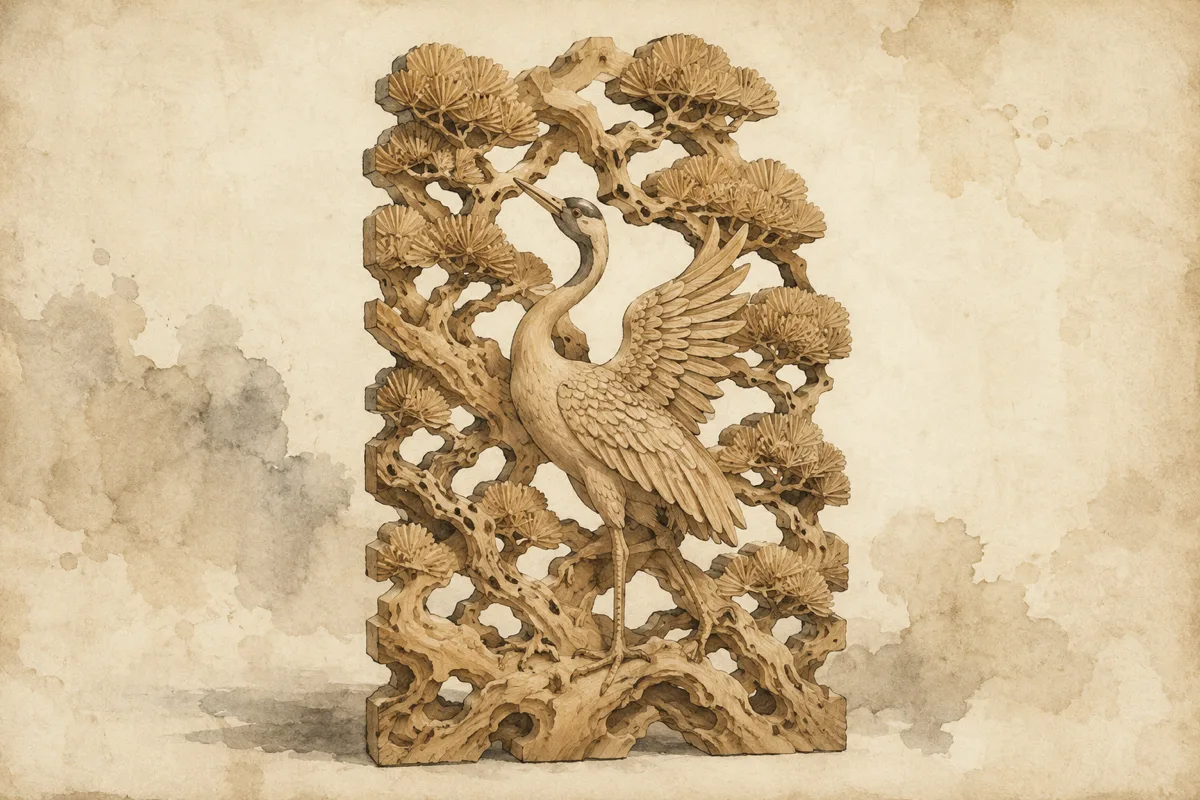
The town of Inami in Toyama built its name on a single object: the ranma, the openwork transom that sits above the sliding doors of a Japanese room. Because a transom divides two rooms, Inami's carvers cut it deep from both faces, so one plank shows a whole scene to each side. The skill did not start in houses. It came from rebuilding a temple after a fire.
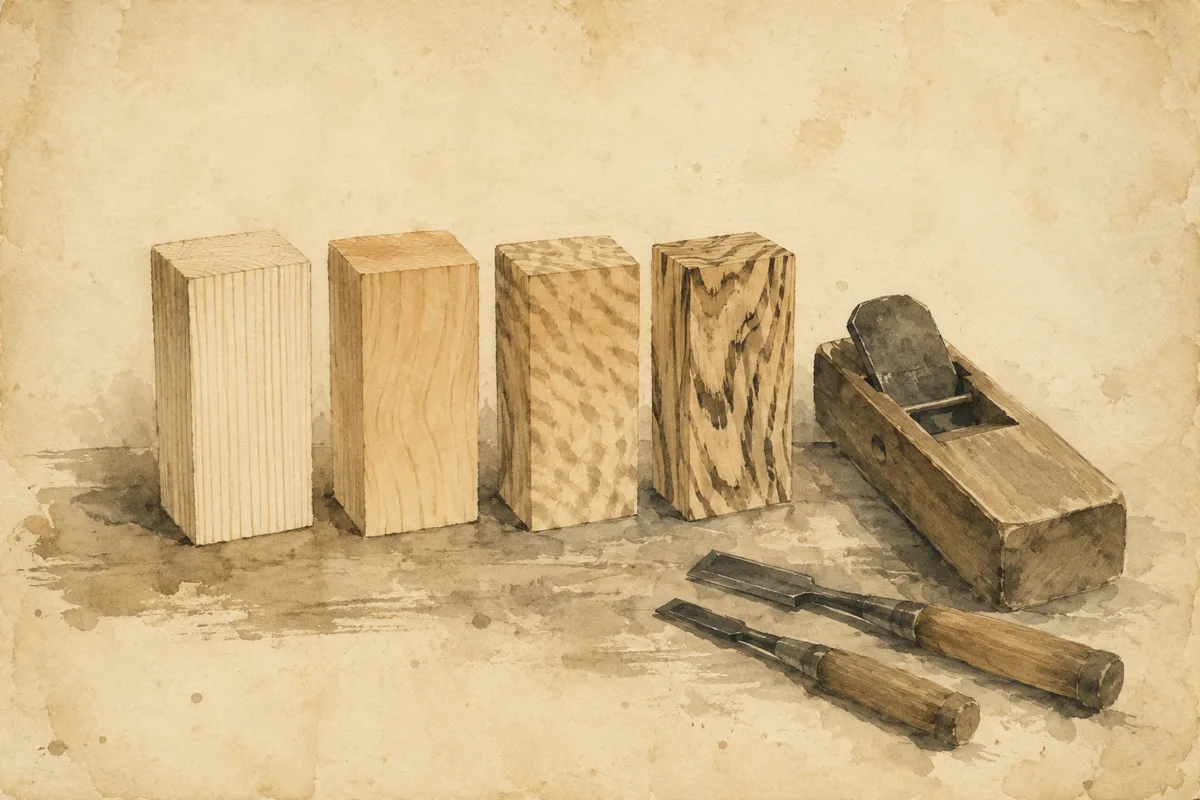
Japanese woodwork rarely says just 'wood.' A shrine gets hinoki because it resists rot, a sake barrel gets sugi because it is cheap and fragrant, a temple pillar gets hard keyaki, and a kimono chest gets kiri because it is the lightest wood there is and chars instead of burning. Four woods, four jobs, and the reason each one is matched to its task.
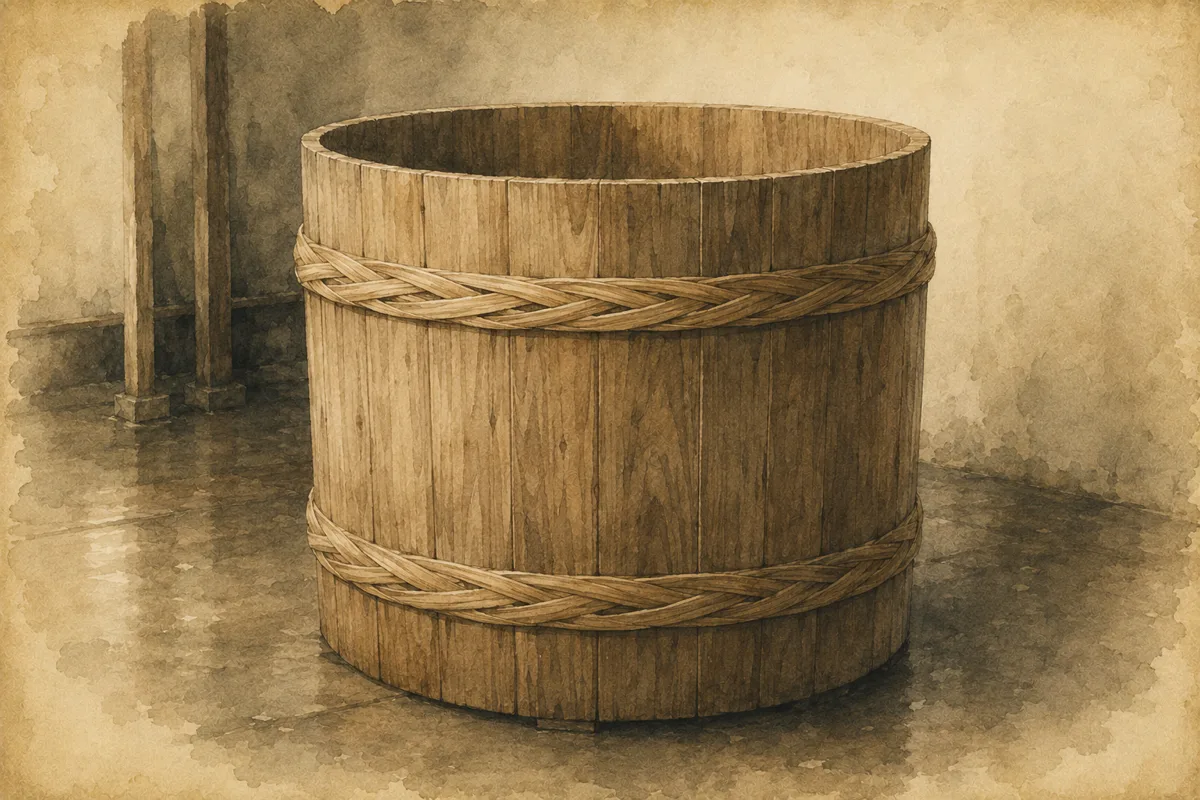
Japan's soy sauce and sake were fermented in cedar vats bound with woven bamboo, holding thousands of litres without a nail or a drop of glue. By 2012 one workshop in the country could still build one, and three men went to learn from it.