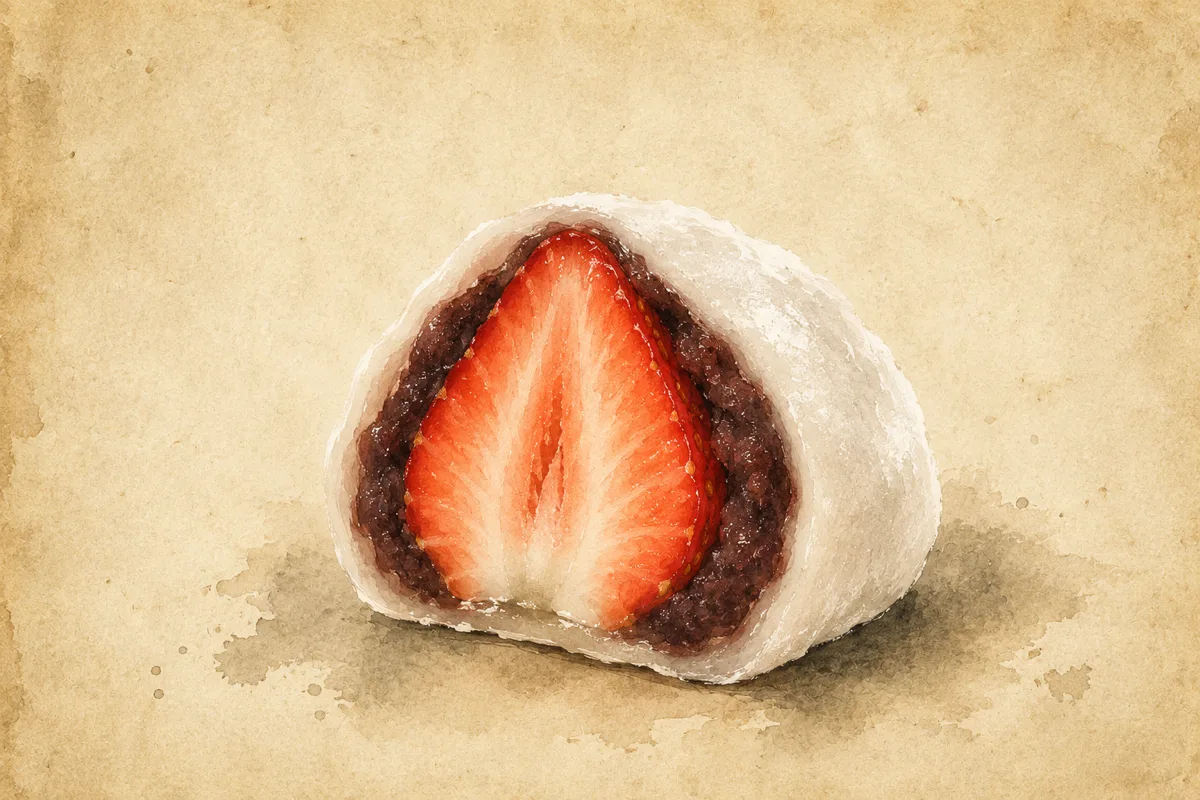
That whole strawberry wrapped in soft mochi and sweet bean paste looks like something out of a centuries-old teahouse. In fact, ichigo daifuku was invented in the 1980s (most credit a Tokyo shop in 1985), and its real inspiration was Western strawberry shortcake. This is what it is, who made it, why the bean paste matters, and why strawberries are a winter fruit in Japan.
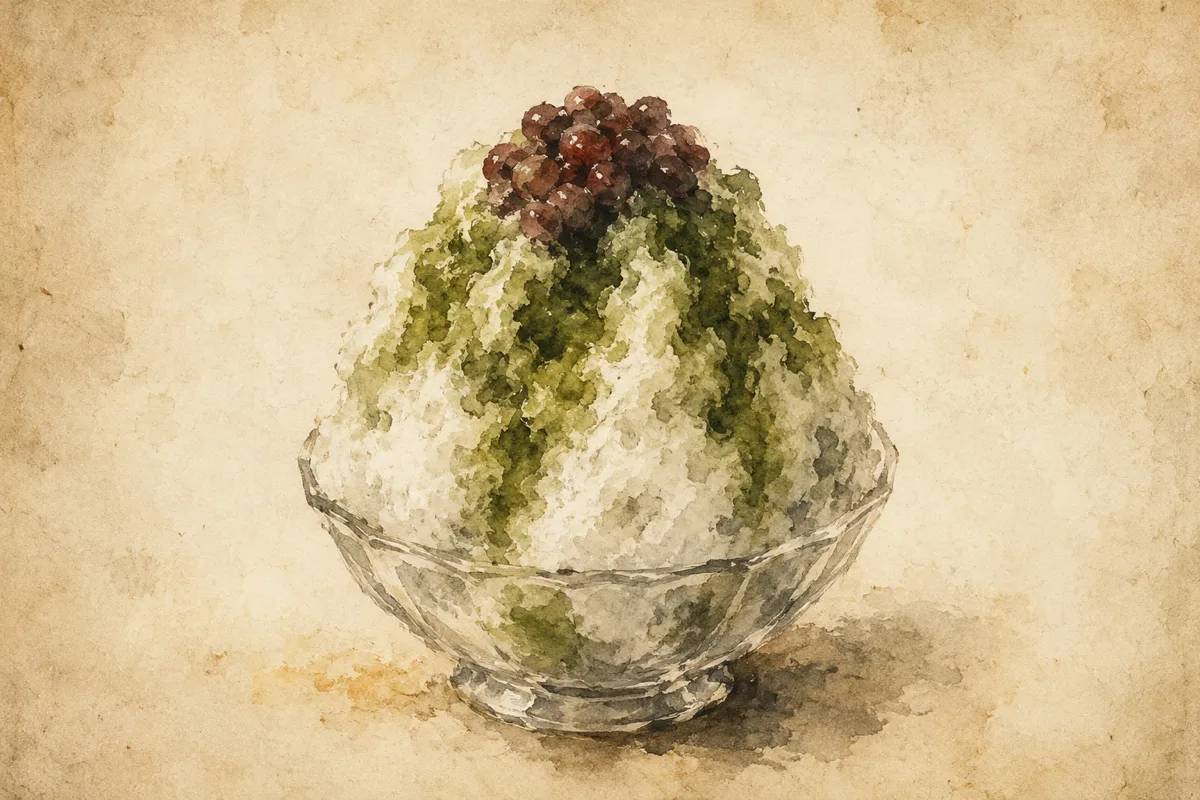
That towering, snow-soft mound of shaved ice you saw in a Kyoto café isn't a snow cone. This is what kakigōri actually is: why the ice melts on your tongue instead of crunching, how a Heian court lady wrote it down in the year 1002, and what Uji kintoki, natural ice, and a carpenter's-plane blade have to do with it.
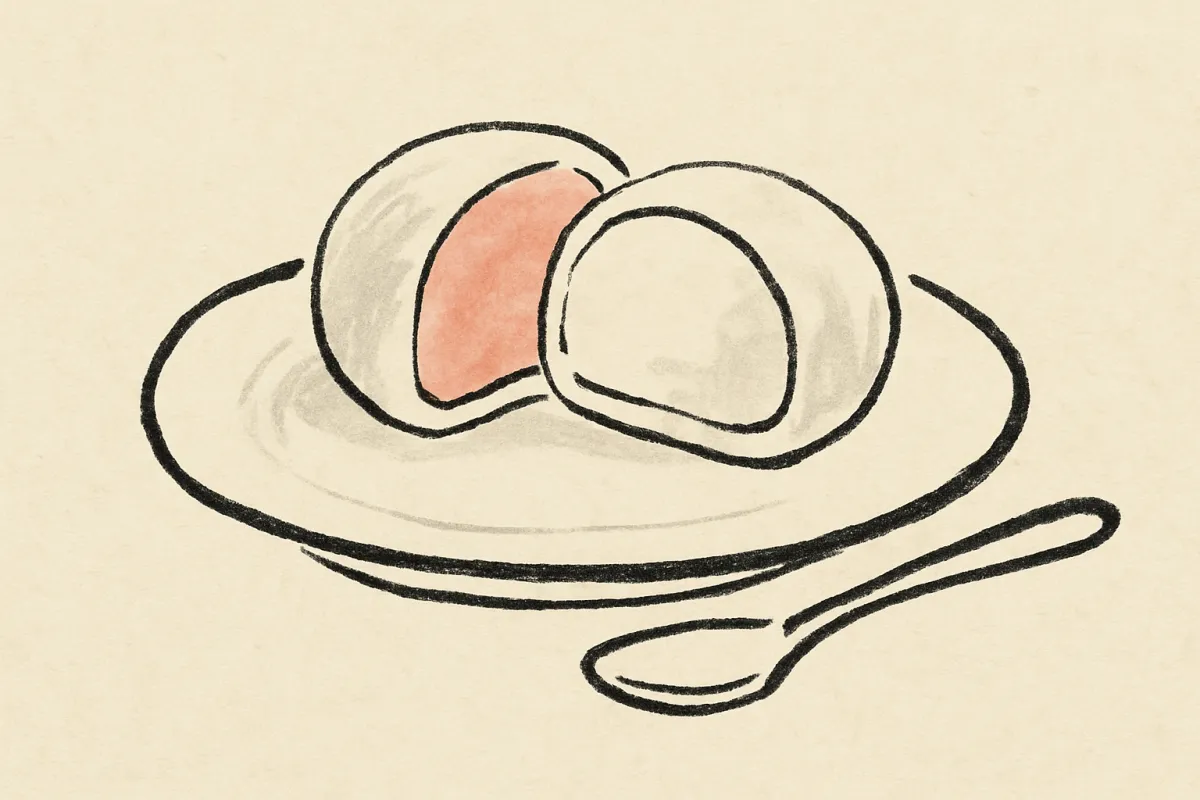
Is the mochi ice cream from Trader Joe's a real Japanese sweet or an American invention? The answer is both. Its roots are daifuku, Lotte invented the ice-cream version in Japan in 1981, and a Japanese-American named Frances Hashimoto put it in US supermarkets in 1993.