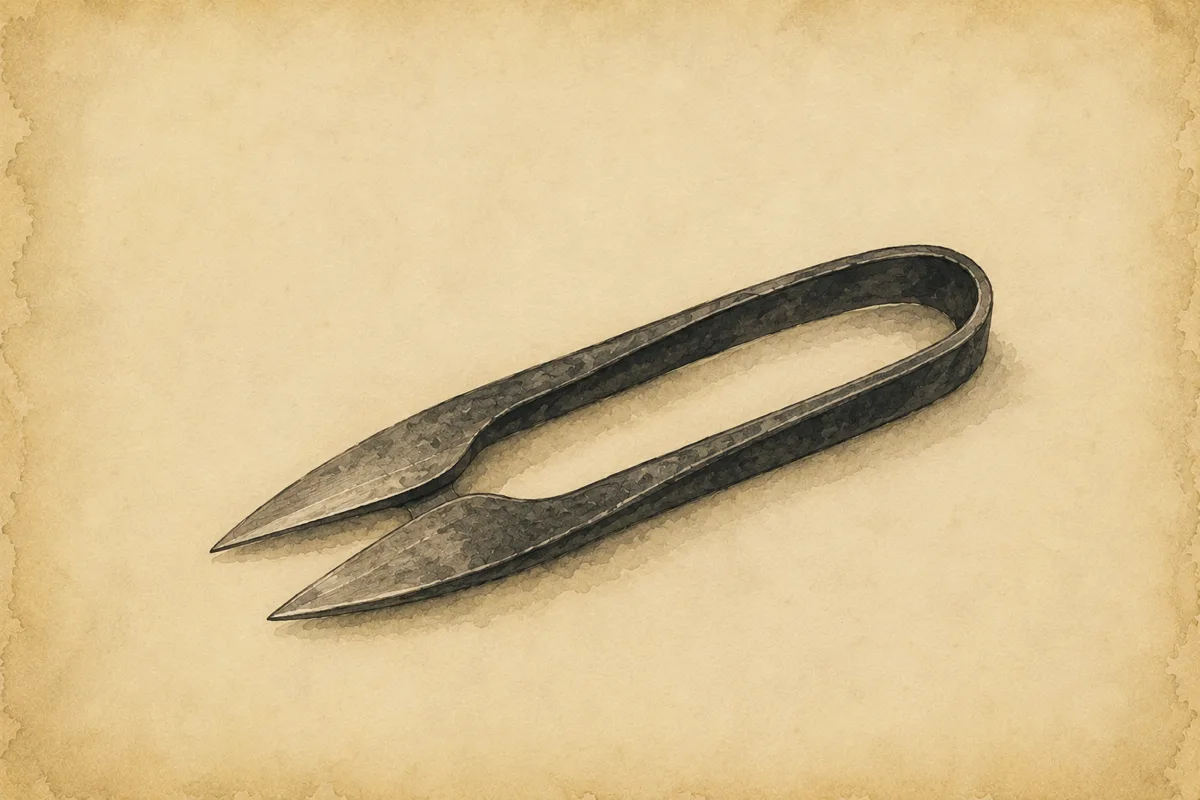
A nigiri-basami is bent from a single bar of steel, so there is no pivot screw. You squeeze the bow shut, and the spring opens it again. The cutting edges are still a hard steel skin forge-welded onto soft iron, the same logic as a kitchen knife. In Ono, where they were once a local industry of 160 smiths, the last man forging them from raw metal by hand was in his seventies with one apprentice.
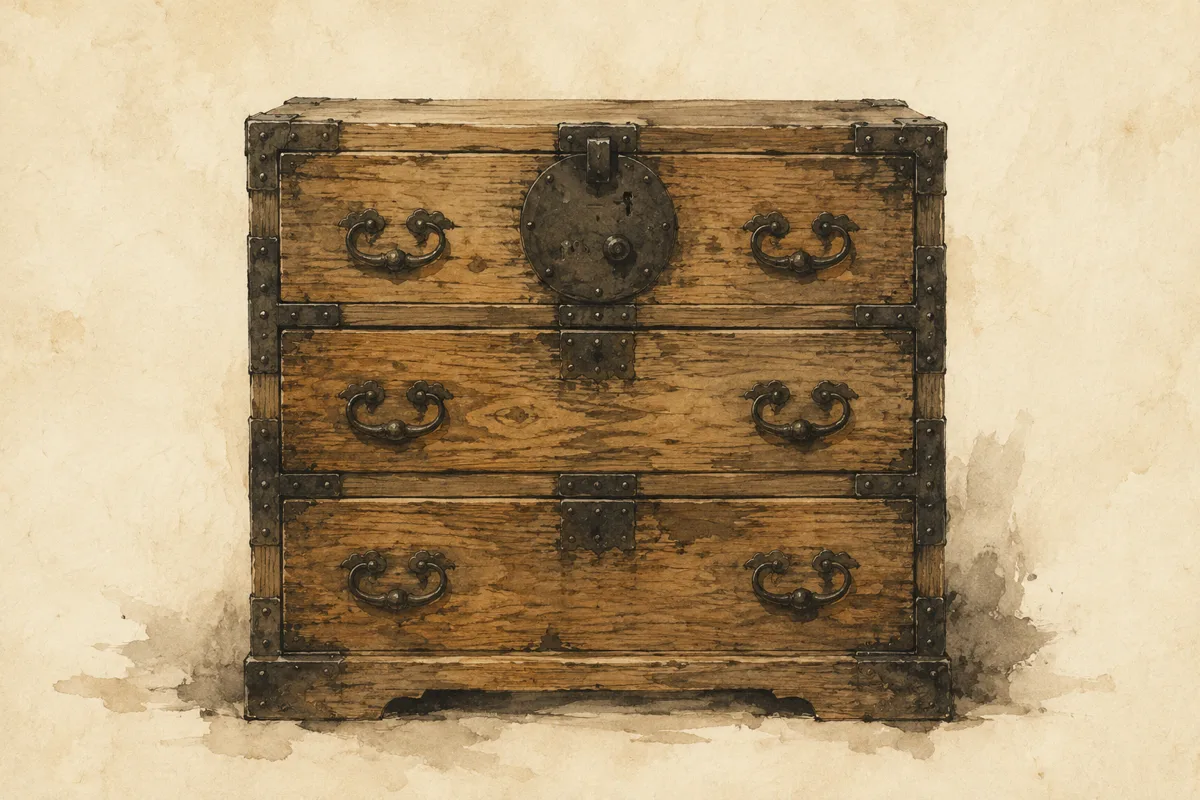
The dragons and lock plates on an old Japanese chest look like ornament, and they are, but they started as work. The iron straps stop the joints springing open when the chest is carried, the lock keeps a merchant's papers shut, and the corners take the knocks. A single Iwayado chest can wear sixty to a hundred fittings. The reason older chests are so heavily ironed is partly that Meiji-era pressed sheet made the metal cheap.
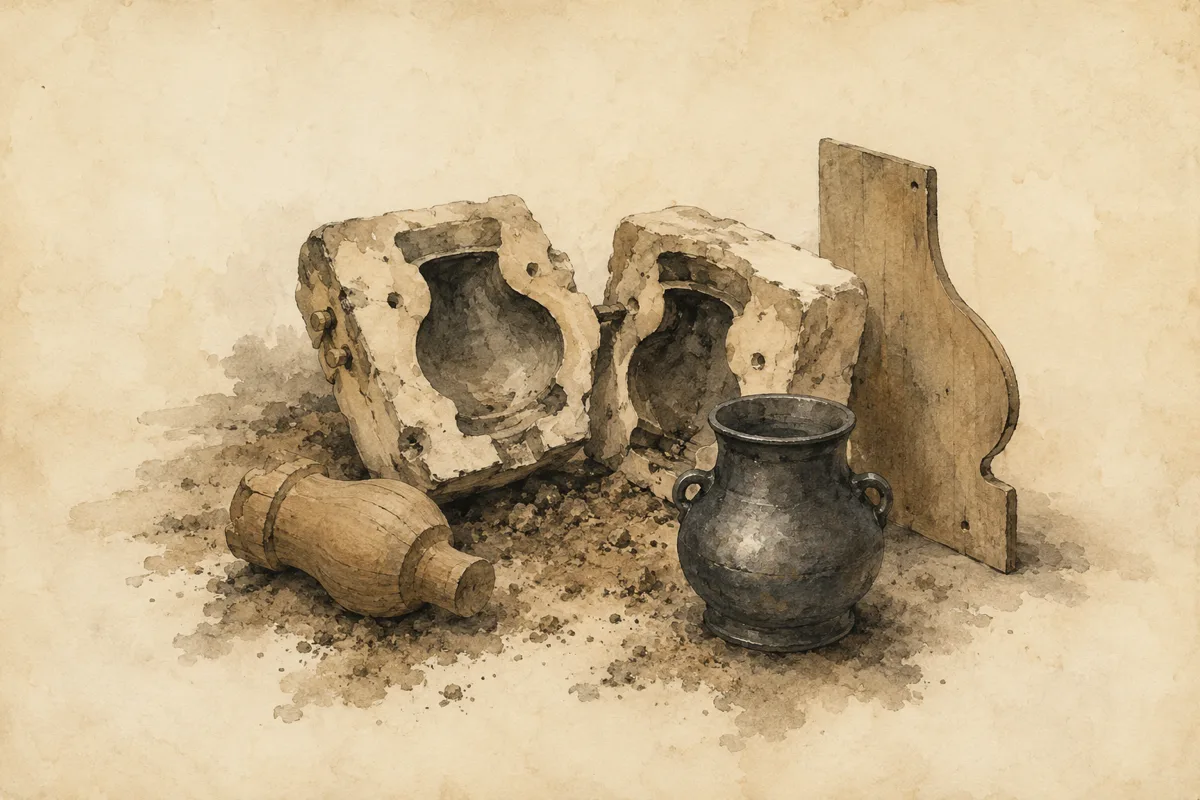
Green sand, fired clay, sectional moulds and lost wax are usually presented as a list of techniques. They are better read as four answers to a single mechanical problem: once the metal has set, how do you get the mould off it? The answer decides what the object can look like and what it costs.