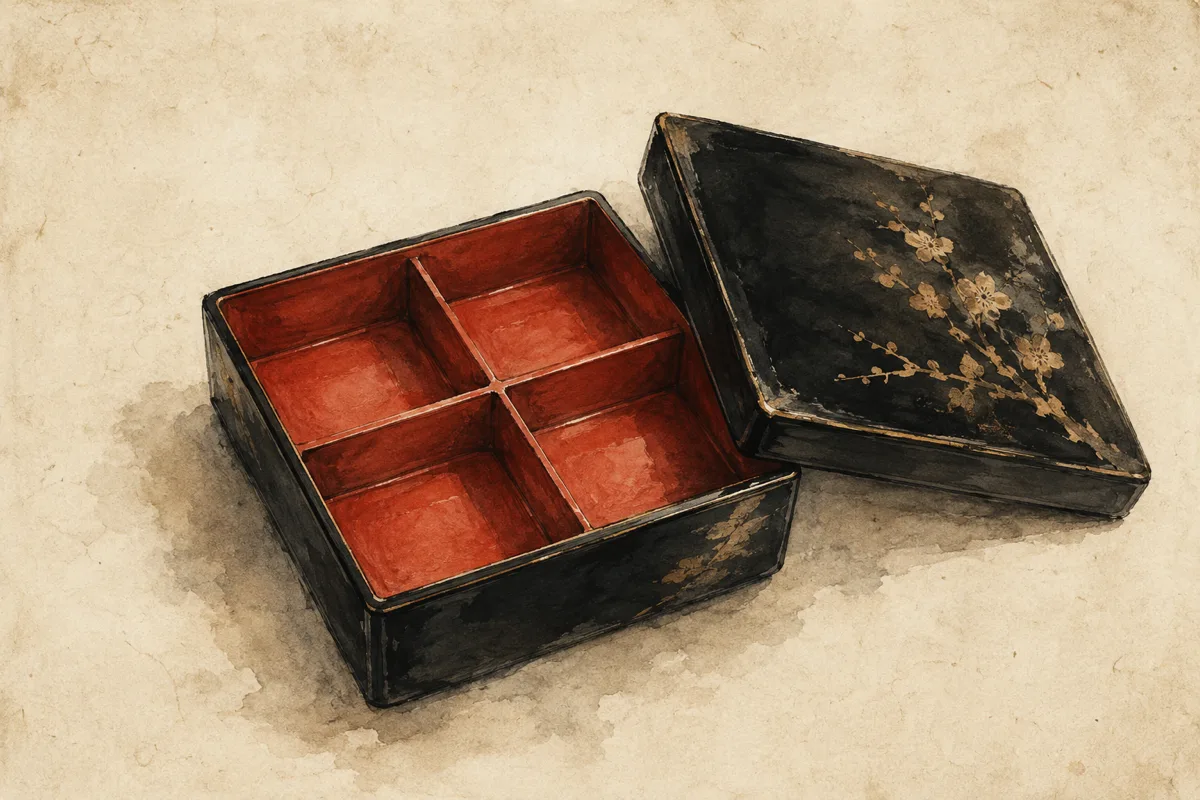
The square black lacquer box with a cross-shaped divider is a shokado, and it began as a farmer's seed box before a monk and then a chef turned it into a lunch. This guide covers where it comes from, how it differs from a jubako or a plastic bento, and how to tell a real-urushi box from a synthetic one before you buy.
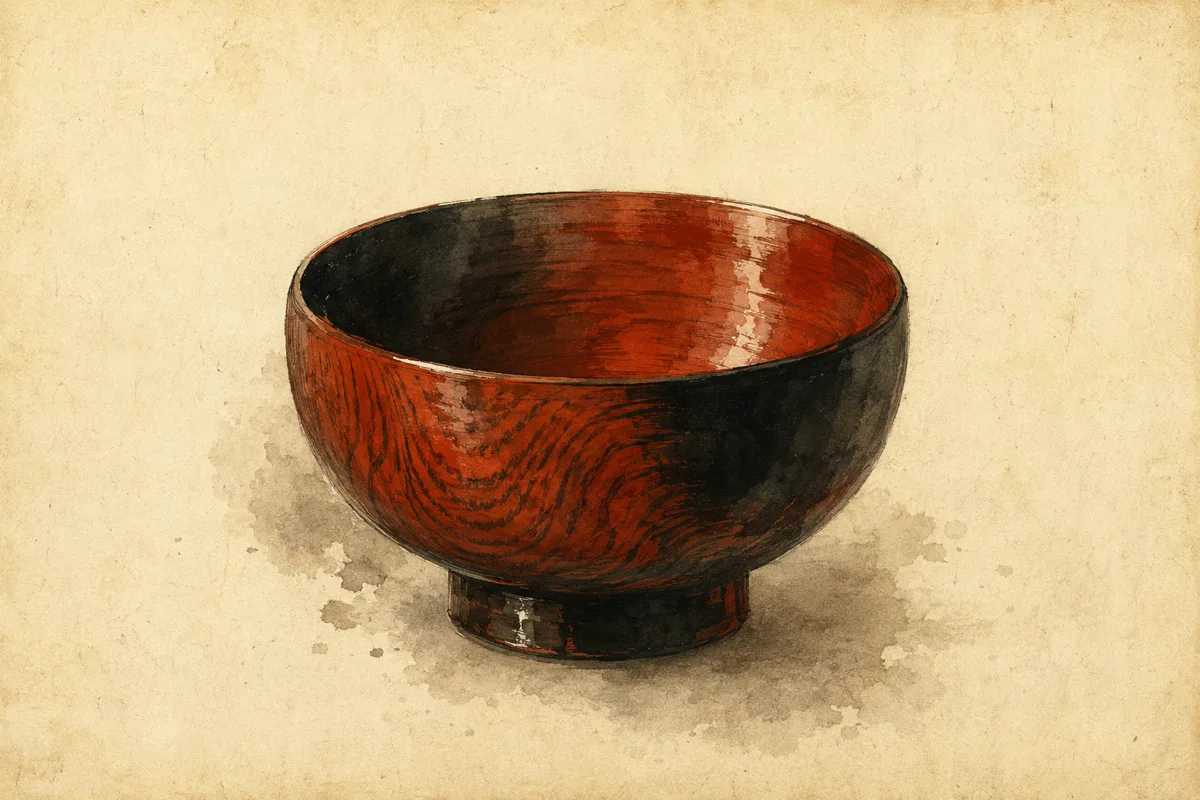
A $12 'lacquer soup bowl' and an $80 keyaki urushi owan sit under the same words. Why miso soup is served in wood, how the kanji tells you the material, real urushi versus synthetic coating, sizes, regions, and how to care for a bowl so it lasts.
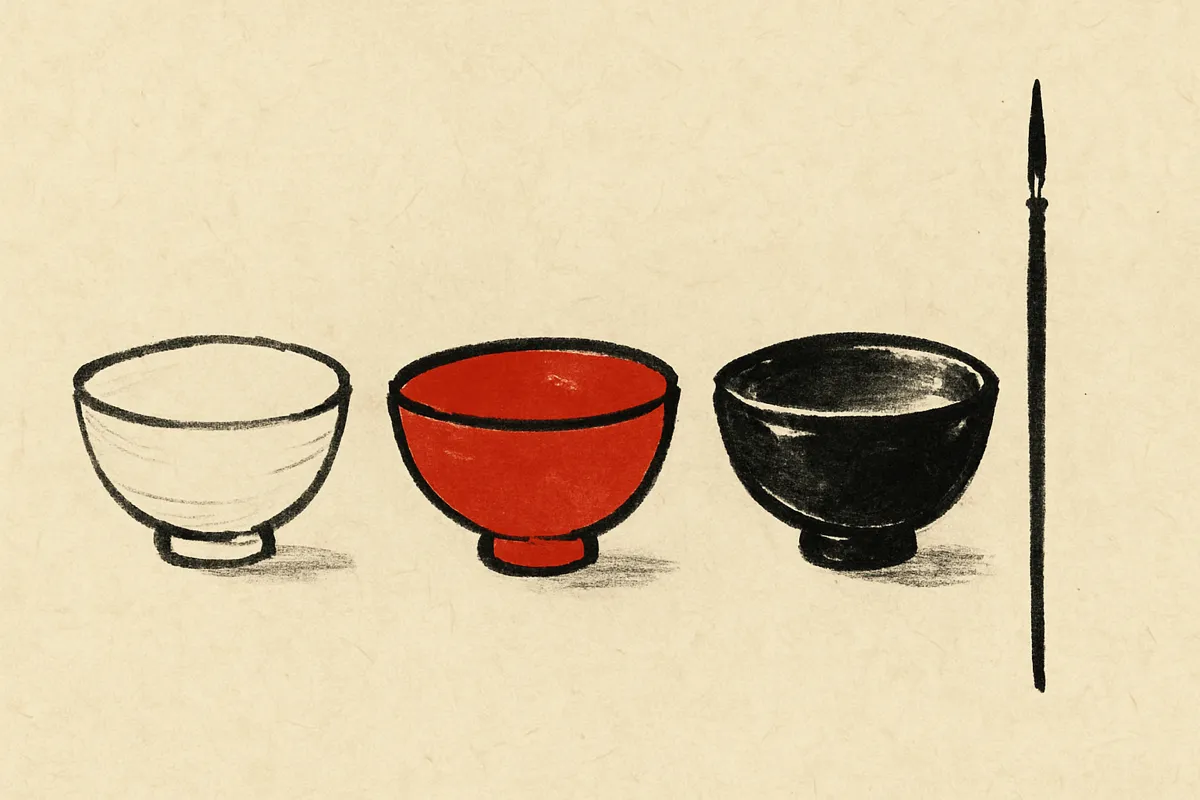
A finished urushi bowl and a plain wooden one are separated by months of work you can't see. This walks the whole line: wood core, an invisible mineral foundation, then thin coats each hardened in a damp cabinet, and why the depth and the price both come from layers and waiting.